 Merry Japan Tours
BLOG
WHAT YOU SHOULD KNOW ABOUT AWE-INSPIRING KIYOMIZU TEMPLE BEFORE VISITING
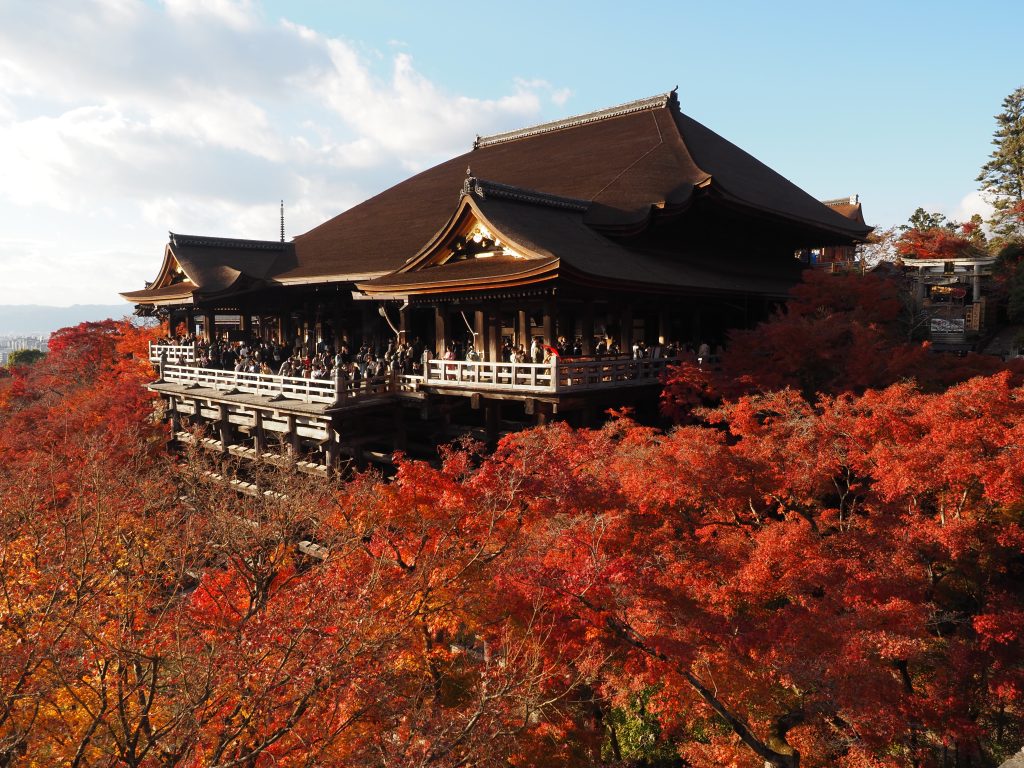
Kiyomizu Temple, one of the 17 world cultural heritage sites in Kyoto, is definitely one of the more touristy spots in Kyoto, attracting millions of visitors annually. If you don’t take advantage of this article rich in suggestions on how to make the most of your visit to this temple, however, you might let something interesting slip through the cracks.
For a first-timer to Kyoto, I do recommend you include this temple in your itinerary because the impression you get from it might far exceed your expectations. For instance, you might not only be overwhelmed by its famous veranda jutting over the hillside but also captivated by Otowa waterfall which looks so ancient that you might feel as if you have managed to turn back the hands of time.
This temple, which changes its atmosphere with each season, was constructed in 778, so it dates back over 1250 years. At that time, a Buddhist priest named Enchin had a dream of Kannon Boddhisattva who told him to leave Nara and go north. Inspired by his dream, he walked north all the way to Mt. Otowa where he found a clean waterfall and saw a mountain hermit undergoing ascetic practice. The mountain hermit instructed him to carve a statue of Kannon Boddhisattva out of a wood near the waterfall.
As instructed by the mountain hermit, Enchin sculpted a statue of Kannon Boddhisattva out of wood and built a small thatched roof hut where he installed the statue as the main object of worship. This is the origin of this temple, which is now conducive to thousands of pilgrims who visit renowned temples enshrining a Kannon Boddhisattva.
The following are the details on why this temple is so famous and things that can be found in this temple.
Contents
- 1 A Jizo Boddhisattva constructed to repose the spirit of a guy who was up to his neck in debt
- 2 What the dragon means to Japanese people
- 3 A black deity who will bring wealth
- 4 Awe-inspiring Kiyomizu Temple that wows the crowds
- 5 The structural beauty of Kiyomizu Temple
- 6 You should choose just one benefit at Otowa Waterfall.
A Jizo Boddhisattva constructed to repose the spirit of a guy who was up to his neck in debt
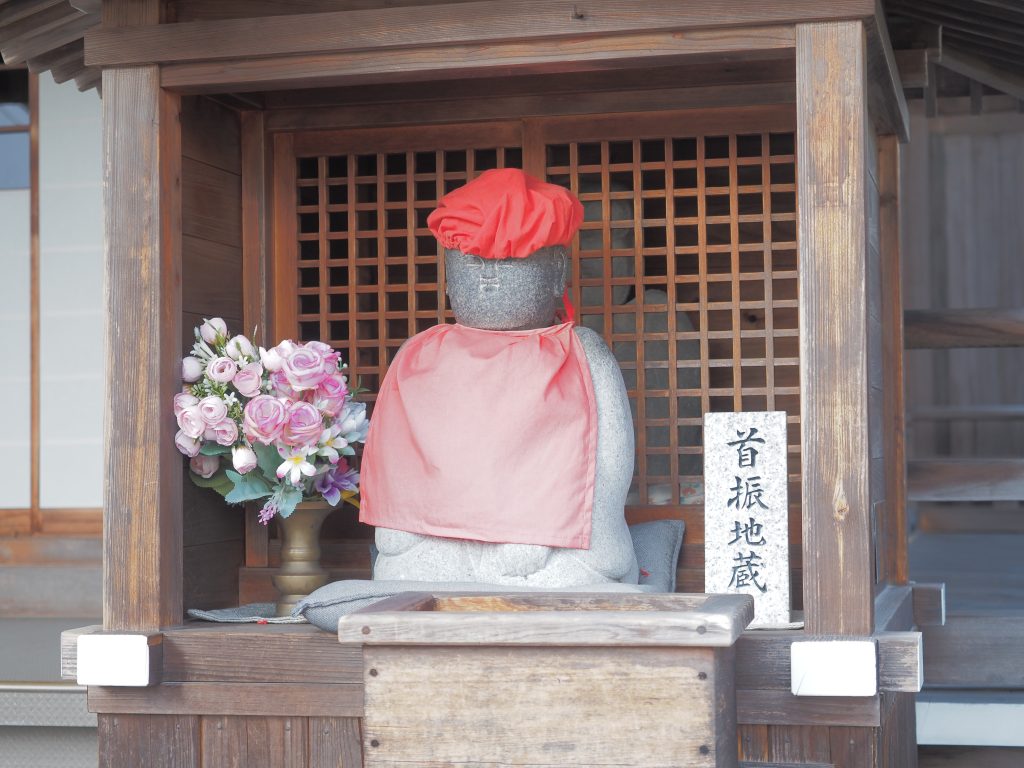
On arriving at this renowned temple, you might be overwhelmed by its entrance, but few people know that there is an interesting statue of Jizo Boddhisattva enshrined in a small hall to the left of the entrance. Jizo, who can be found on the roadside is generally a guardian deity for travelers and children. Some Jizo are so compassionate towards people who suffer a lot in hell that they voluntarily go to hell to save said people.
This Jizo is unique because we can turn its head 360 degrees, which means salvation for anyone who is stuck in debt.
In Japan, those who are up to their neck in debt are in a state called “kubigamawaranai,” meaning “can’t turn one’s head around due to debt.” This statue was designed to be able to have its head turned 360 degrees so that debtors’ loans would be canceled or cleared in the afterlife.
It’s nothing to make fun of, but his wearing a red bib or an apron is funny to the eyes of a first-timer. Indeed, he is neither an infant nor tied to his wife’s apron’s string. On the contrary, the unique red apron is a donation made by local people.
What the dragon means to Japanese people

The dragon is an imaginary creature depicted in fairy tales in many countries including Japan. But, the interpretation of a dragon differs from country to country.
In general, dragons are considered evil in Western countries while they are considered sacred in Japan. In Buddhism, dragons protect the Buddhist world from evil spirits. Actually, when Buddha was born, a dragon showed up in the sky to celebrate his birth by bringing sweet rain. That’s why we can see dragon art including statues as well as paintings on the ceilings of Buddhist temples depicting a dragon going up the sky.
To look into more details, a Chinese legend holds that if a carp ascends a waterfall, it will be a dragon. In addition, dragons have 81 scales, one of which is jutting from their throat and grows the other way around. One of the most unique features is their holding a golden ball called “Hoju,” with which every wish can come true. To those who read the world-famous manga, “Dragon Ball,” it may ring a bell.
A black deity who will bring wealth
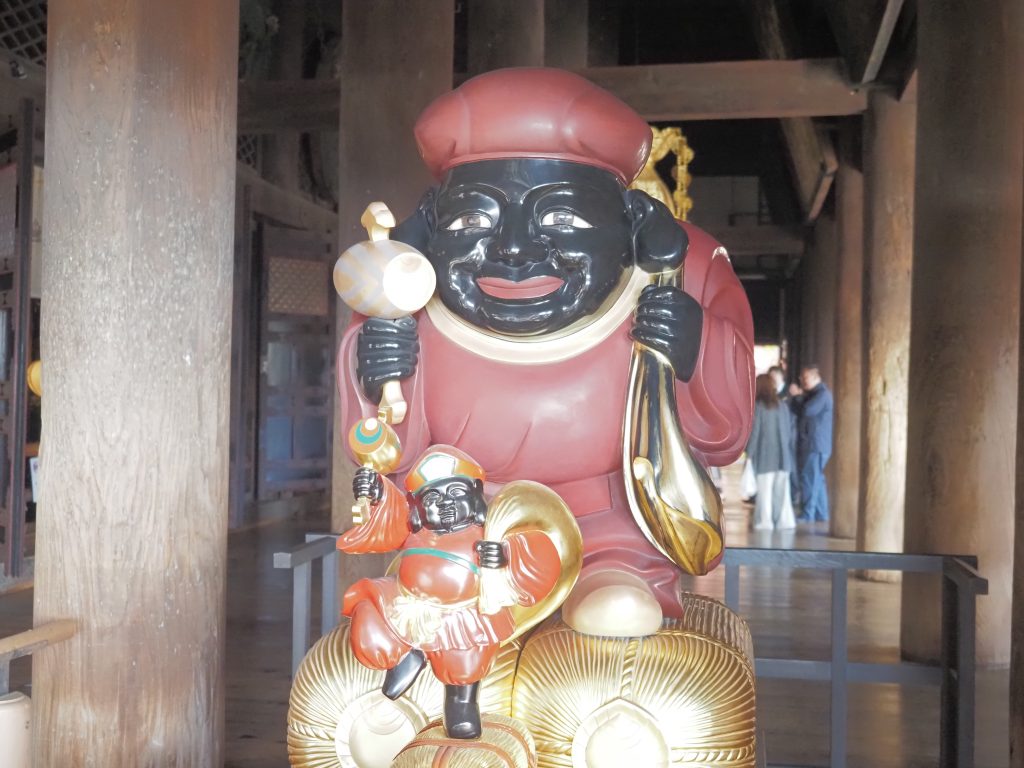
When you enter the main hall of this temple, you will be welcomed by a statue of a hilarious suntanned guy who brings wealth. This deity is called “Daikoku-ten,” and is considered a guardian of the Buddhist world, and one of “the seven lucky gods”.
So, let me explain the seven lucky gods. The seven lucky gods are a group of deities who are mainly derived from Indian mythology. They are “Ebisu-ten,” a deity native to Japan who brings prosperity to our businesses, “Daikoku-ten,” a suntanned deity who brings wealth, “Bishamon-ten,” a deity of martial arts who brings happiness, “Benzai-ten,” a deity of music who brings romance, “Fukurokuju,” a deity who brings longevity, “Jurojin,” a deity who also brings longevity, and “Hoteison,” a deity who brings a happy marriage.
Daikoku-ten, who has attained spiritual enlightenment, is considered to emerge in this world to bring us wealth. Furthermore, this deity is also considered to take control of the soil, so enshrining this deity may lead to a good harvest.
To provide you with more details, this deity carries a big bag on his back like Santa Claus, but it isn’t filled with material presents. Instead, it is filled with spiritual presents including longevity, popularity, beauty, charm, and so on. In addition, he holds a small mallet with which to bring treasure or make your specific wish come true. Once you learn about this deity, there’s no choice but to pray in front of this deity, grateful for making our monetary wishes come true.
Awe-inspiring Kiyomizu Temple that wows the crowds
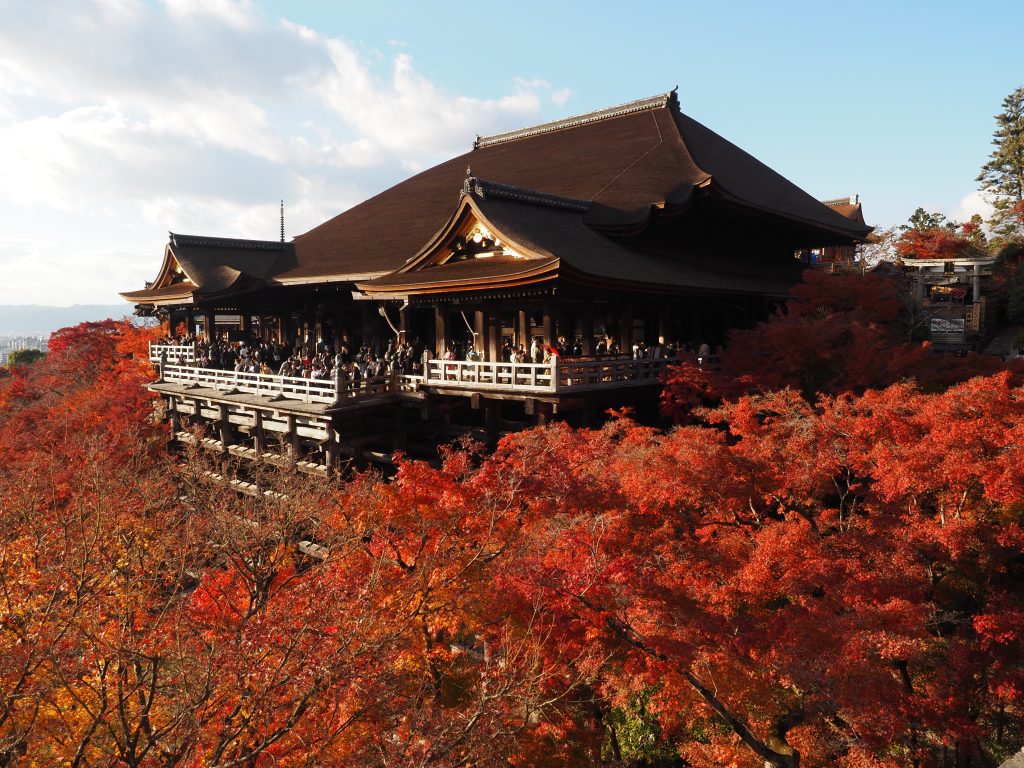
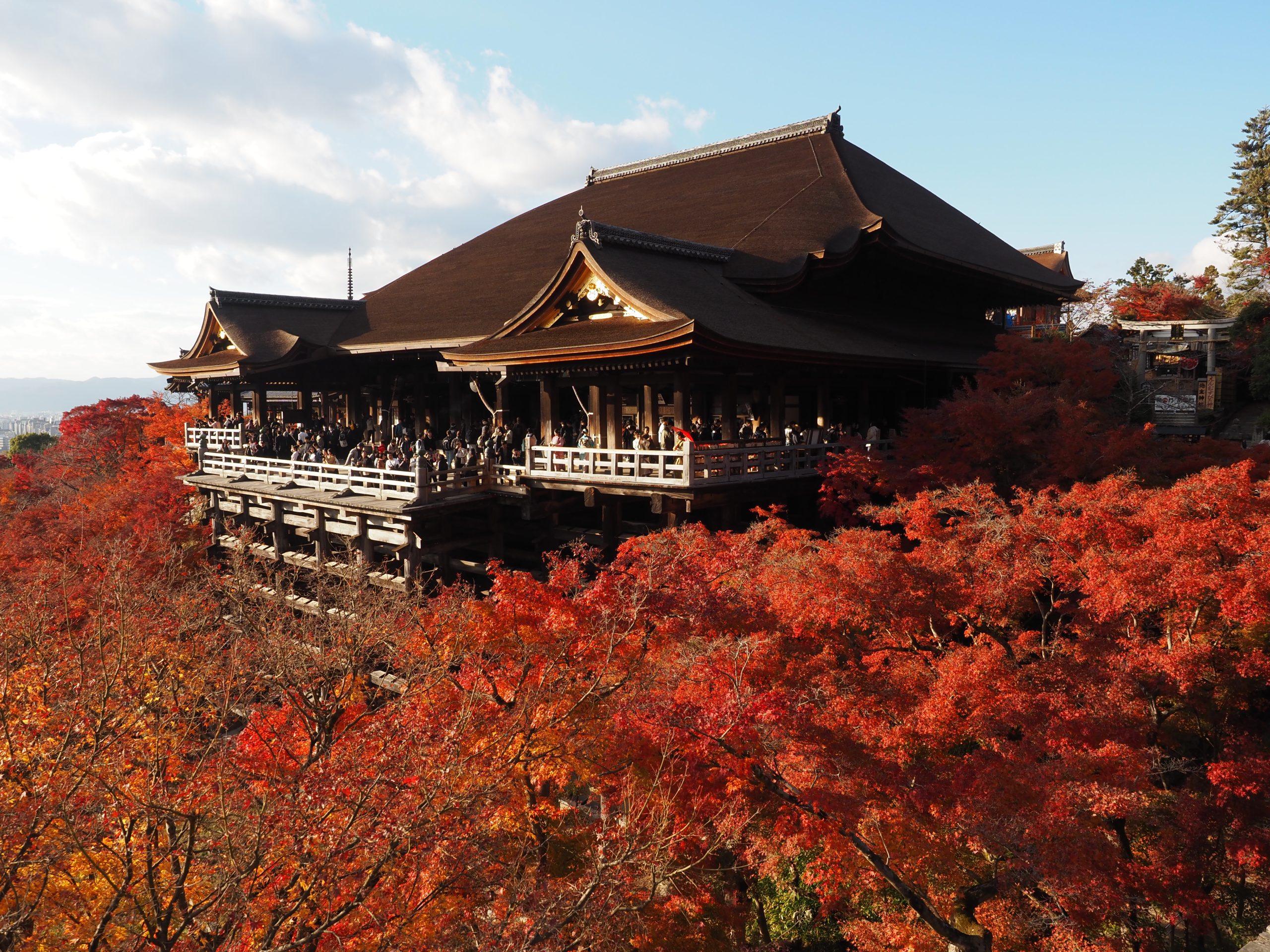
The world-famous main hall of Kiyomizu Temple with its roof thatched with cypress was reconstructed in 1633 after a fire in 1629. Looking back on Japanese history, this temple has been burnt down by accidental fires and fires stemming from wars. But every time the buildings were burnt down, we Japanese put a lot of money and effort into reconstructing them. This is because this place has spiritual importance and it has been considered among Japanese people to be the spiritual home that we can fall back on.
A noticeable feature of this temple is that this temple is located on a mountainside. During the relocation of the capital to Kyoto, which took place in 794, temples were not permitted to be moved to the palace, and new construction of temples was also strictly prohibited for they might get in the way of the relocation project. Because of this, the layout of this temple is unique.
This may surprise you, but in the past, people jumped from the veranda. It’s not suicide. Far from it. Many people had jumped from the veranda as a gamble; if they had succeeded and lived, their wish would have come true. So, the jumping came from one’s belief. According to an official journal, 234 people were recorded to have jumped over the course of 148 years during the Edo period.
Of course, this daredevil stunt has been prohibited since the Kyoto municipal government put a ban on this in 1872. But, even after the ordinance was enacted, administrative bodies strived to talk those who wanted to jump out of doing it.
Now no one is possessed by this strange belief and dares to jump, but, the feeling has still taken root among us Japanese, and there became a saying, which goes “Kiyomizunobutaikaratobioriru,” meaning “To take the plunge.”
The structural beauty of Kiyomizu Temple
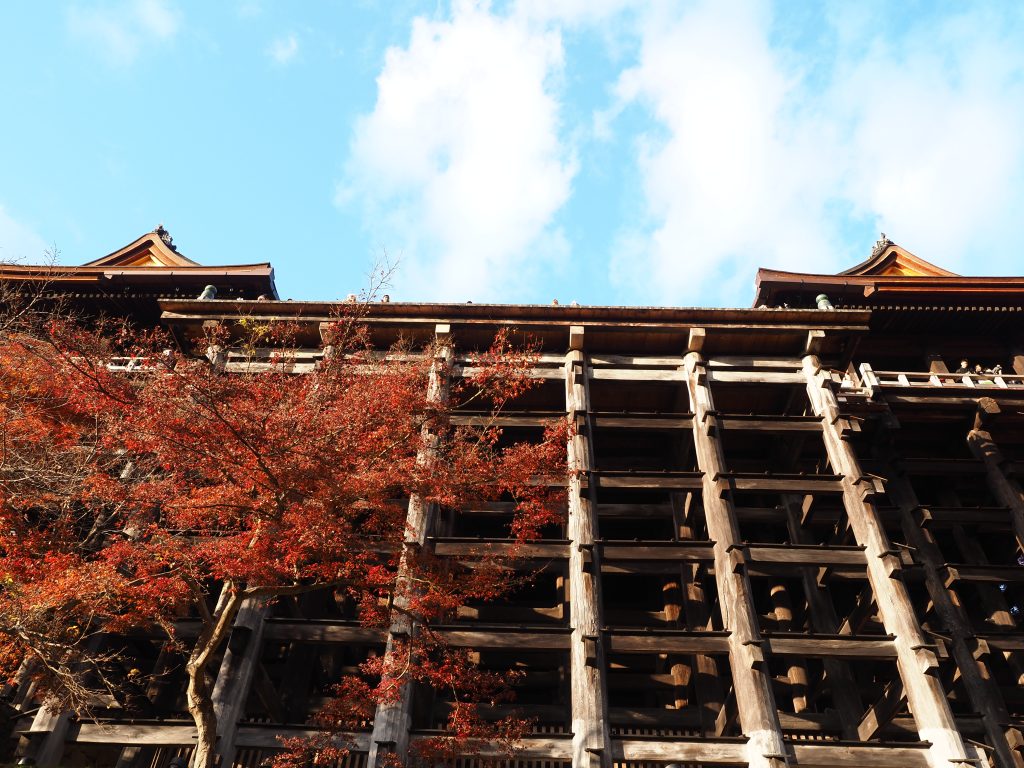
One of the structural beauties of this temple is its 18 pillars made of Japanese zelkova. Zelkova is a type of tree that is immune to deterioration so it has great durability and is waterproof. The 13-meter-long, latticed pillars were constructed, utilizing the traditional technique that enables them to withstand earthquakes by supporting one another to disperse any impact if the building jolts.
What is surprising about this structure is its construction method: using no nails at all. Small spaces between pillars are fixed with wooden wedges. In addition, by nature, wood is susceptible to water, so it is of great necessity to make the wooden building waterproof. In this building, the platform, which slightly leans, works as a roof which prevents water intrusion into the supporting pillars. What’s more, you can find small wooden parts which act like umbrellas attached to the supporting pillars. These wooden parts are for further repelling water that is dropped from the platform.
Everything made from Zelkova lasts for two times the age of the tree, so these 400-year-old Zelkova pillars need to be replaced with new ones within the next 400 years. Looking ahead to the next replacement of the pillars, Kiyomizu Temple now grows zelkova and cypress in woods owned by the temple in Kyoto city with the help of people engaging in forestry.
You should choose just one benefit at Otowa Waterfall.
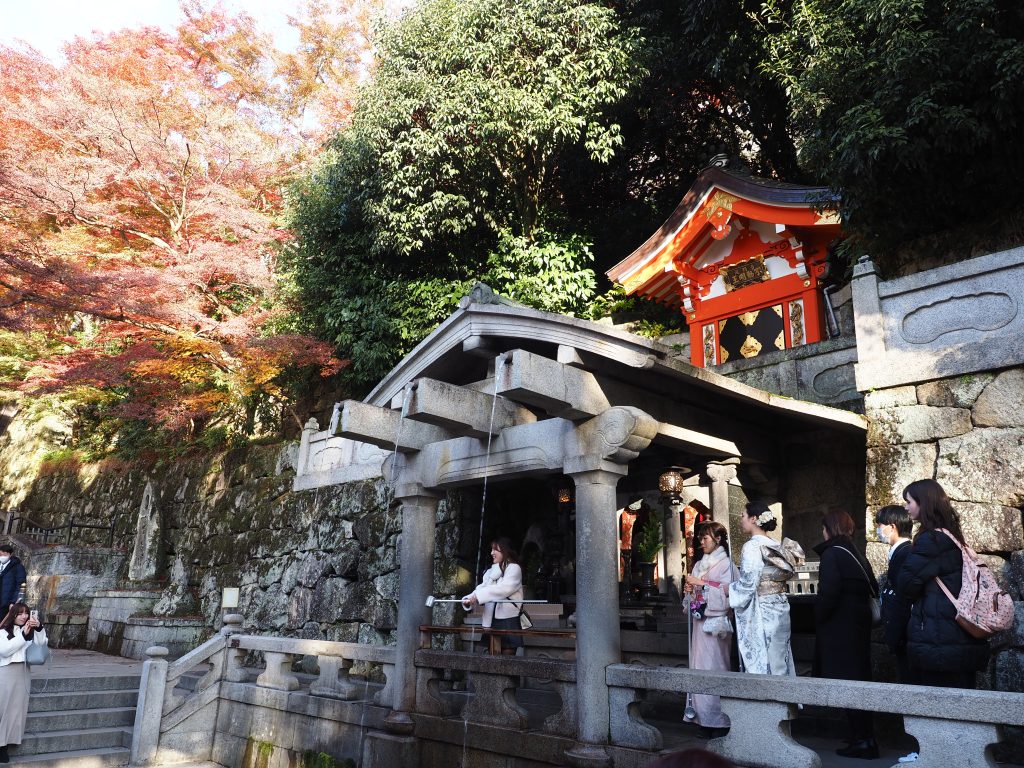
At the foot of Mt.Otowa, there are three water channels called the “Otowa waterfall,” which is located within the compound of Kiyomizu Temple.
The water is as pure as one can drink. Some local people even bring bottles to fill with the water and take them back to make coffee.
You should know that drinking water from the three channels has its own benefits: when seen from the front, the channel on the right is for longevity, the channel in the middle is for romance, and the channel on the left is for academic progress.
You should choose just one benefit, and take a sip. That’s an unwritten rule in this place. If you drink too much, your greed may be seen by a deity, and your wish will not be answered.
Since this place has been both a great sightseeing spot and a sight for spiritual cleansing since the distant past, there are many anecdotes regarding this waterfall. Among them, legend has it that a dragon painted on the ceiling of the hall of Jishu Shrine, which is located within the compound of Kiyomizu Temple, came out of it and drank water here at Otowa waterfall every night. In addition, you can retrieve your lost items using a magical quotation; you should say “Even if the water from Otowa waterfall runs out, my lost item will definitely be discovered,” when you lose an important item. Whether you are at this waterfall or not, you will be blessed with finding your lost item by reciting this spell.