 Merry Japan Tours
BLOG

Osaka Castle, the King of Osaka
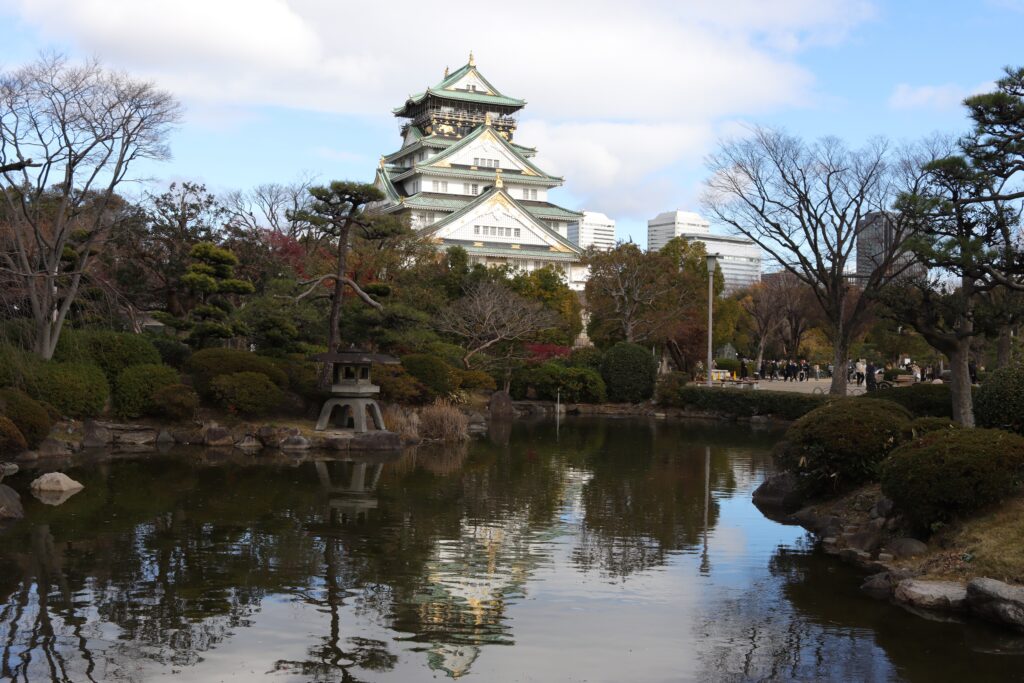
Osaka Castle surely captivates every visitor. One reason for this is not only its sheer size, measuring 55 meters, but also its association with Samurai warriors; lots of Samurai got involved to build Osaka Castle, and thus whenever I visit Osaka Castle, I feel as if I have become a warlord.
Although this castle is busy all year round, the structural beauty and elegance are among the masterpieces of Japanese Castles. Through this article, I tried to dig as deeply as possible into the origin of this outstanding castle and what we can see in the park. By reading this piece, you will get to know why this castle is so famous and has remained the king of Osaka.
Contents
- 1 Osaka Castle Park, One of the Oases of Osaka
- 2 A Pleasant Bus Ride
- 3 An awesome view that will clear us of any anxieties.
- 4 The oldest Turret in Osaka Castle and amazing moats
- 5 The pitch-black main gate
- 6 A spacious square, a place to annihilate enemies
- 7 huge stones guarding against enemies
- 8 A strange rock, dubbed “Unfortunate stone.”
- 9 A superb Shinto Shrine, enshrining the founder of Osaka Castle
- 10 Sakuramon Gate, one of the important cultural properties in this castle
- 11 The largest stone in Osaka Castle is dubbed “Octopus Stone.”
- 12 An entertainment facility, MIRAIZA
- 13 Osaka Castle Tower stands still against a blue sky
- 14 Farewell to Osaka Castle Tower at the Heavenly Bridge
- 15 Don’t forget to get on a luxury boat.
Osaka Castle Park, One of the Oases of Osaka
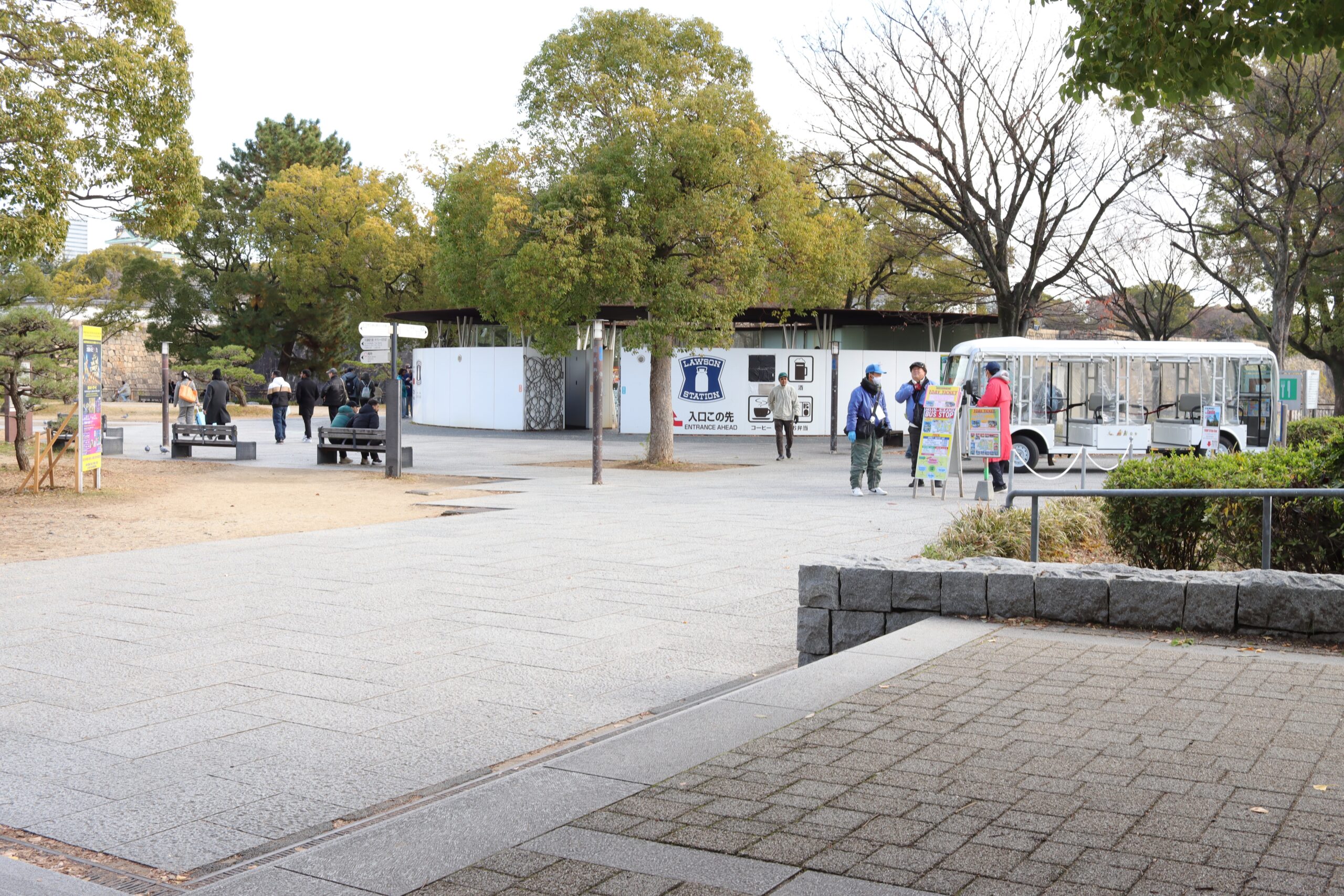
My recommended route to Osaka Castle starts from Tanimachi Yoncho-me Subway Station, where a 10-minute walk will get you to Osaka Castle Park, and you can enjoy watching the outer castle walls and lots of cherry trees. So, if you happen to visit Osaka Castle during spring, you may see a bunch of people enjoying cherry blossom-viewing parties under cherry trees—a custom deep-rooted in Japan where Japanese people show our true colors by having a drinking spree. It’s not illegal to drink outside in Japan, so some people immerse themselves in drinking in daylight or at night on holidays, but the cherry blossom season is the one when lots of people gather with friends or family members to appreciate the ephemeral beauty of cherry blossoms. Osaka Castle Park is by far the best place for a cherry blossom viewing party in Osaka.
A Pleasant Bus Ride
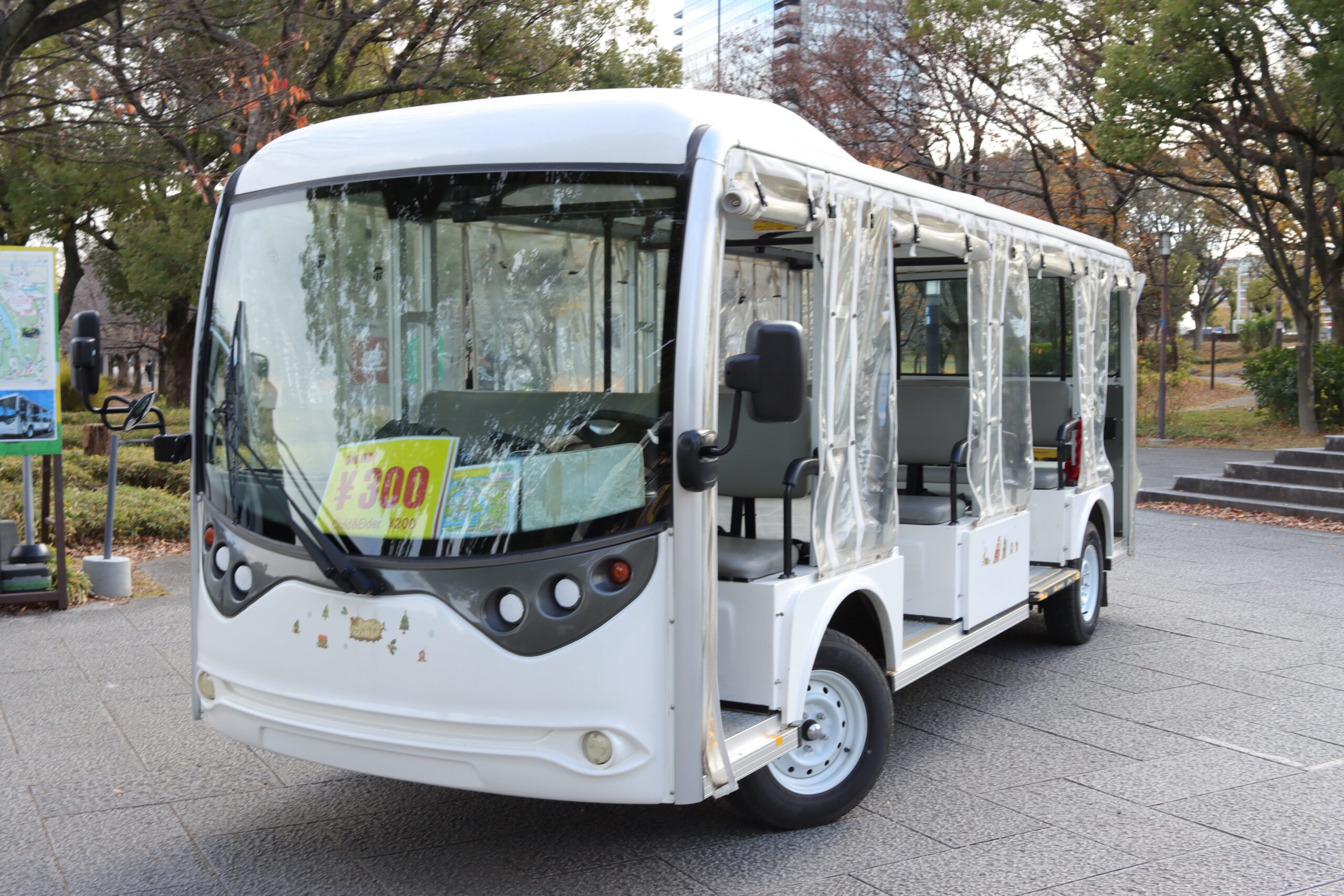
On arriving at Osaka Castle Park, you may soon find a bus, which will drive you around Osaka Castle Park. If you don’t have confidence in your stamina, I strongly recommend that you get on this bus. It’s efficient and cheap—you just pay only 300 yen to reach the front of the castle tower.
An awesome view that will clear us of any anxieties.
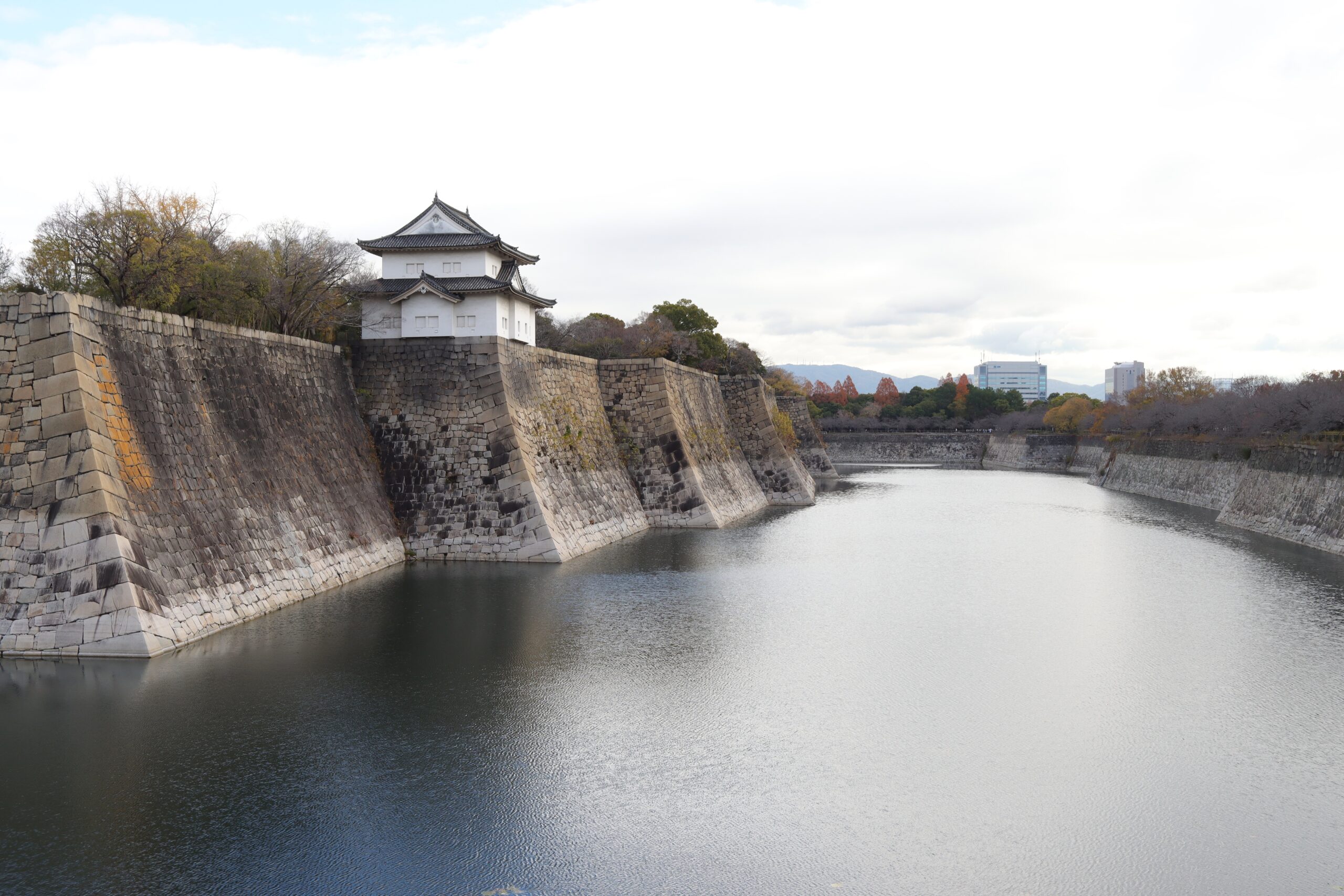
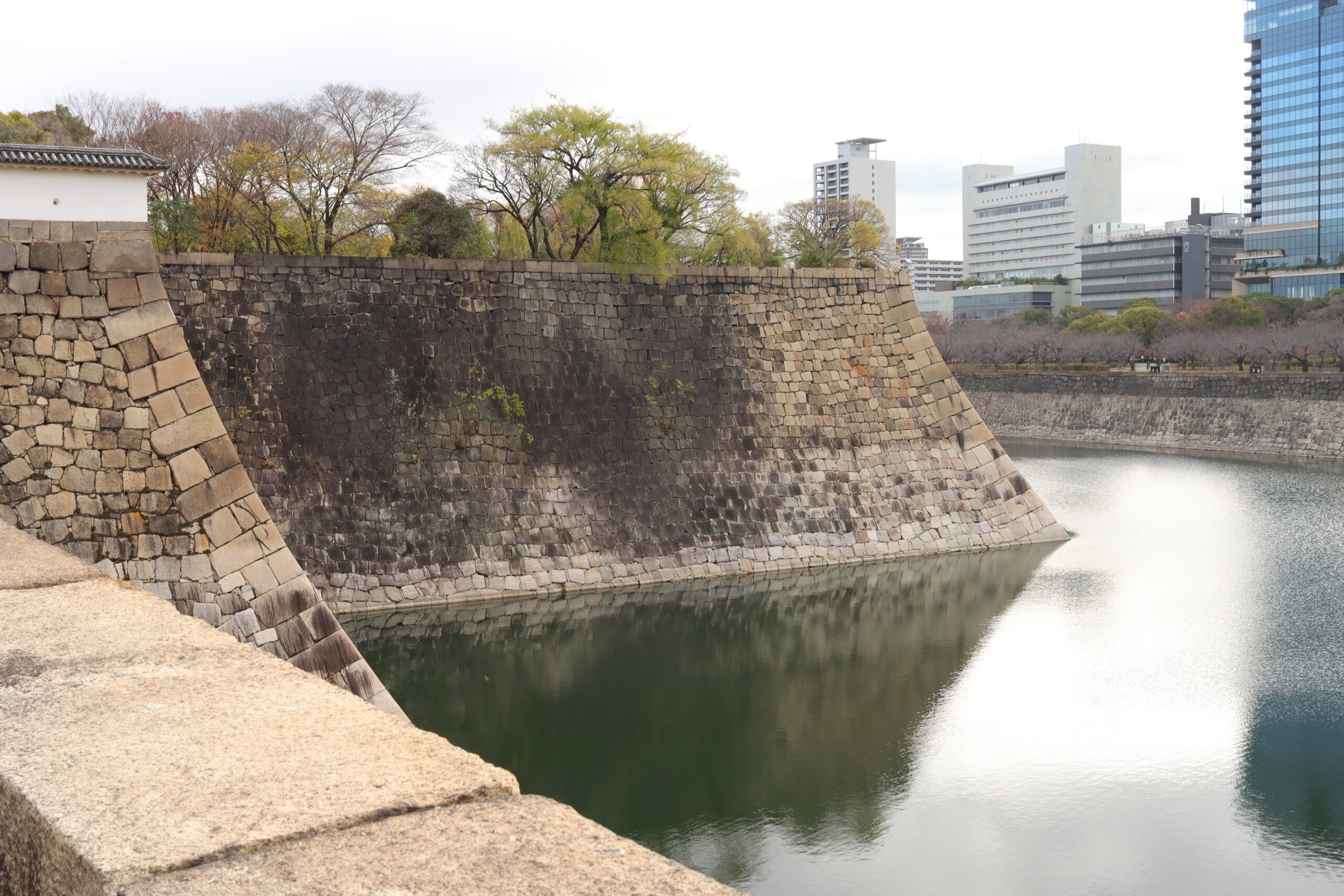
I assure you that the scenery observed from Osaka Castle Park is so beautiful that everyone will be touched and healed. I believe the scene at Roppon Yagura Turret, which is shown in the photo above, is among the best in this park. There used to be 7 turrets across the outer moat, but this Roppon Yagura Turret was speared from fire during the war, and thus it is registered as a national treasure.
So, what was Yagura for? Yagura was an important point because when enemies tried to invade the castle, the samurai shot arrows from the turret. The reason why they dug a ditch is so that it worked as an impenetrable fortress to prevent enemies’ intrusion into the castle compound.
I bet your stresses and anxieties will go away by just watching the scenery while catching the breeze.
The oldest Turret in Osaka Castle and amazing moats
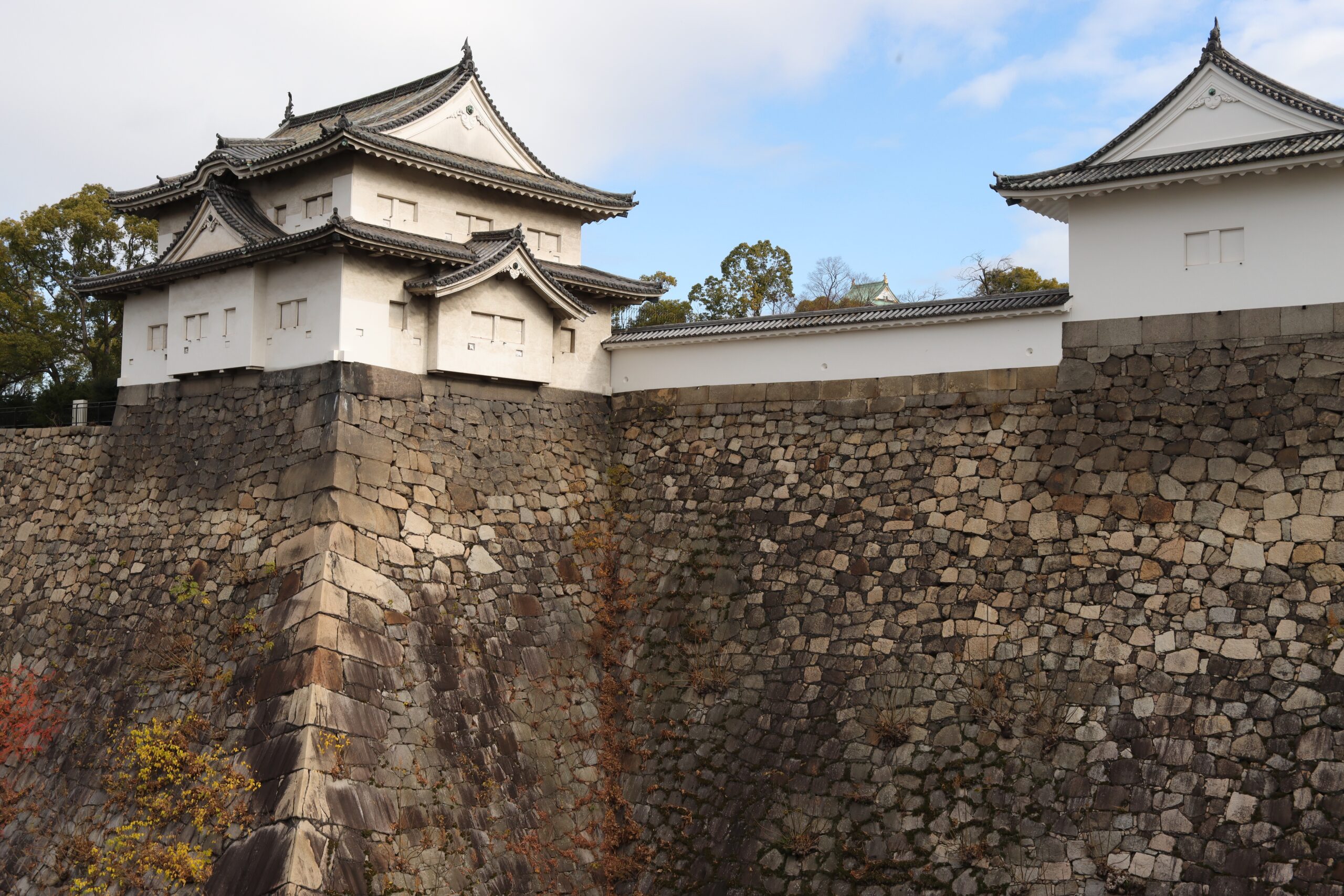
When you arrive at the main gate of this castle, you will find majestic turrets and walls. On the left is the Senkanyagura turret, which was constructed when the castle was built, and this turret is the oldest in Osaka Castle. Various devices were used to ward off enemies; samurai dropped stones and shot arrows from small spaces. In addition, contrary to a general image, they used firearms, which had been brought from Portugal.
As for walls, the left side wall is older than the right side wall, suggesting that the construction technique was greatly improved when the right side wall was constructed.
Looking closely and attentively at the difference between the right side wall and the left side wall will help you understand the technological advancement.
The pitch-black main gate
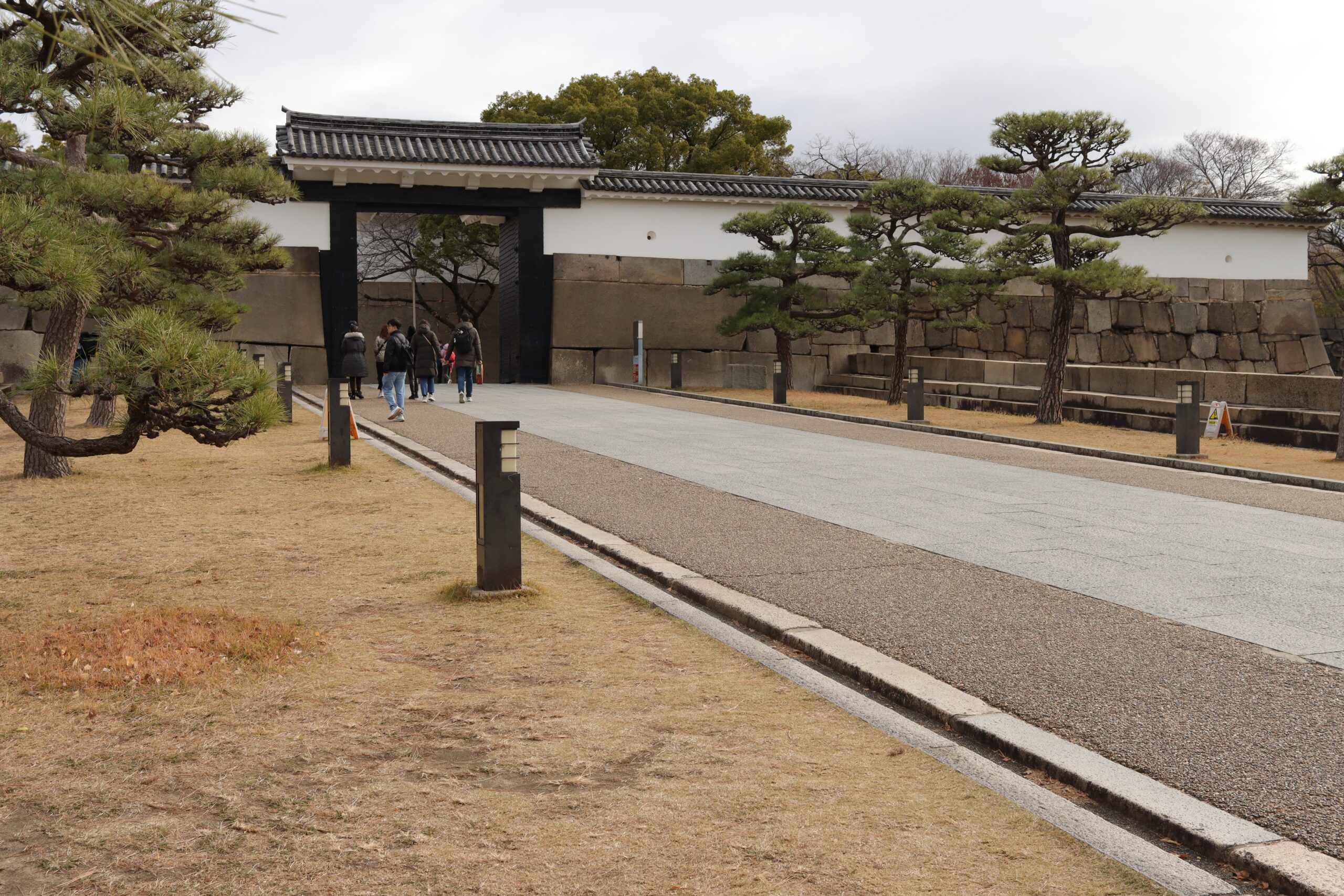
This black gate is now open every day, but during the shogunate periods, it opened only three times or so to welcome the shogun or a general. Normally, the gate was closed for safety.
Additionally, the pine trees on both sides of the street are beautiful and are considered auspicious—pine trees are a symbol of longevity, so that’s why old ladies and men sometimes touch them to get energy.
A spacious square, a place to annihilate enemies
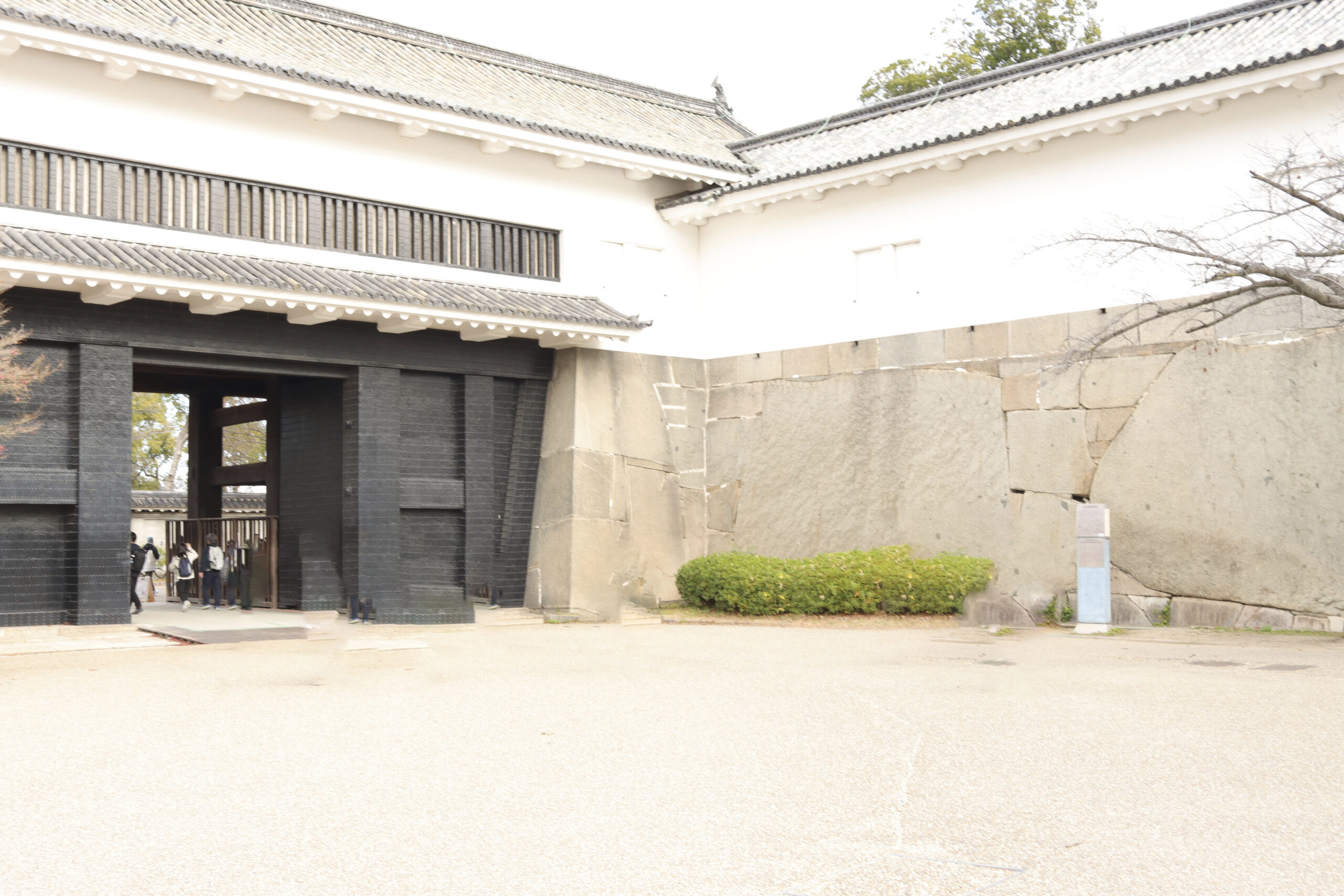
Even if enemies had broken the gate, they would have been bombarded with lots of spears, arrows, and firearms. The thing is that this place is a dead-end space, and in spite of the enemies’ effort to go straight ahead, their momentum would be totally worn off, because they need to turn left. They couldn’t advance due to huge stones in front of them.
huge stones guarding against enemies
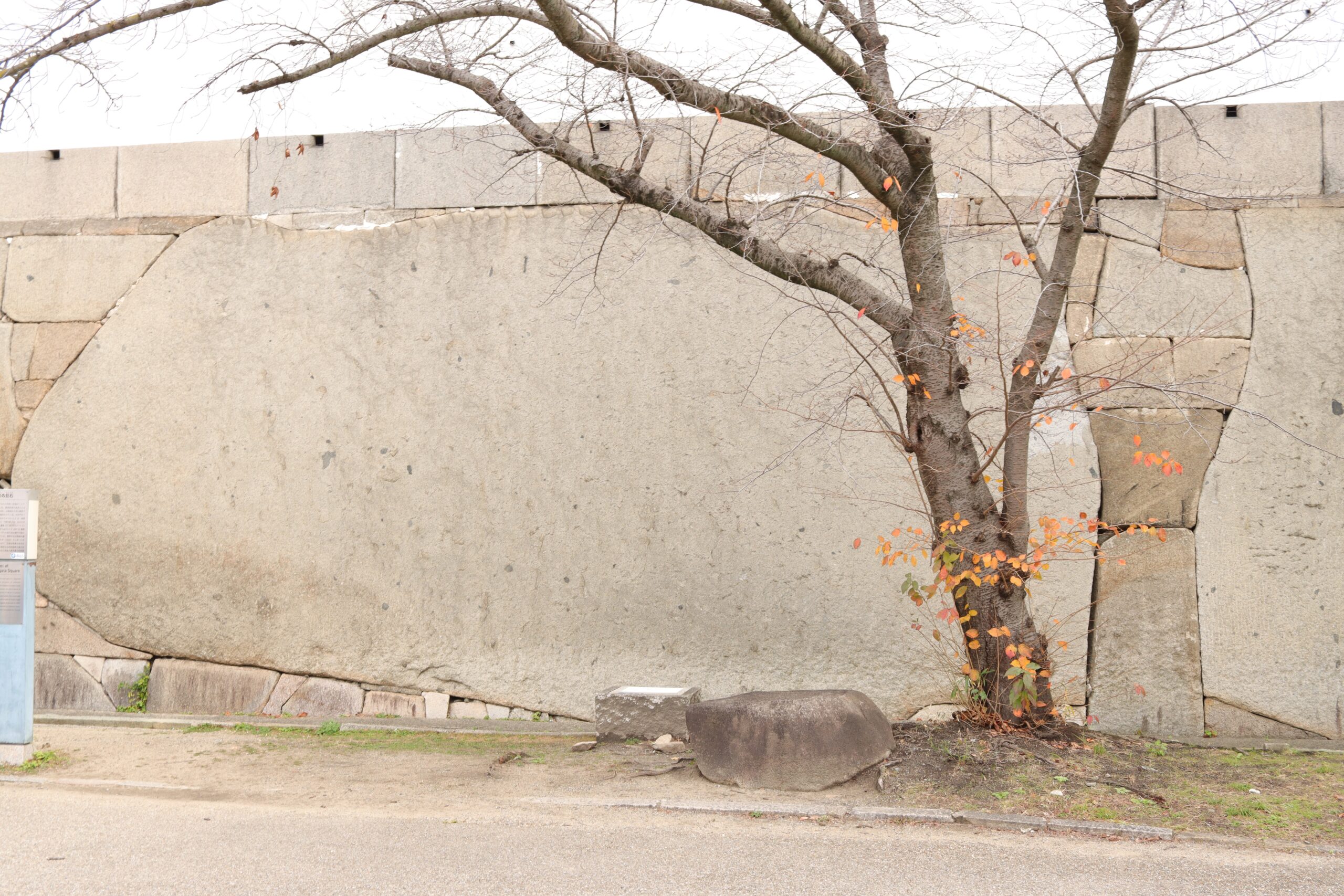
In the dead-end square, there are three huge stones that guard against enemies. You may wonder how these super-heavy stones were brought here. One theory holds that these gigantic stones were brought from an island miles away; they were split in half at the island and then loaded onto logs to be rolled to this place. Interestingly, lots of kelp were utilized to help make them easier to roll.
Personally, I’m skeptical about the theory, and I believe such a stunt could be beyond the power of human beings, so I guess aliens could have possibly been involved with the labor.
A strange rock, dubbed “Unfortunate stone.”
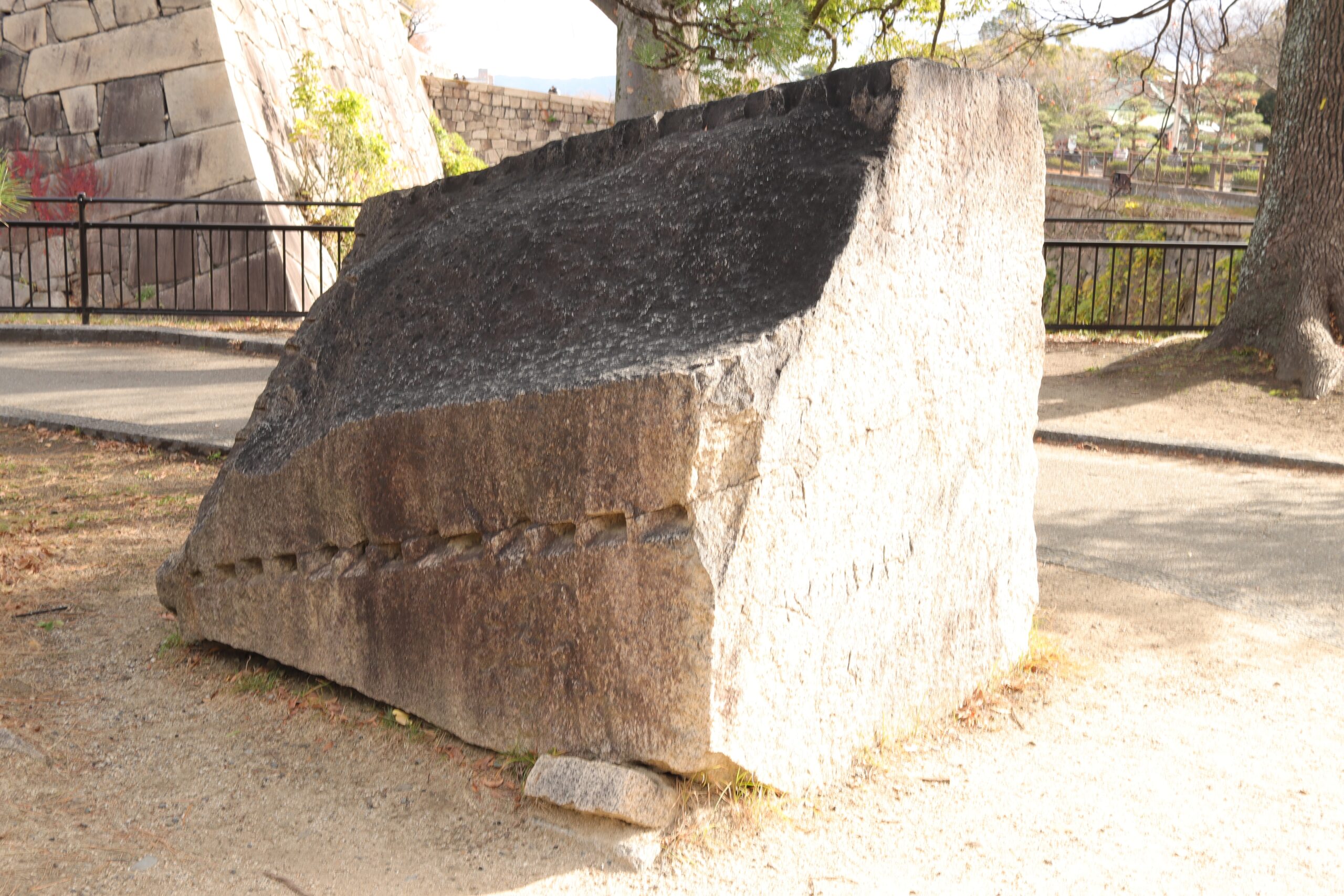
On your way to the castle tower, you will find a suspicious stone that is dubbed “Unfortunate stone.” You may well feel strange about it. The stone was supposed to have been inserted into the wall, but it seemed to have ended up as a failure.
If you look closely at the stone, you will notice some niches on it, so it’s possible that it couldn’t be split in half, leaving it whole. In my speculation, this stone is not a failure but an artwork left by one of the most elite stone masons—an intentional failure made by some of the great stone masons with a view to conveying a message to everyone who sees it: Failure is a stepping stone to success.
A superb Shinto Shrine, enshrining the founder of Osaka Castle

In Osaka Castle Park, there’s a Shinto Shrine enshrining the founder of Osaka Castle, Toyotomi Hideyoshi. This Shinto Shrine is beneficial for business promotion and building a good connection.
Toyotomi Hideyoshi got ahead by leaps and bounds under the auspices of Oda Nobunaga, who was about to unify Japan during the warring states period. Hideyoshi had a great set of people skills and had a peasant background. Here’s a short anecdote of why he rose to success: Toyotomi Hideyoshi used a strategy to curry favor with Oda Nobunaga. Hideyoshi warmed up Nobunaga’s rush grass sandals, holding Nobunaga’s sandals to his chest early in the morning in the cold winter before Nobunaga went out to town. Such an expression of loyalty was received well by Nobunaga, leading up to Hideyoshi’s huge promotion. From then on, the master cherished the ex-farmer samurai.
I bet such thoughtfulness and strategy are applicable even now for business people to survive.
Sakuramon Gate, one of the important cultural properties in this castle
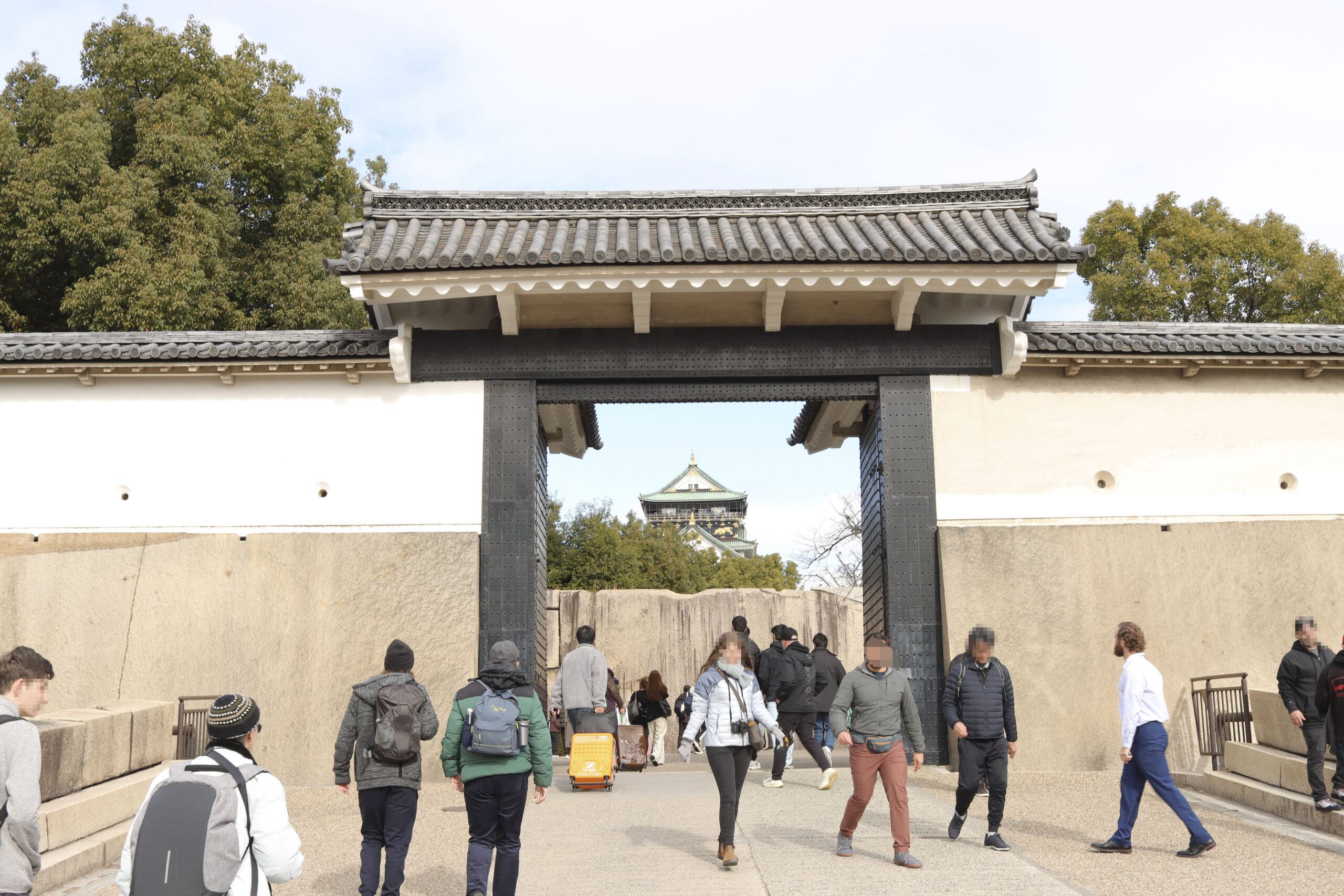
This gate is the final gate to the donjon and one of the important cultural properties in this castle. It is speculated to have been constructed in 1624, but remains to be proven. Until the Tokugawa shogunate, which established Edo, present-day Tokyo, attacked and destroyed Osaka Castle, this gate had been impregnable. The holes in the gate wall were for shooting firearms, just in case.
The huge gate wall on the right is associated with a white tiger; on the left is associated with a blue dragon—they are imaginary creatures who protect the west side and the east side, respectively.
The largest stone in Osaka Castle is dubbed “Octopus Stone.”
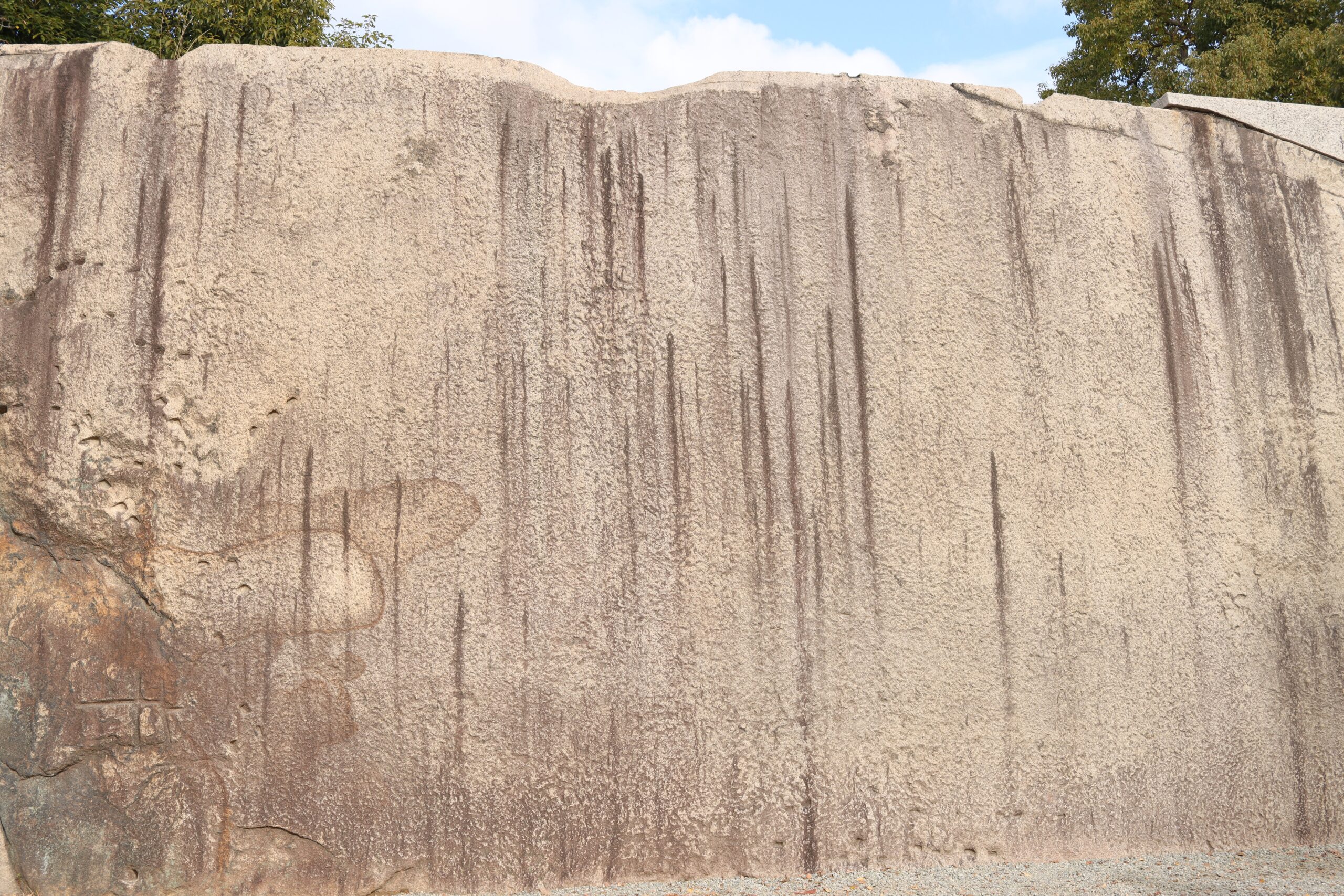
Before reaching the majestic castle tower, you will be amazed by the huge stone, which is among the largest in Osaka Castle. There are about a million smaller stones in the compound. The stone is dubbed “Octopus Stone” because of its stains on the lower left corner of the stone. Measuring 59.43㎡ and 5.5 meters in height, this huge granite stone was brought here from Inu Island in the Seto Inland Sea, miles away from Osaka Castle.
The purpose of placing this stone was to exhibit the power and authority of the shogun. It can easily be imagined that visitors to this castle may have been overwhelmed by its sheer size and couldn’t help but obey.
An entertainment facility, MIRAIZA
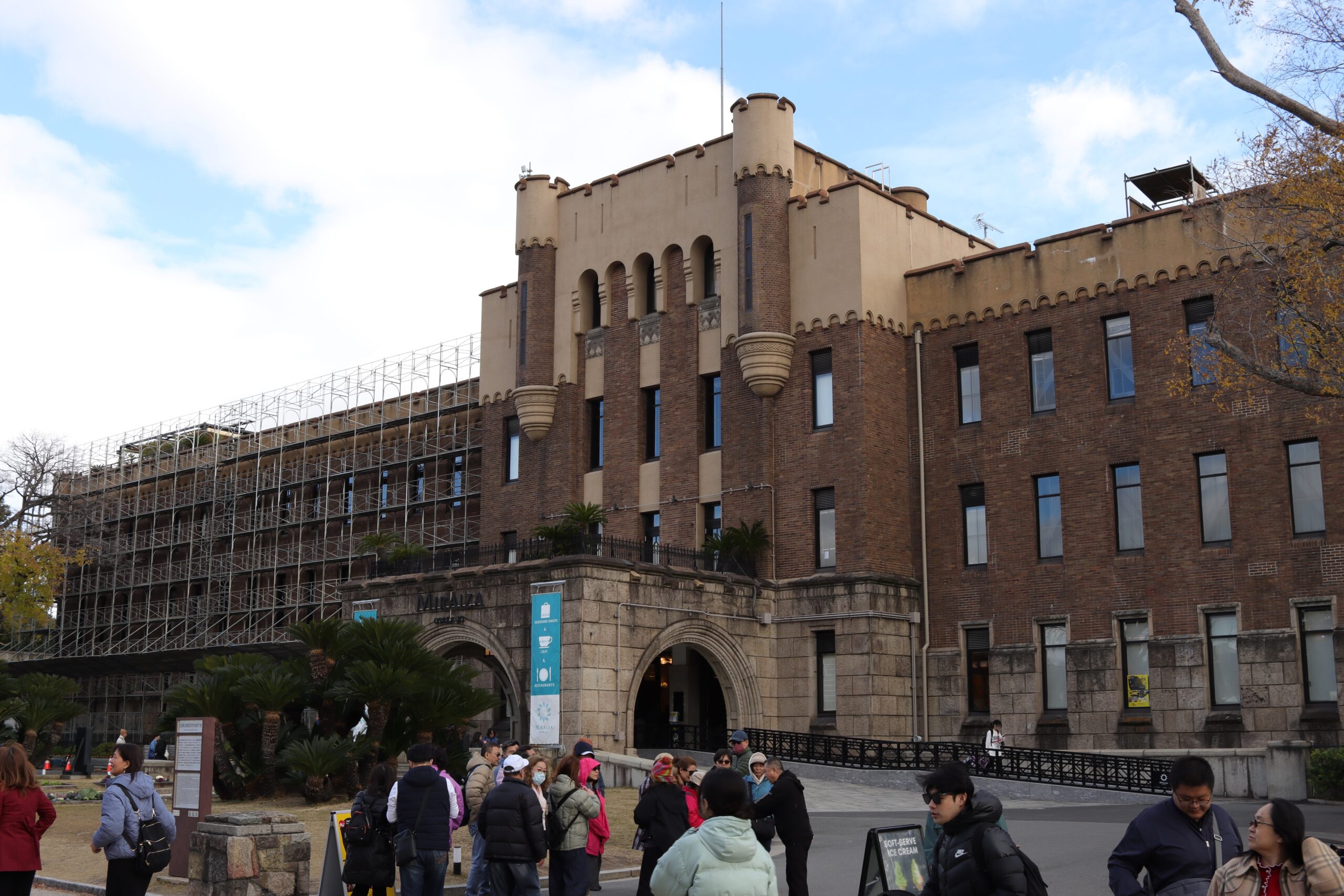
On the right of Osaka Castle tower stands MIRAIZA, which houses restaurants, cafes, and a souvenir shop. This rigid structure was constructed in 1931 and used to be a military base during the Second World War. The exterior was modeled after a medieval castle in Europe. After the war, this building was utilized as the headquarters of the Osaka police offices.
If you visit Osaka Castle in summer, this facility may be a great place to take a break from the heat.
Osaka Castle Tower stands still against a blue sky
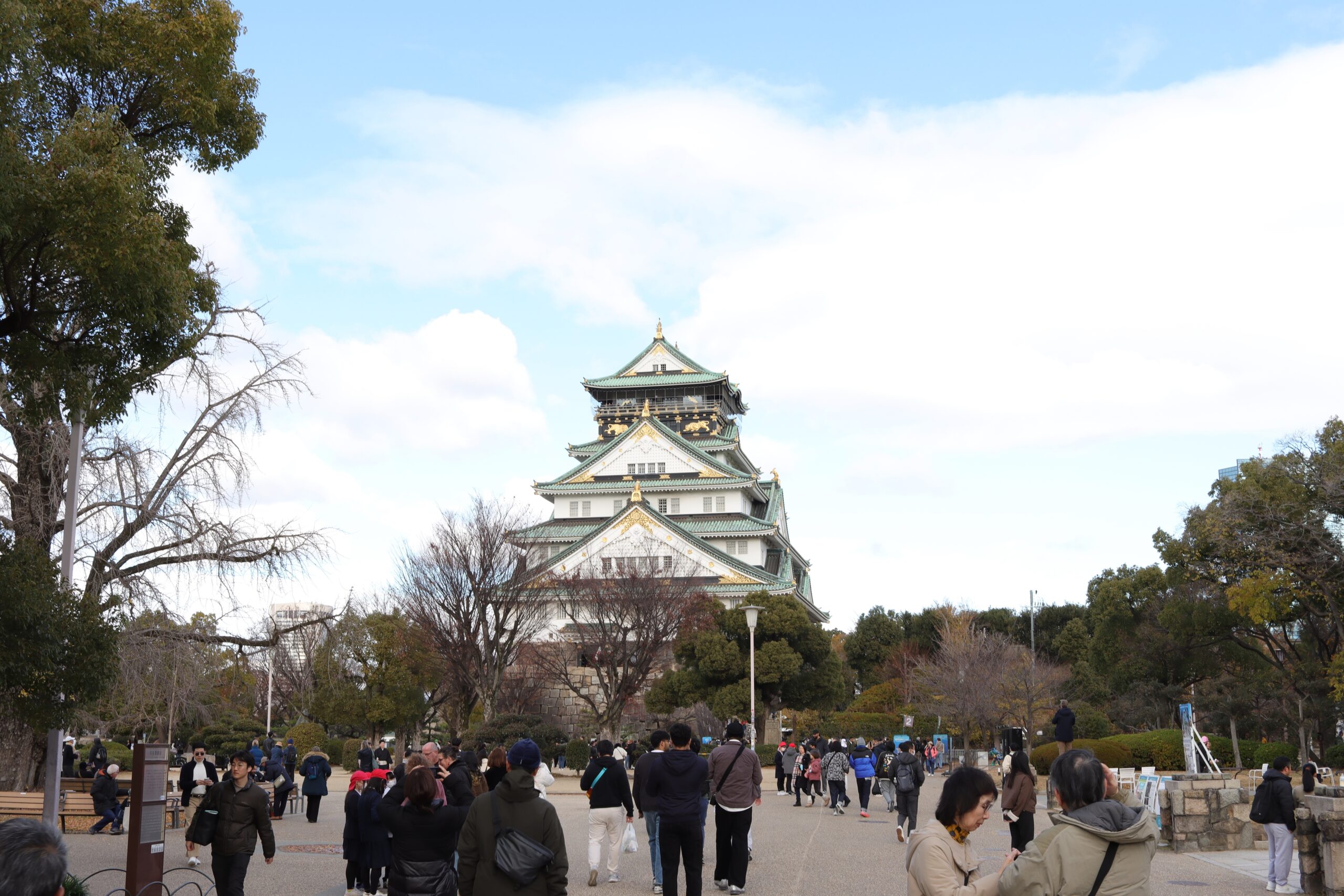
Finally, you will arrive at Osaka Castle Tower, which has 5 layers outside and 8 stories inside. The castle tower is adorned with gold fish-like ornaments, which represent fire prevention. Samurai imagined this way: The castle is nestled on the sea floor, thanks to the fish-like ornaments. This type of imagination is derived from Buddhist structures, where fish-tail gold ornaments are attached at the ridge-end.
The history of this castle can be divided into three stages. Here is a brief explanation of each stage.
Stage 1: The origin of this castle dates back to the 15th century, when a temple called “Ishiyamahonganji Temple” stood in the same location. The strongest warlord at that time, named Oda Nobunaga, frowned on Buddhist monks who armed themselves and wielded military power. Then, he came to turn against the militarized Buddhist monks belonging to the temple. The battle between Oda and the temple lasted about 10 years and completely devastated the temple compounds.
Toyotomi Hideyoshi, who got ahead through the backing of Oda Nobunaga, constructed a castle after Nobunaga’s death, which served as his residence with a view to governing the nation by setting up a castle town nearby because Osaka would likely thrive as a major city.
Stage 2: After the death of Toyotomi Hideyoshi, Tokugawa Ieyasu destroyed the castle because he deemed the castle as an obstacle to unifying the nation. But the castle was so robust that it took several months to completely destroy it.
Following its destruction, Tokugawa Hidetada, the second general of the Tokugawa shogunate, ordered the reconstruction of the castle and for it to be larger than the original because a bigger castle than the original Osaka Castle would showcase the advent of the Edo period, ushered in by the Tokugawa family.
Unfortunately, though the second generation of Osaka Castle thrived, maintained by the Tokugawa family, the castle was demolished when Tokugawa Yoshinobu, who was the 15th general of the Tokugawa shogunate, was defeated in the battle of Tobafushimi in 1868.
Stage 3: In the Meiji Period, the ruins of the castle were turned into an army site under the new Meiji government with an emperor at its head. During this time, many valuable structures, including watchtowers and treasure houses, were utilized for military purposes.
In 1928, when the 7th mayor of Osaka City proposed the reconstruction project of Osaka Castle, the offer of millions of donations came along. In 1931, the third generation of Osaka Castle was constructed, employing a ferroconcrete construction, which was the state-of-the-art technique at that time.
Farewell to Osaka Castle Tower at the Heavenly Bridge
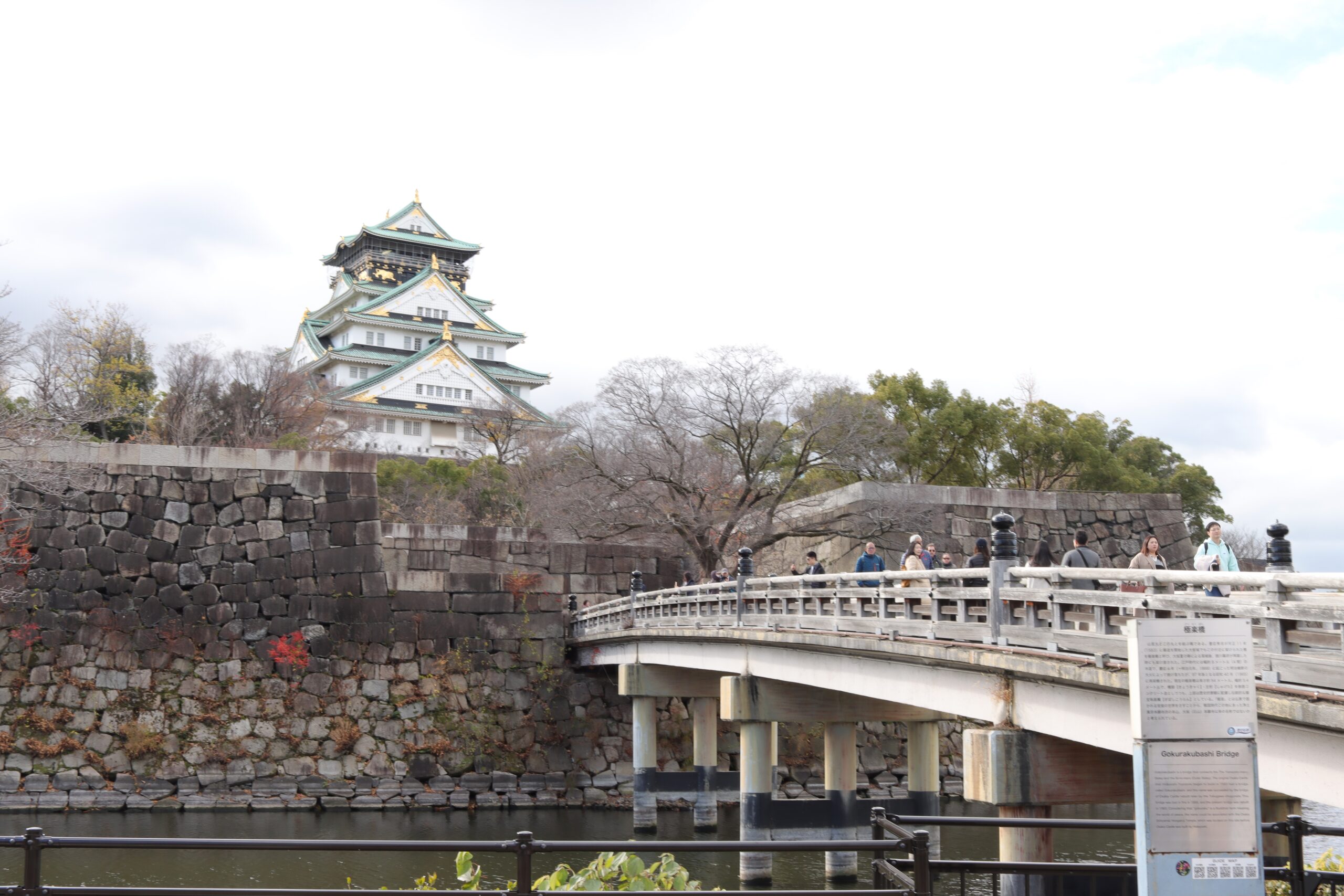
After you leave Osaka Castle Tower, you will come to a bridge called “The Heavenly Bridge,” which was reconstructed in 1965. This bridge is the representation of the Pure Land in Buddhism, which is considered to be heaven or paradise in Buddhism. The reason for the name could possibly be because a temple existed before the construction of Osaka Castle.
I believe this place is one of the great spots in this castle to take memorable photos.
Don’t forget to get on a luxury boat.
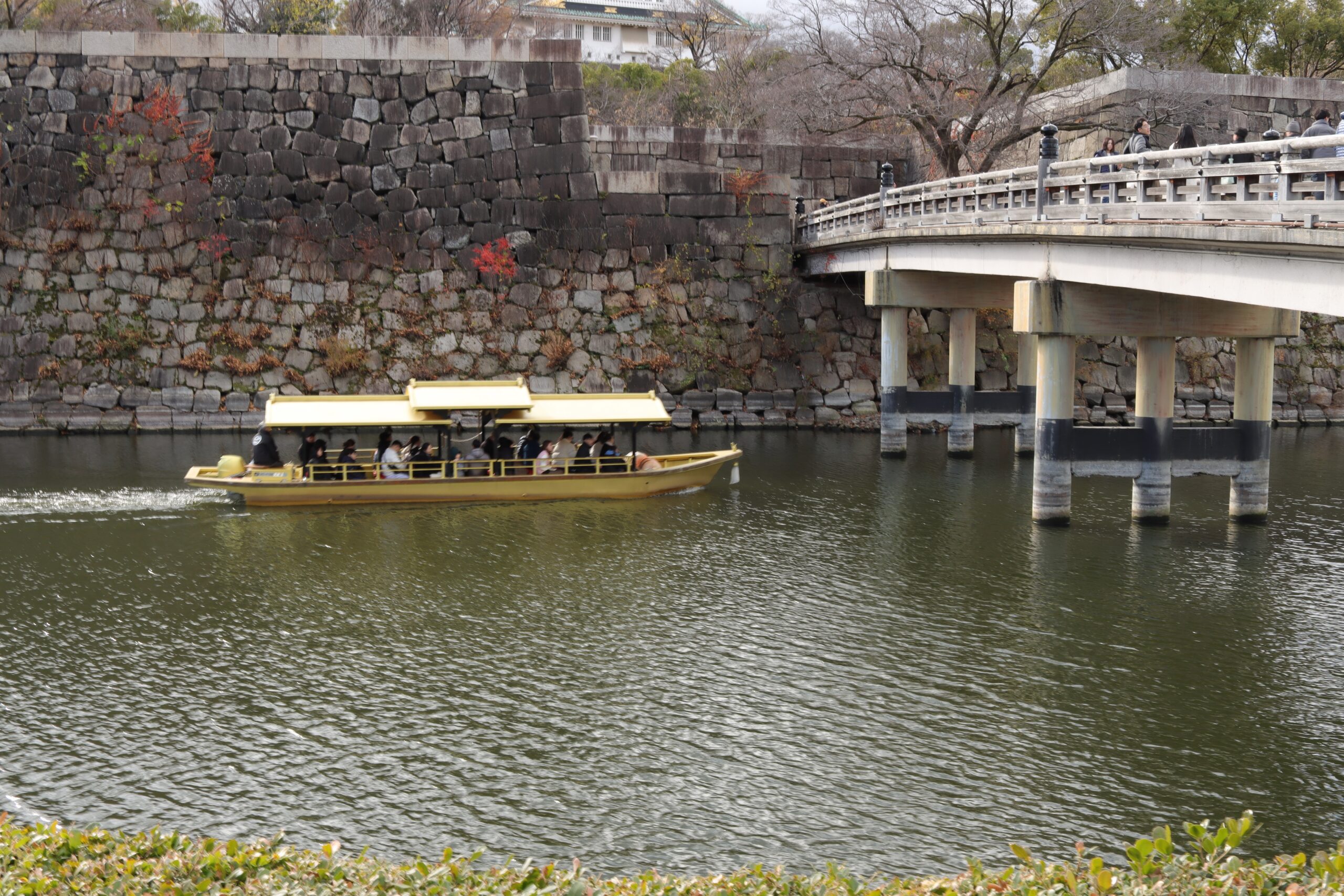
If you feel reluctant to leave Osaka Castle, I strongly recommend you get on a luxury boat, which takes you around the moat in 20 minutes. This boat is called “Gozabune” and used to be exclusive for emperors, shoguns, and warlords to ride in.
The fare is 1,500 yen for an adult and 750 yen for elementary and junior-high school students. Of course, it’s free of charge for infants.
Why not enjoy having a boat ride experience that may make you feel as if you have become an important person.