 Merry Japan Tours
BLOG
A Traditional Paper Fan from Kyoto
Rakufuan Shiomi, one of the giants of traditional paper fan companies in Kyoto, offers a hands-on experience, where we can make our own Kyoto-Fan! There’s more to the paper fan than meets the eye; it has a long history and pride. The origin of the Kyoto-Fan dates back to the 14th century, when Japanese pirates, who were active near the Korean Peninsula, brought back Korean fans to Japan.
After all the twists and turns, Kyoto-Fans were favoured by aristocrats in Kyoto, leading to the flowering of paper fans with colorful designs. What’s worth noting here is that during the Edo period, famous artists drew pictures on paper fans, letting them ascend to works of art. Because of this, Kyoto fans were even utilized as souvenirs from the Imperial Palace in Kyoto!
So, it can safely be said that a Kyoto fan is not a mere tool for cooling us off, but a legacy that Japanese ancestors handed down to us.
Contents
A two-minute walk from Ono Station will take you to the workshop.

The workshop is located in Yamashina Ward, Kyoto, which is a bit far from the Gion district, so I recommend you take a taxi or a subway to get here. When you get off the train and get out of the station, you will soon find a white building. That’s Shiomidansen, the company that runs this workshop.
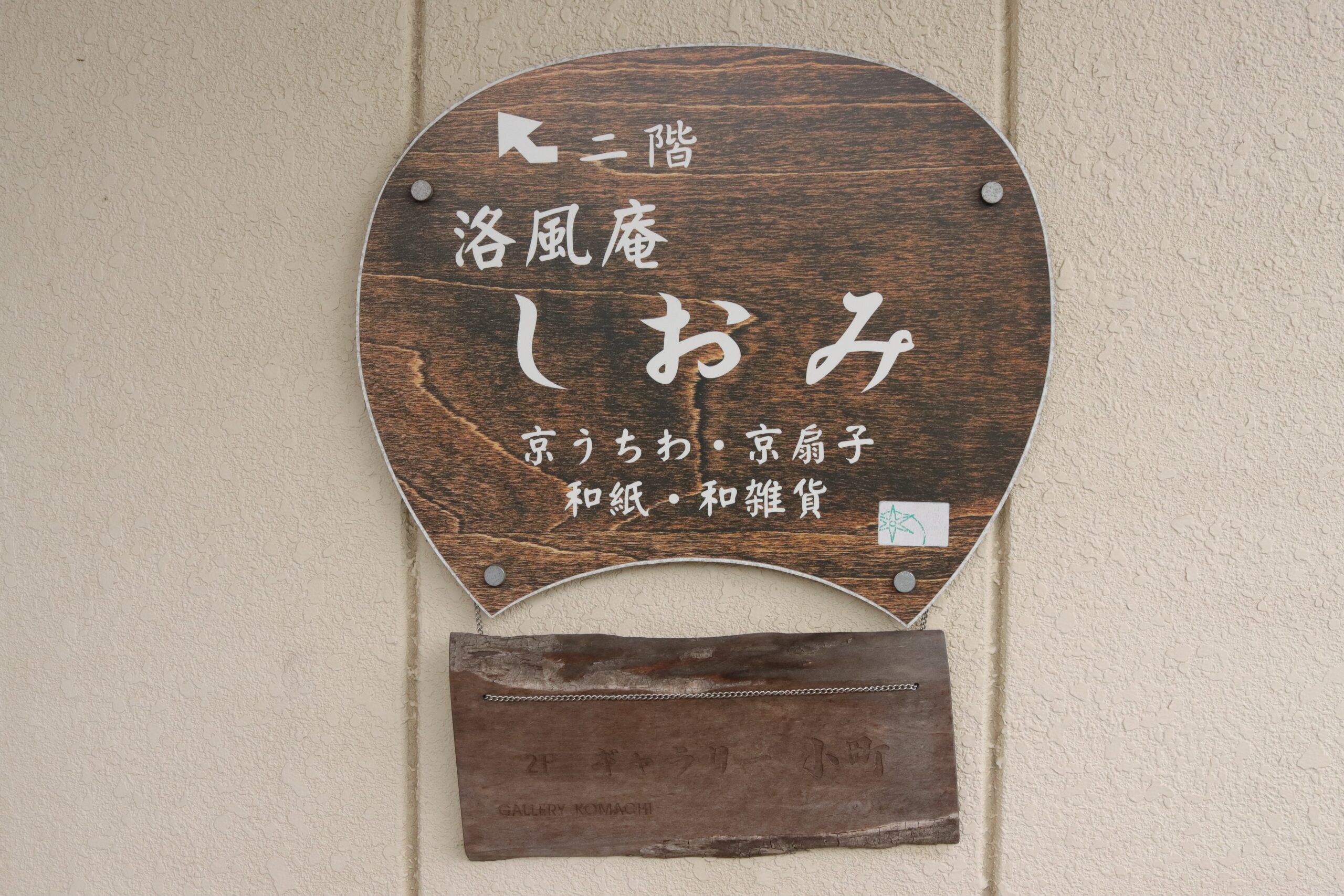
Upon arriving at the company, you will find a signboard as seen in the picture below. The workshop is on the second floor.
The second floor has a shop space, an office, and a workshop. There’s a corner where you can purchase a Kyoto fan as a souvenir. Kyoto fans come in lots of sizes and designs, so it’s a lot of fun to browse the shop before the experience. I assure you that you can come across your favorite one.

One of the Kyoto fans that attracted my attention was the one with a painting of a beautiful lady in the Edo period. This painting is derived from an Ukiyo-e woodblock print, and the artist is Kitagawa Utamaro, a renowned Ukiyo-e artist in the Edo period.

Let’s create your own traditional paper fan!
The workshop is a spacious room, adorned with several Kyoto fans. A nice shop clerk is always at hand during the experience to give you a lecture on Kyoto funs and how to make them.
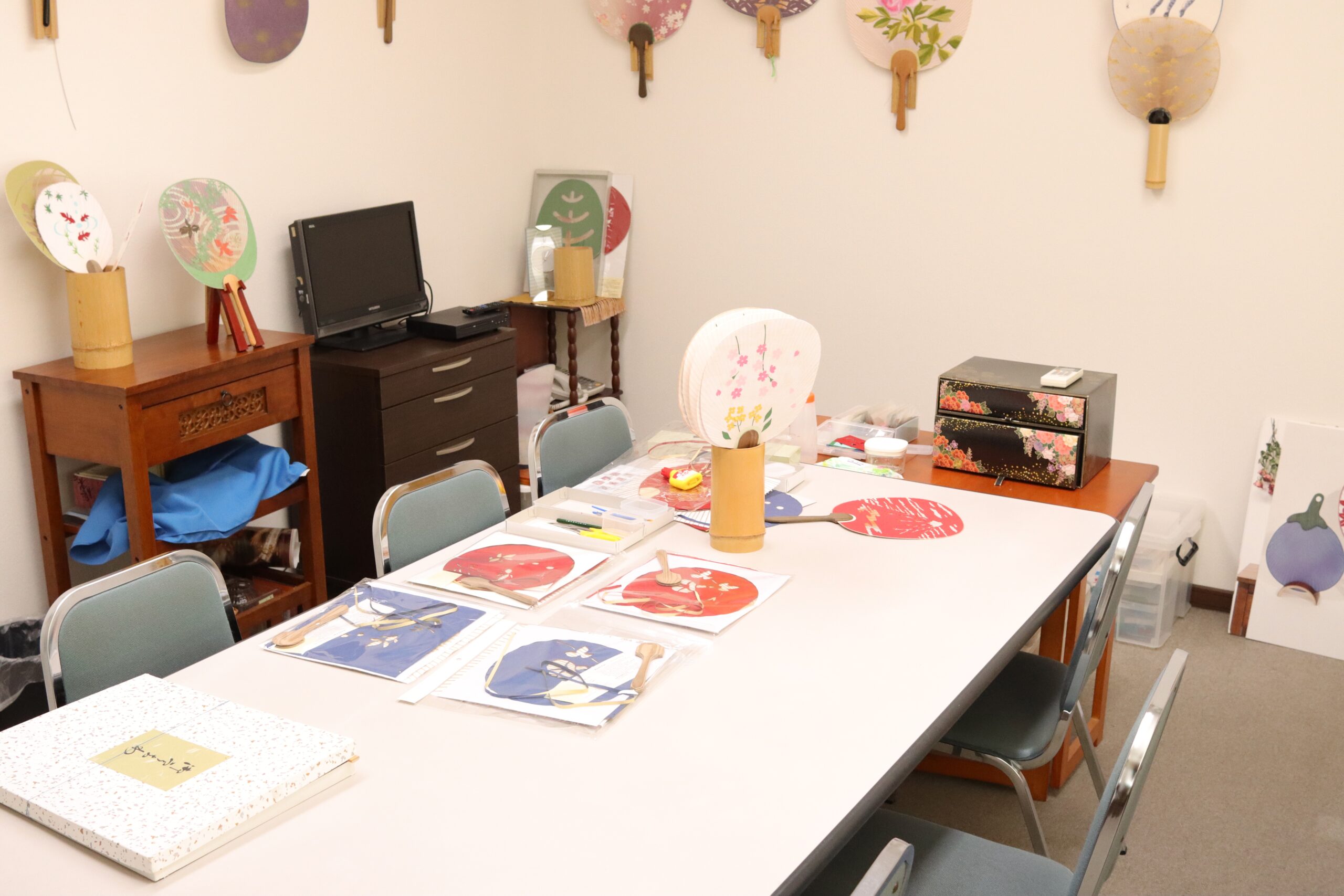
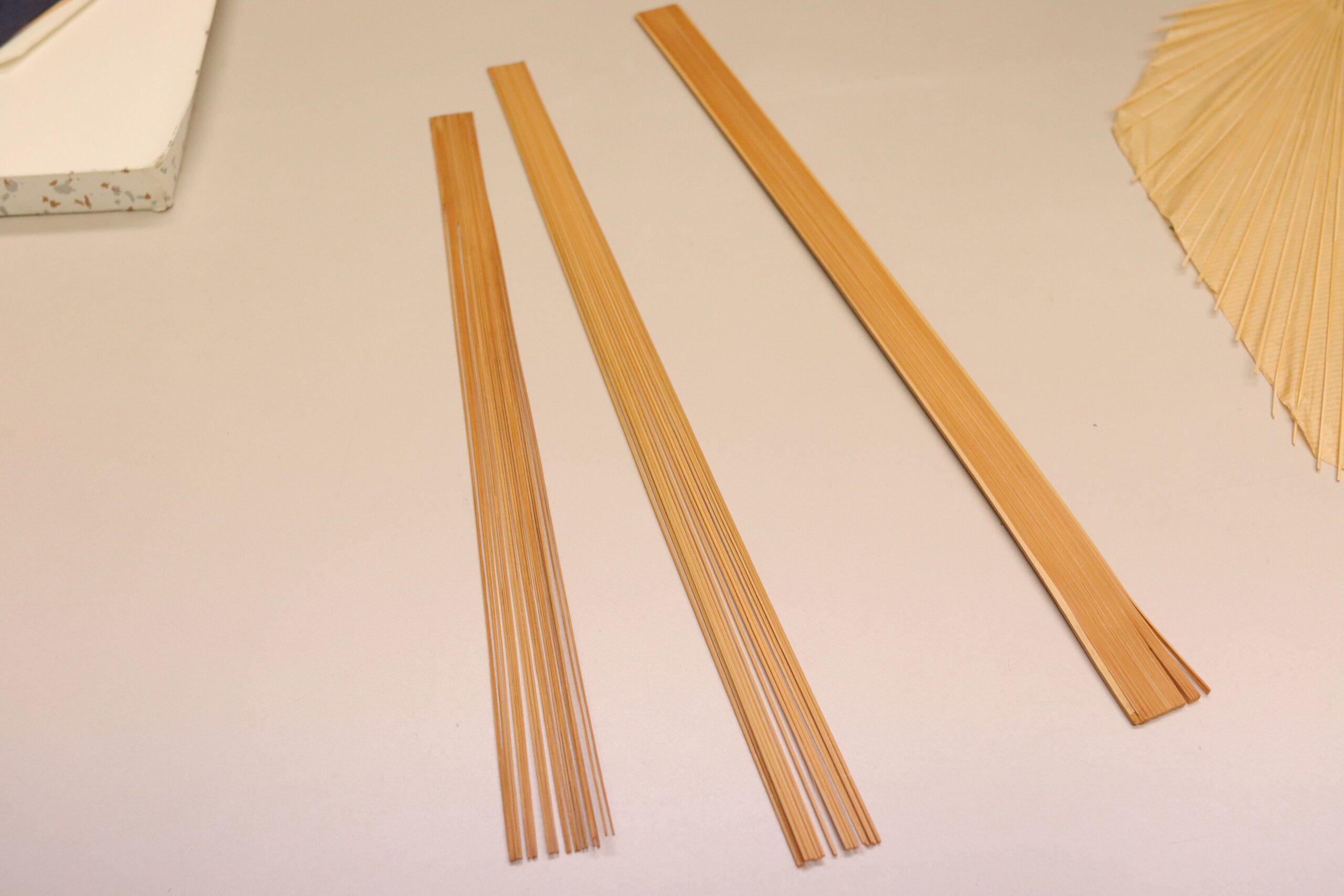
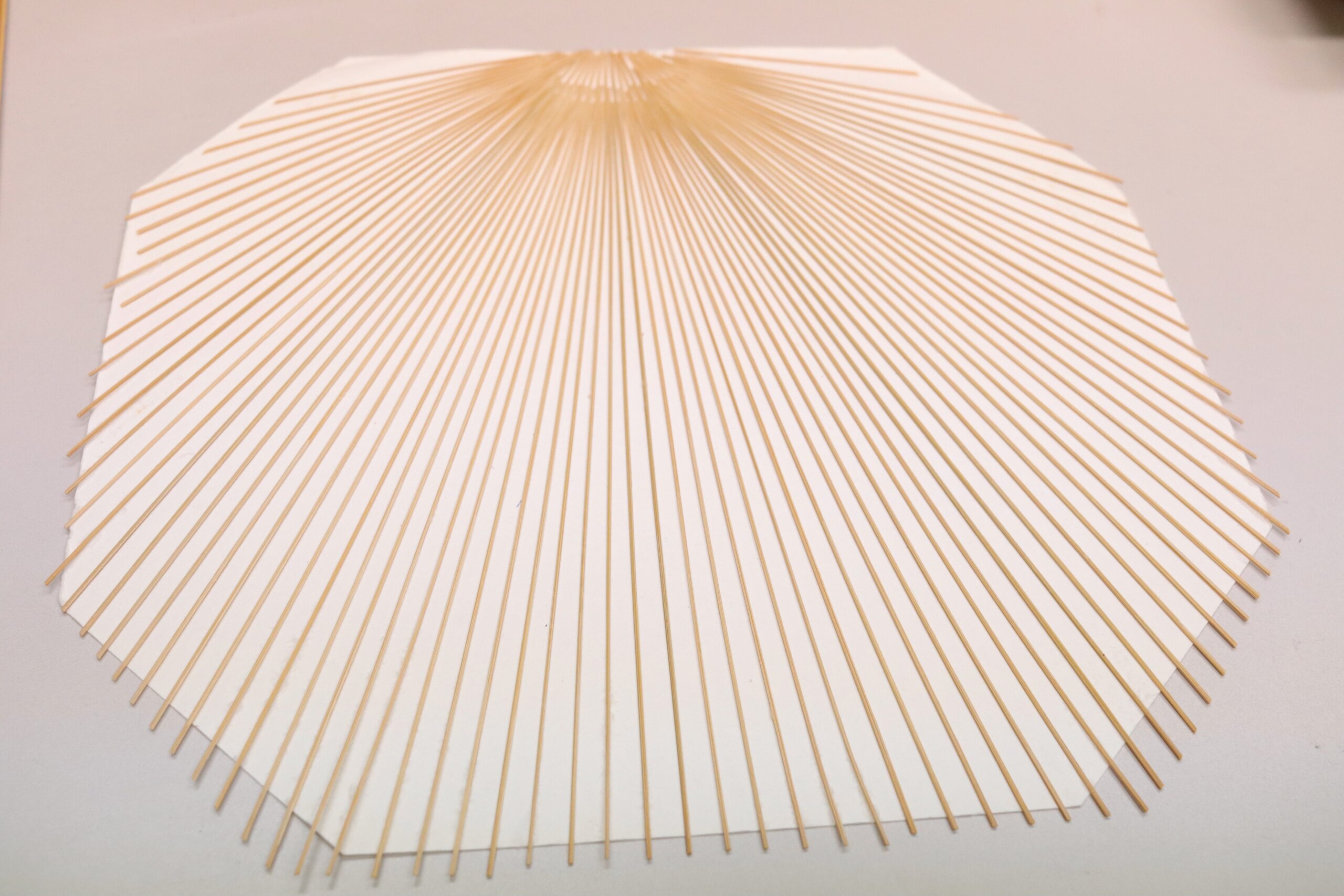
The shop clerk told me the process of making a Kyoto fun. First and foremost, qualified bamboo frames are essential in making a high-quality Kyoto fan. The bamboo is slit into smaller strips, and the strips are placed radially.
Then, paper is pasted onto the bamboo frames. This process requires a period of dying, for a couple of days, so the actual experience I had didn’t involve this task.
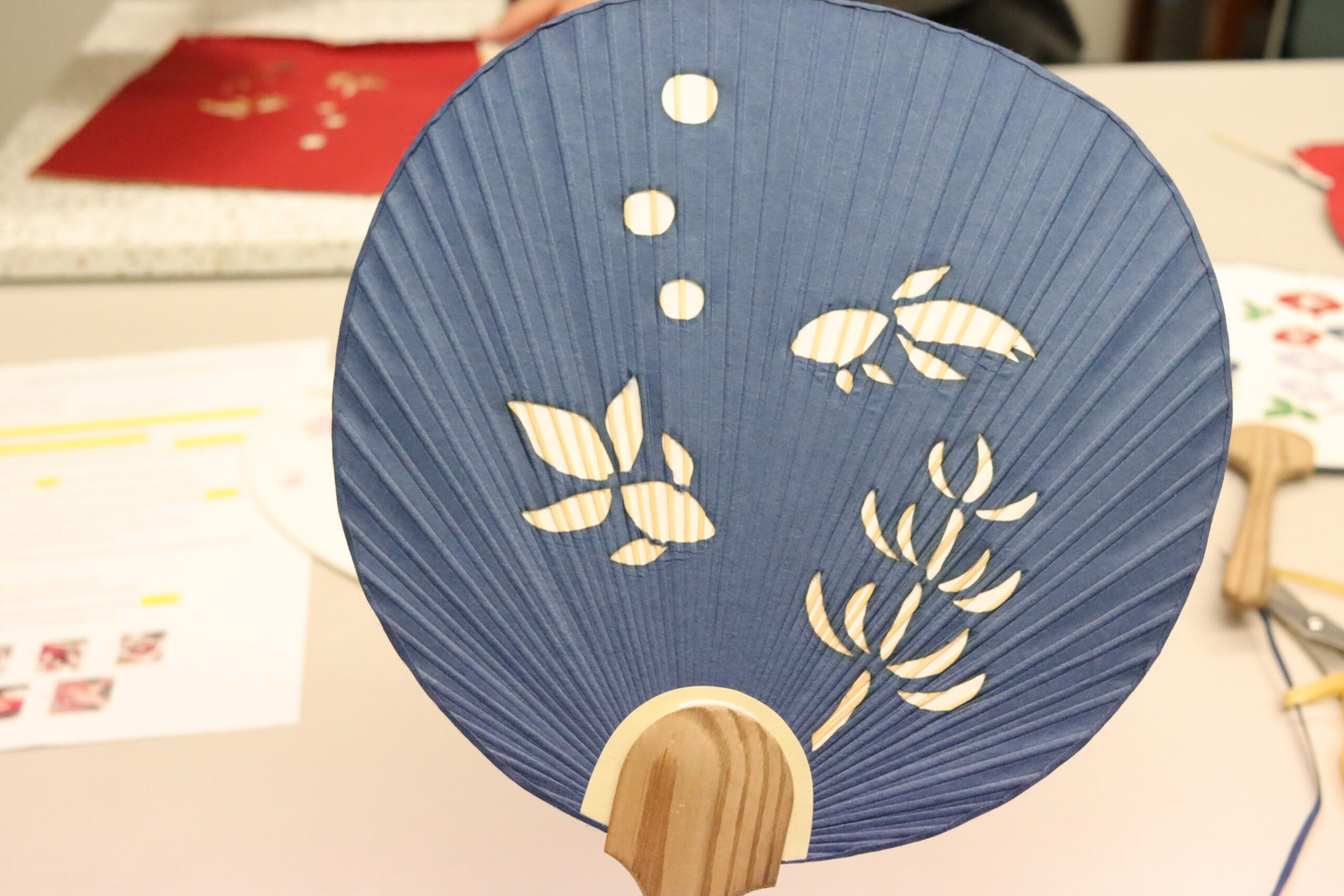
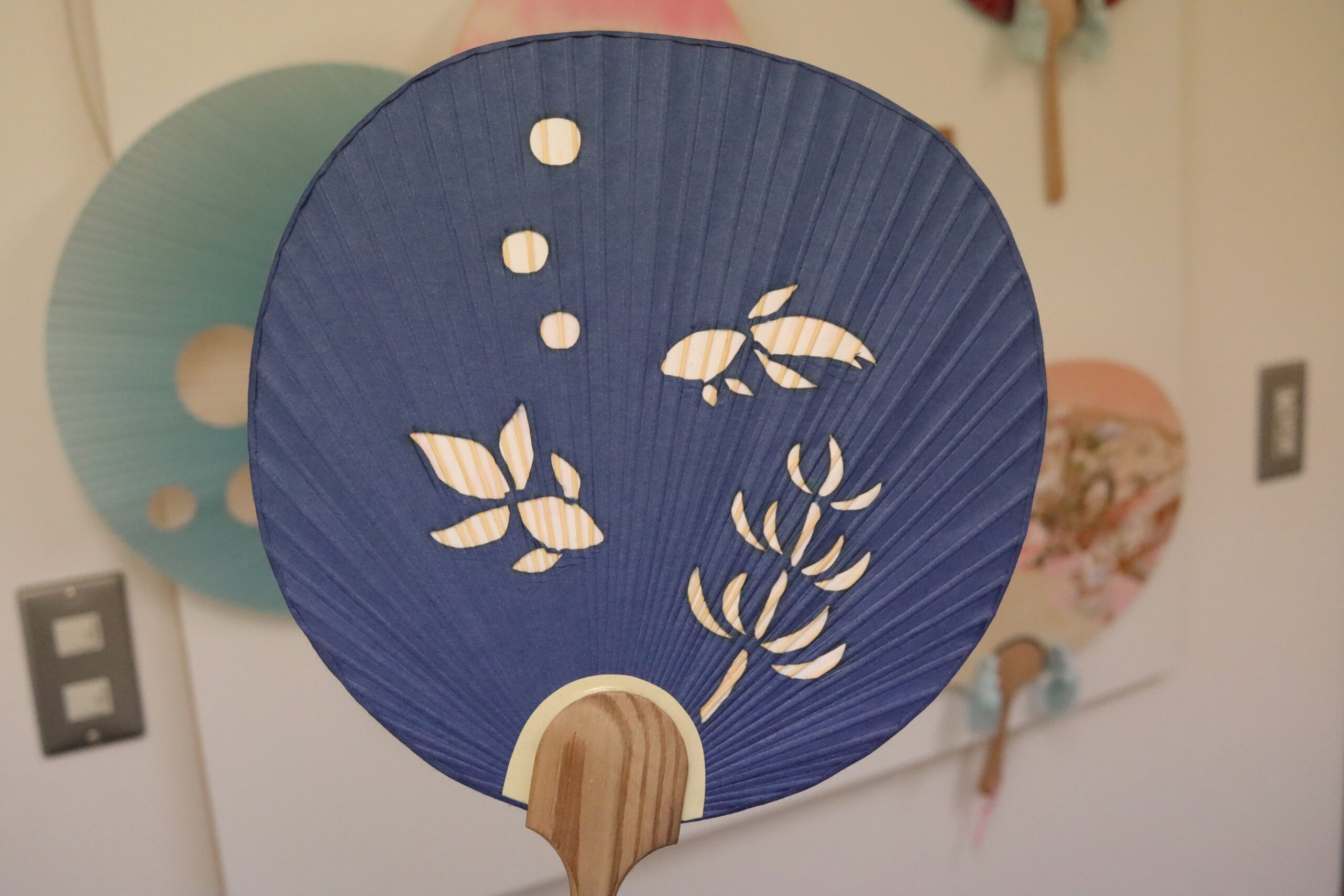
Now, a set for making a Kyoto- fan is prepared on the table. You can choose the color and the motif. This time, I chose blue paper with a motif of gold fish.
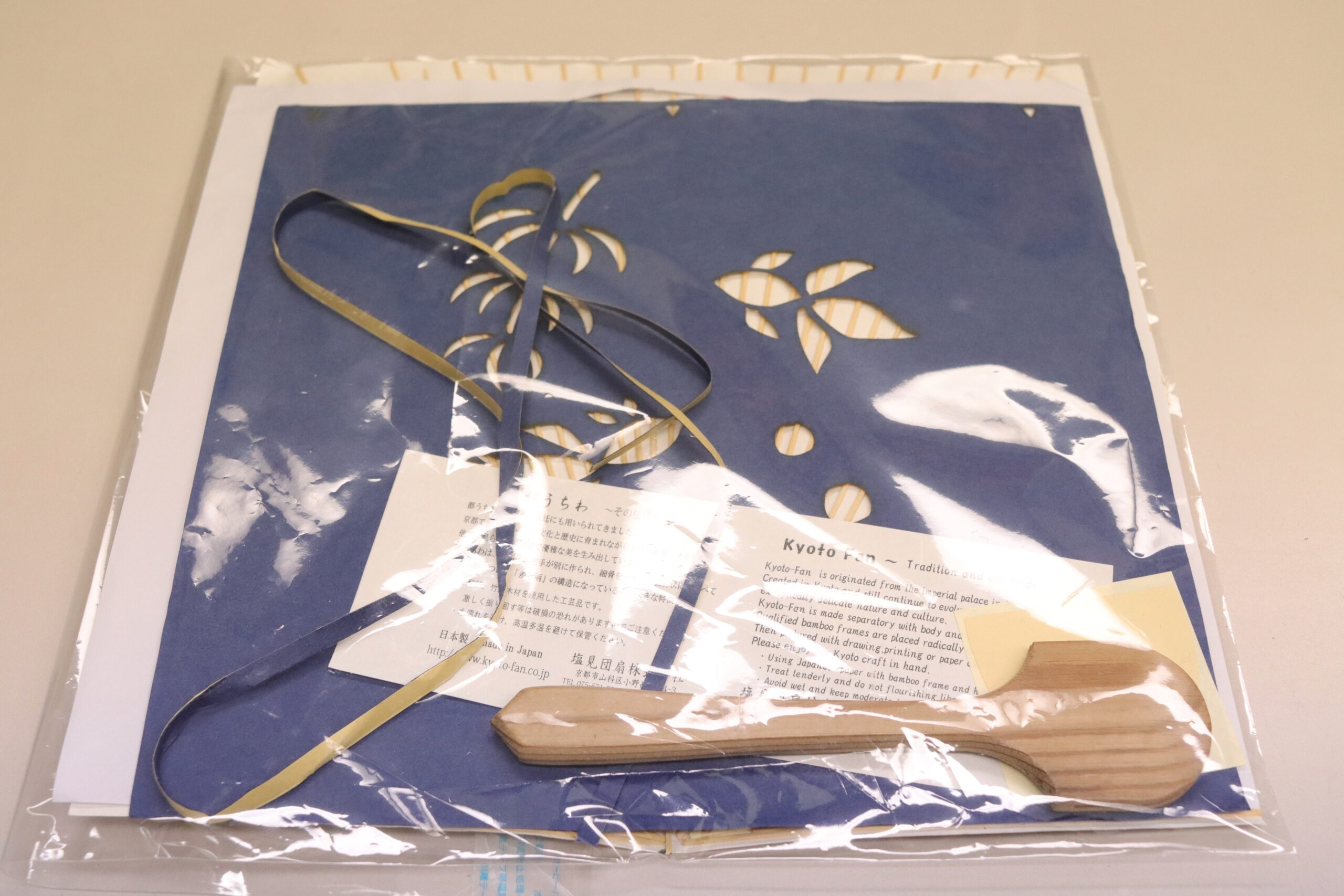
Firstly, I needed to put the triangle point of the paper toward my body. This triangle suggests the right direction of the paper.
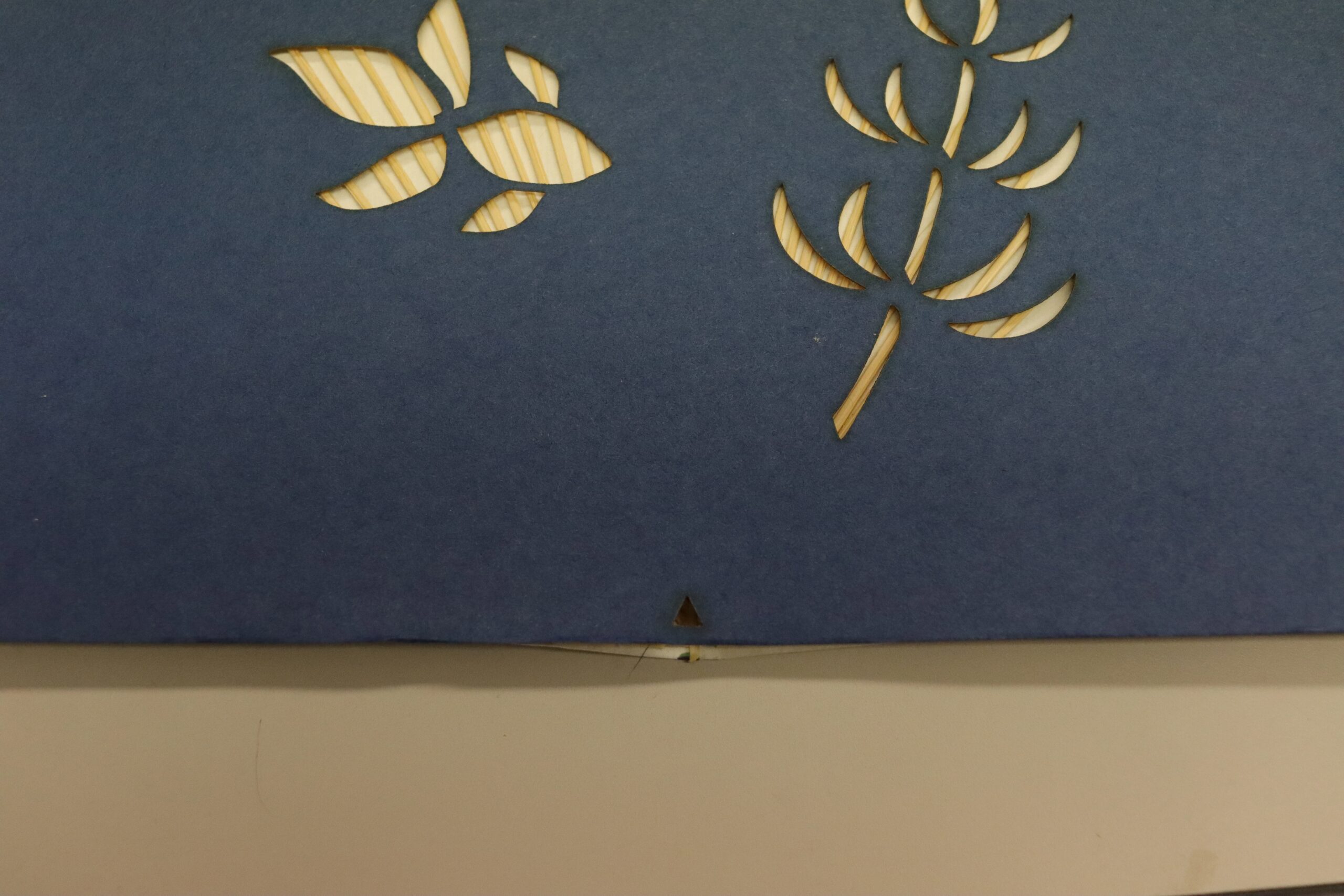
Next, I turned the paper around and peeled off the protective film up to a third point.
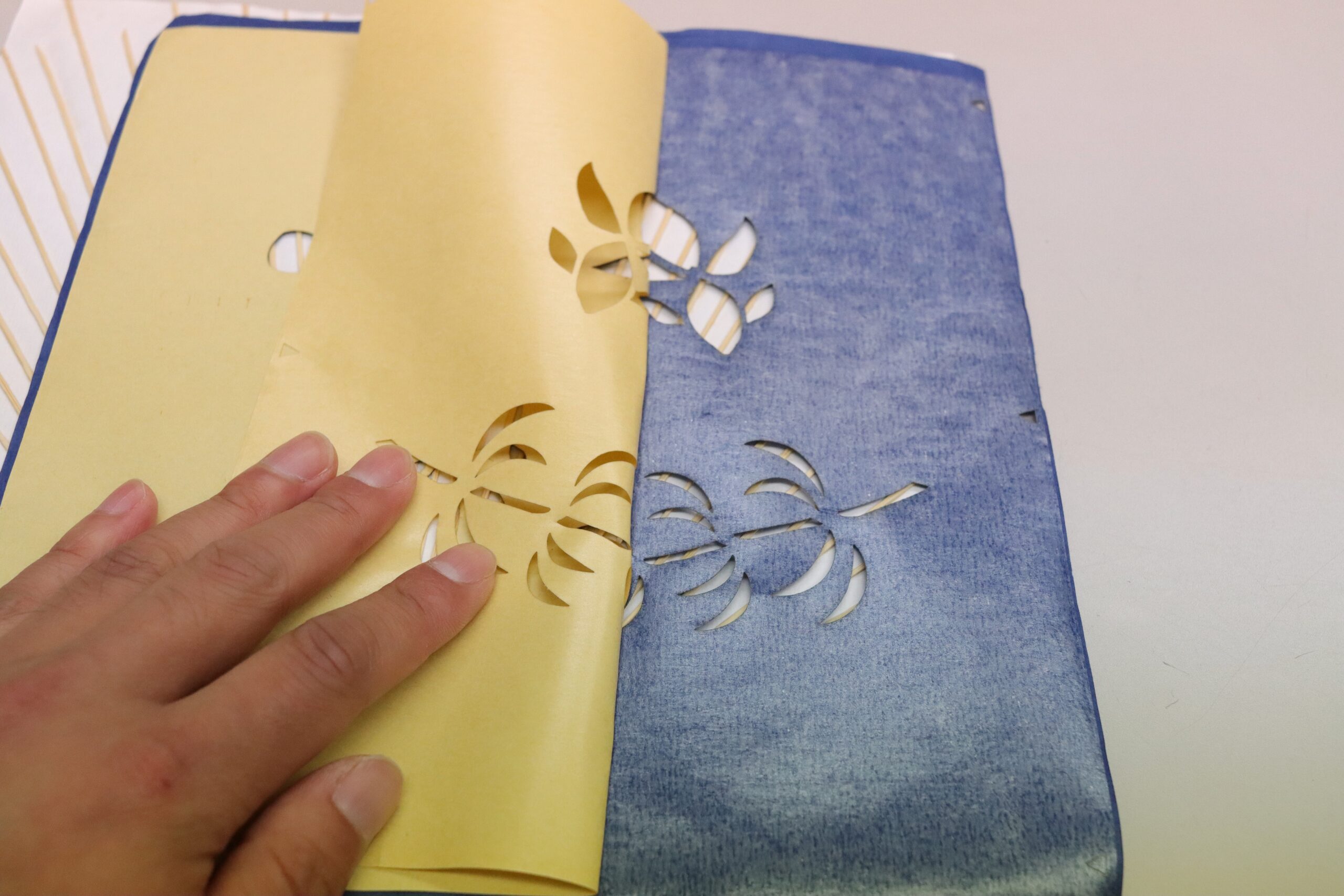
Then, I turned the paper around again and pasted it gradually. The shop clerk said it’s easier if I directed the triangle point to the left and pasted it like rolling.
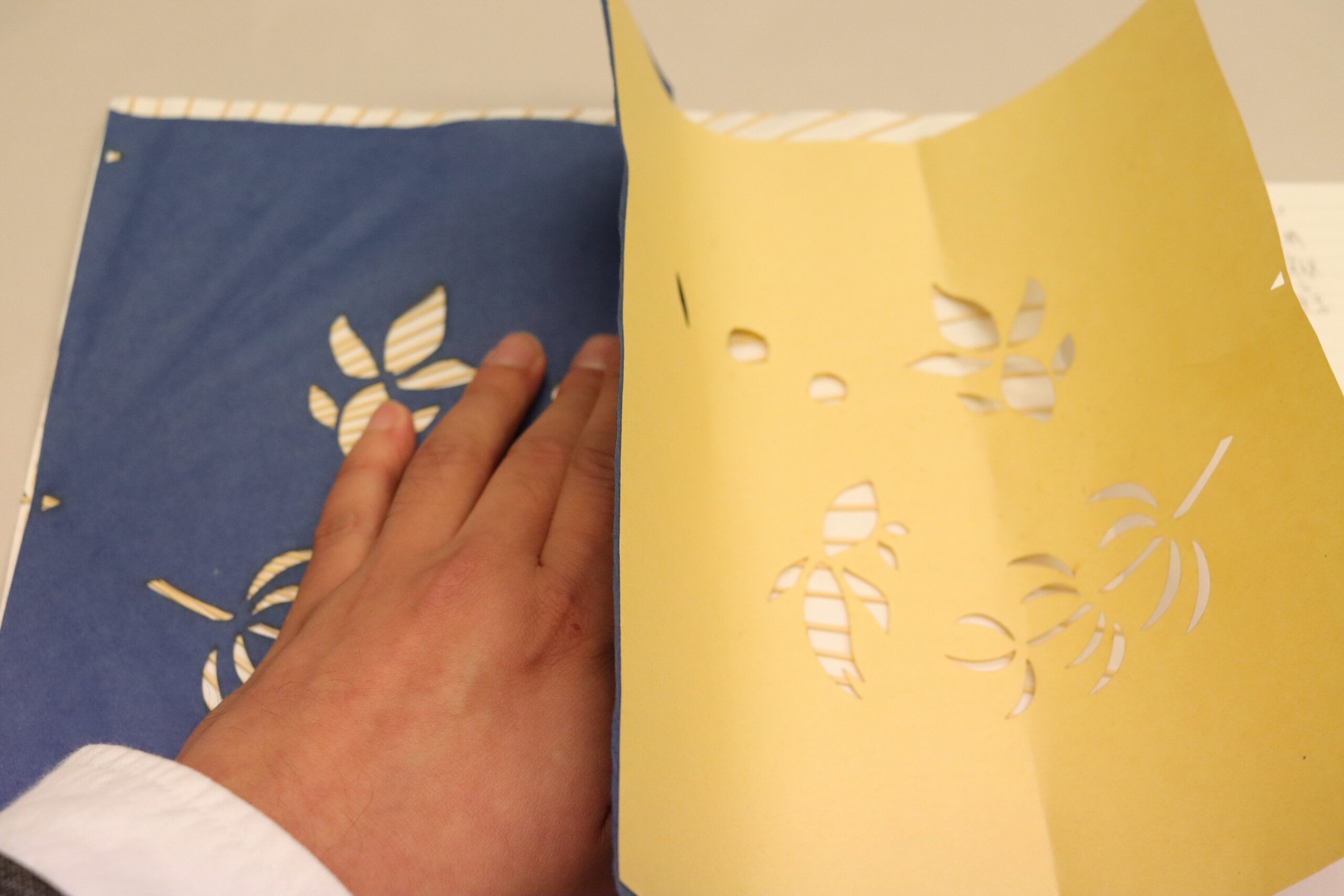
I pasted the paper onto the bamboo frames. It was more difficult than it looked, but then the real experience started!
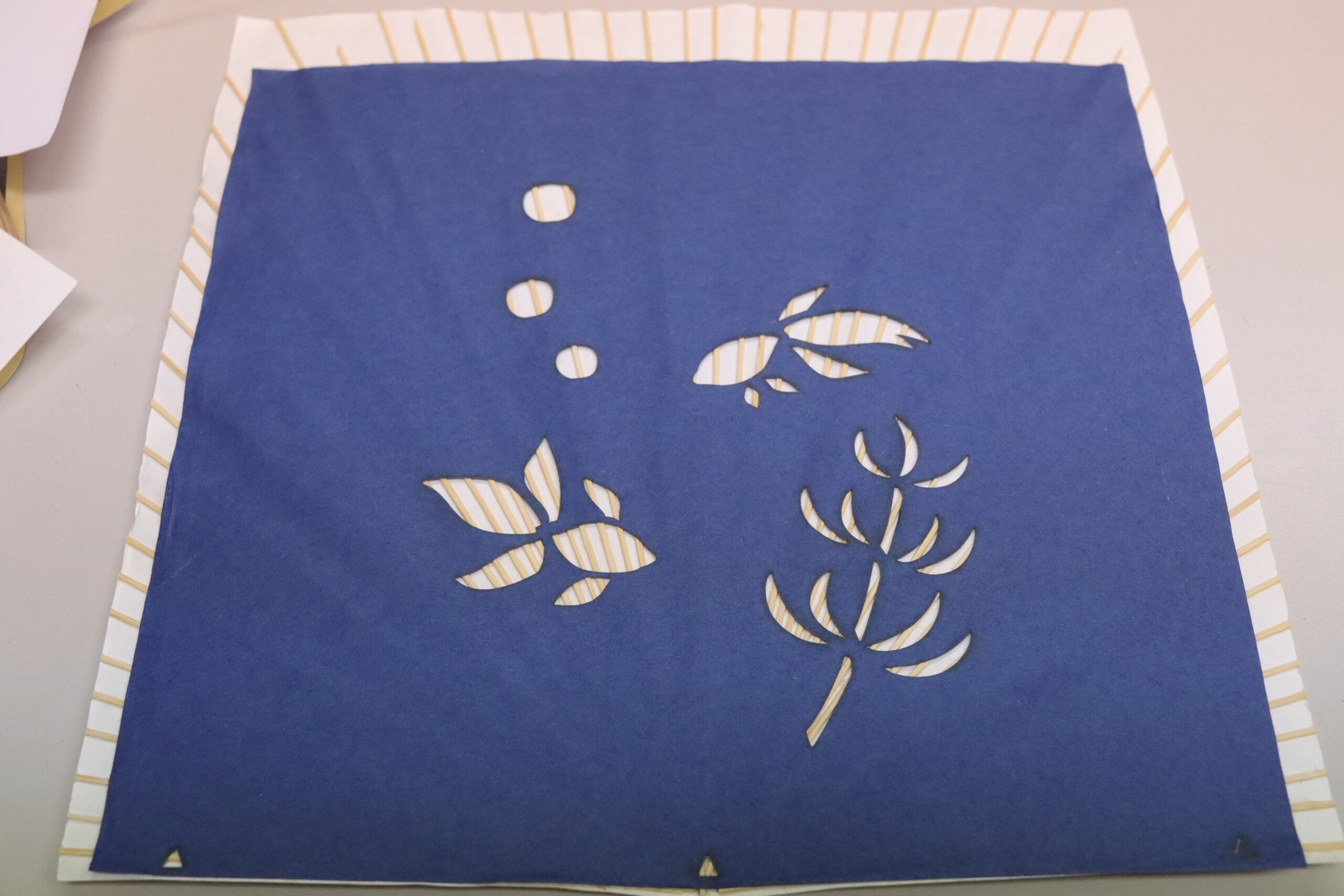
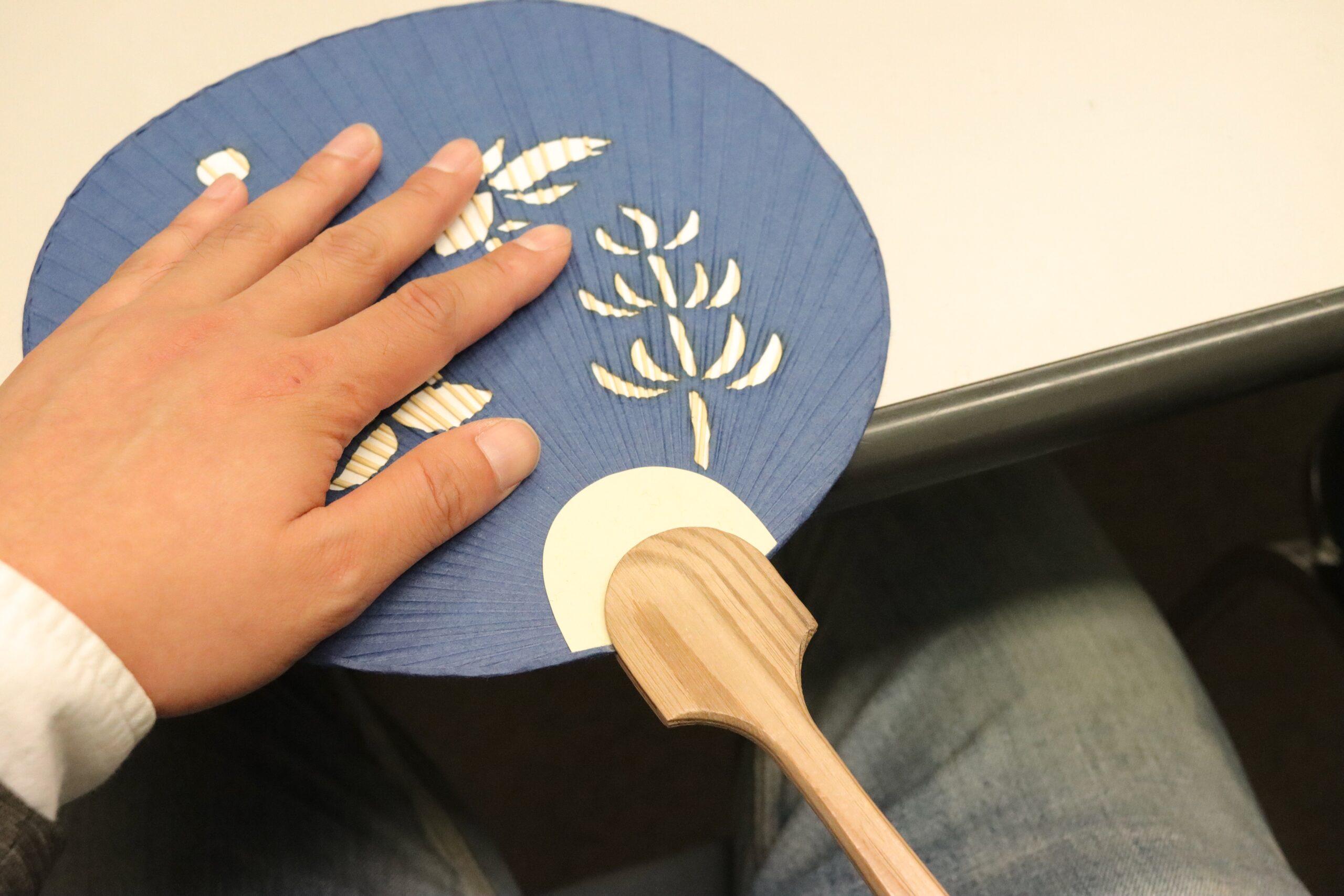
The next step is called “Nentsuke,” meaning reinforcing the strength of the paste by tracing the frames with a special tool, just in case. This step is backbreaking, since there are many frames that I needed to trace one by one, but without this step, I couldn’t make it beautiful and three-dimensional.
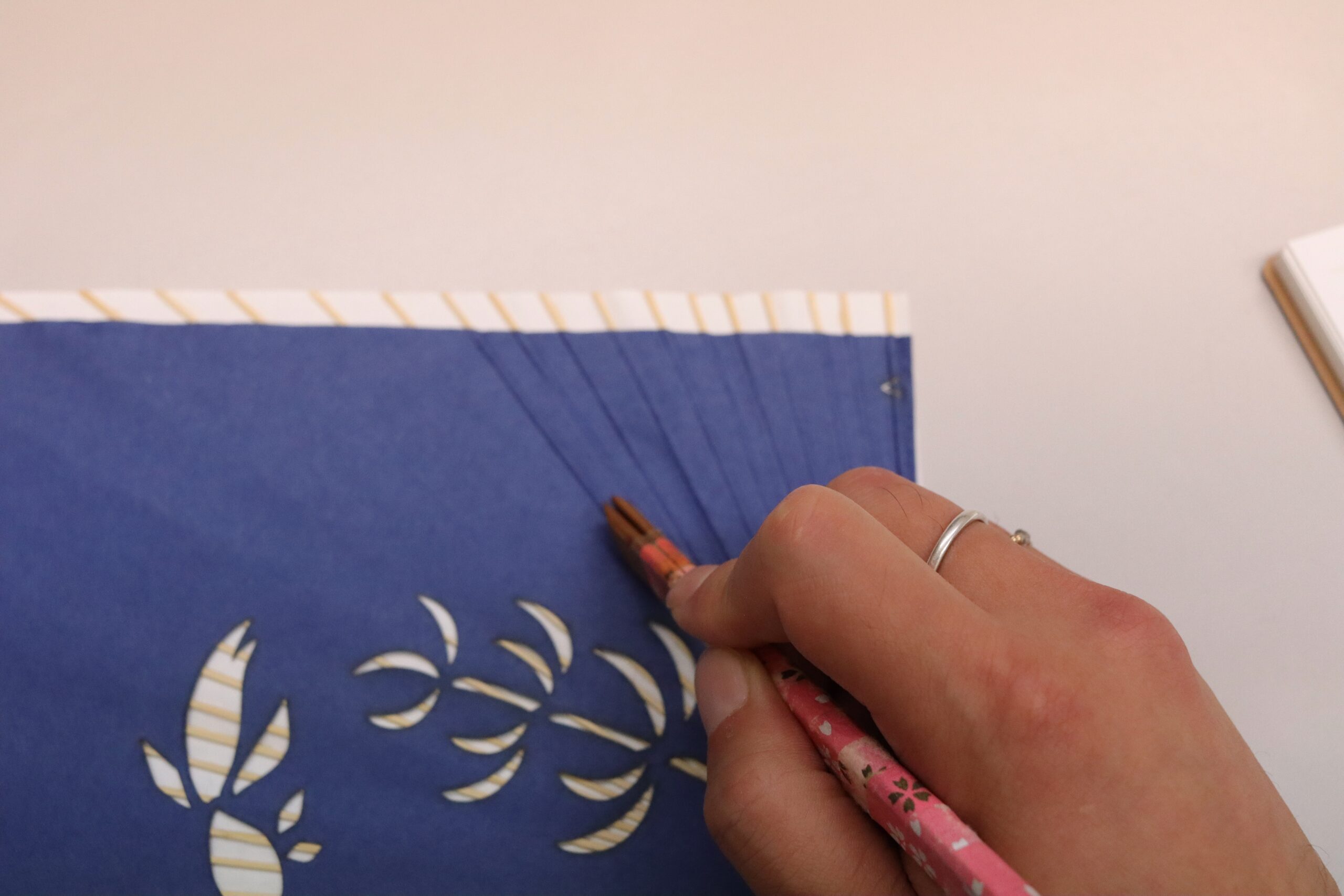
Look at my paper fan in the making. It looks more solid, doesn’t it? The Netsuke step surely brought life to it.

The next step was also important. I placed the thick paper, the center of which was cut off like a fan, onto the paper fan, and traced the rim with a pencil to mark.

Then, I cut the paper pasted onto the bamboo frames with scissors, tracing the mark. The bamboo frames were a bit stiff to cut.
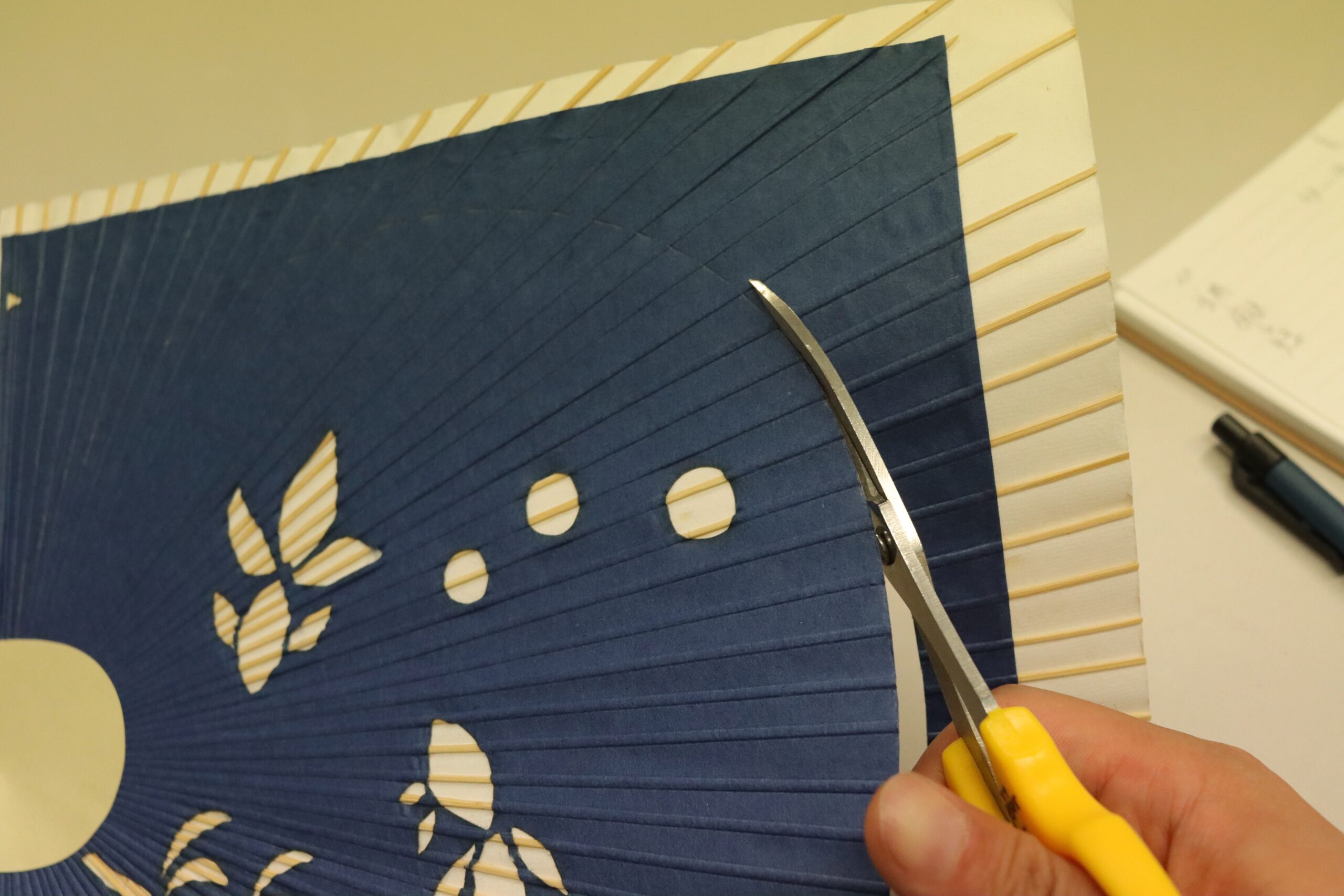
After I finished cutting it, I was almost there!
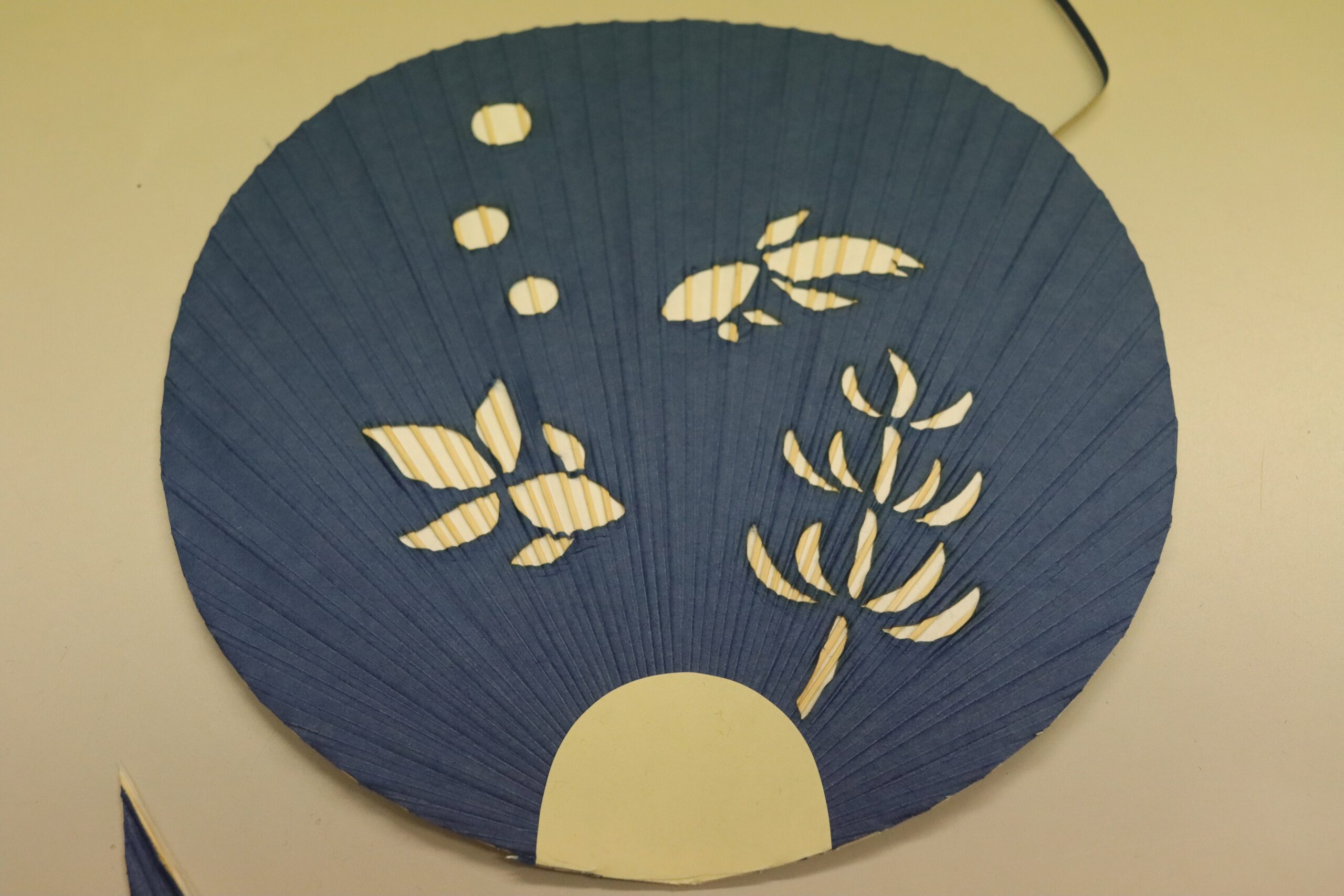
The next step was for the rim to be protected. I just pasted a long protective seal along the rim. Without this step, it could come apart, so take your time and do it carefully.
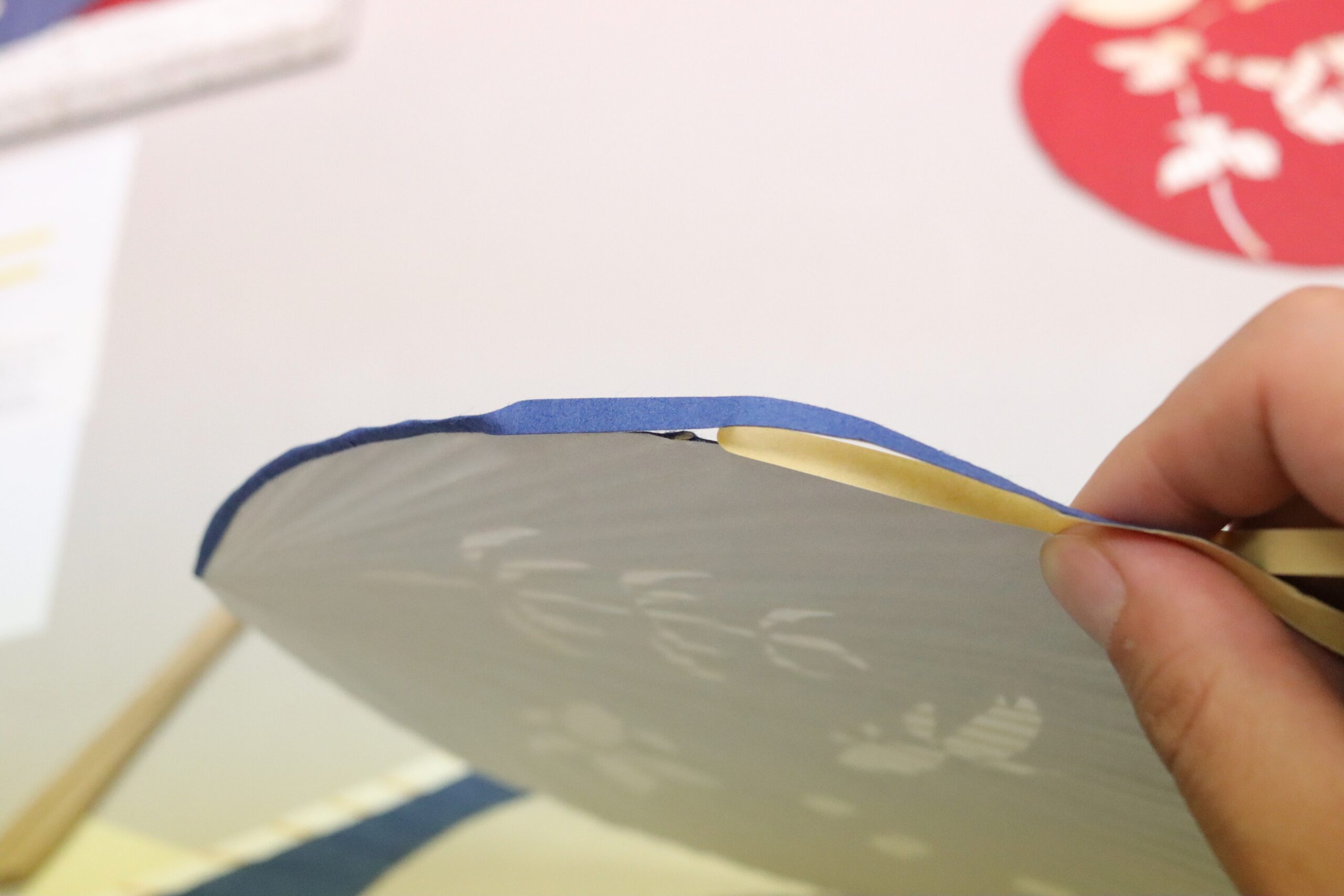
Next, I attached the grip to the paper fan, using glue.
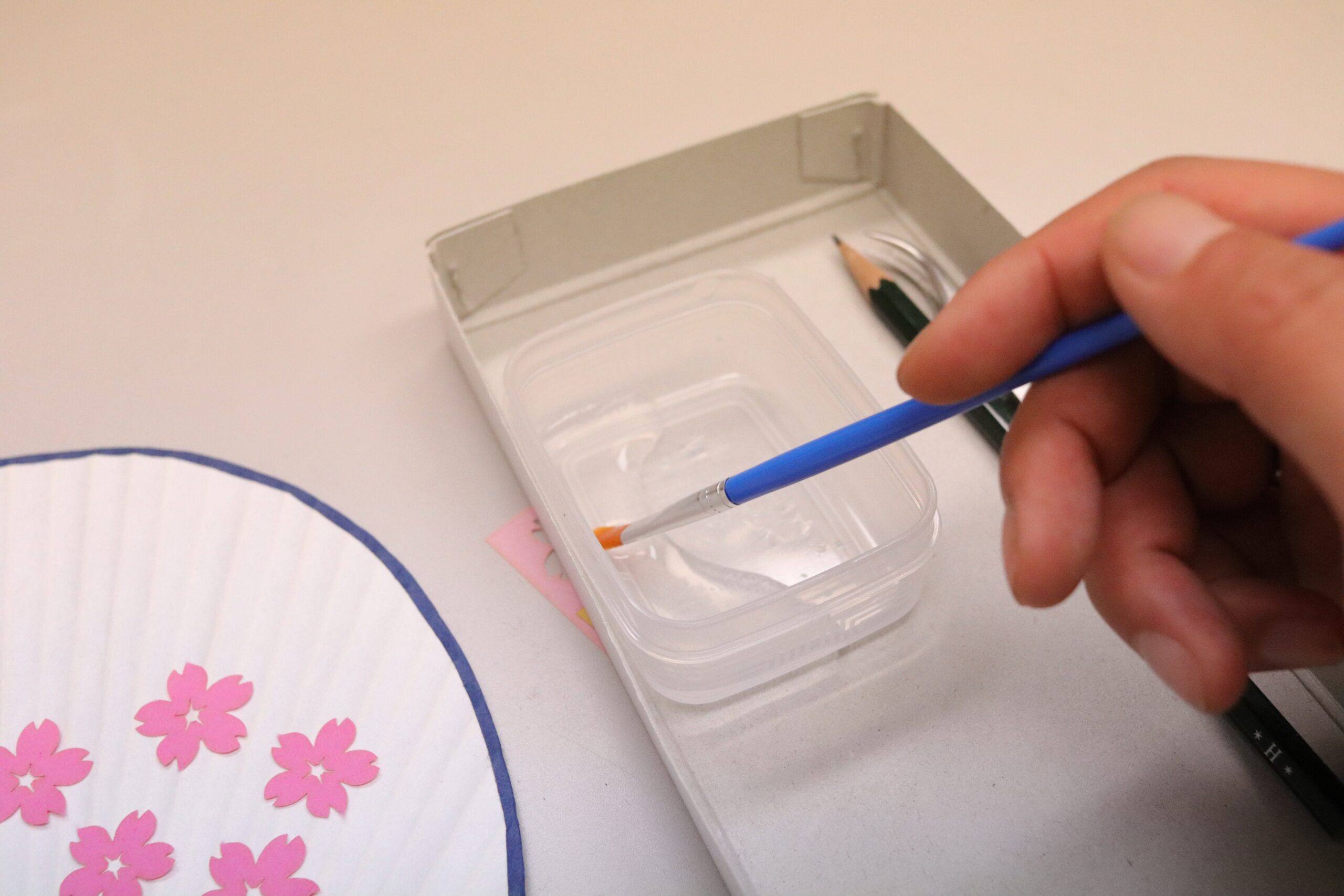
Finally, I put the finishing touches on it. I pasted paper motifs like cherry blossom petals on the other side of the paper fan. First, I needed to think about the layout of the motifs by just putting them on the paper fan, and decided on the design layout. Then, pasted them with glue, using a paintbrush.
Now, all the steps were done! I intended to capture the moment when cherry blossom petals are sweeping through the air. There would be a number of ways to arrange the beautiful paper motifs, and so some kind of design sense is required to make it look beautiful.
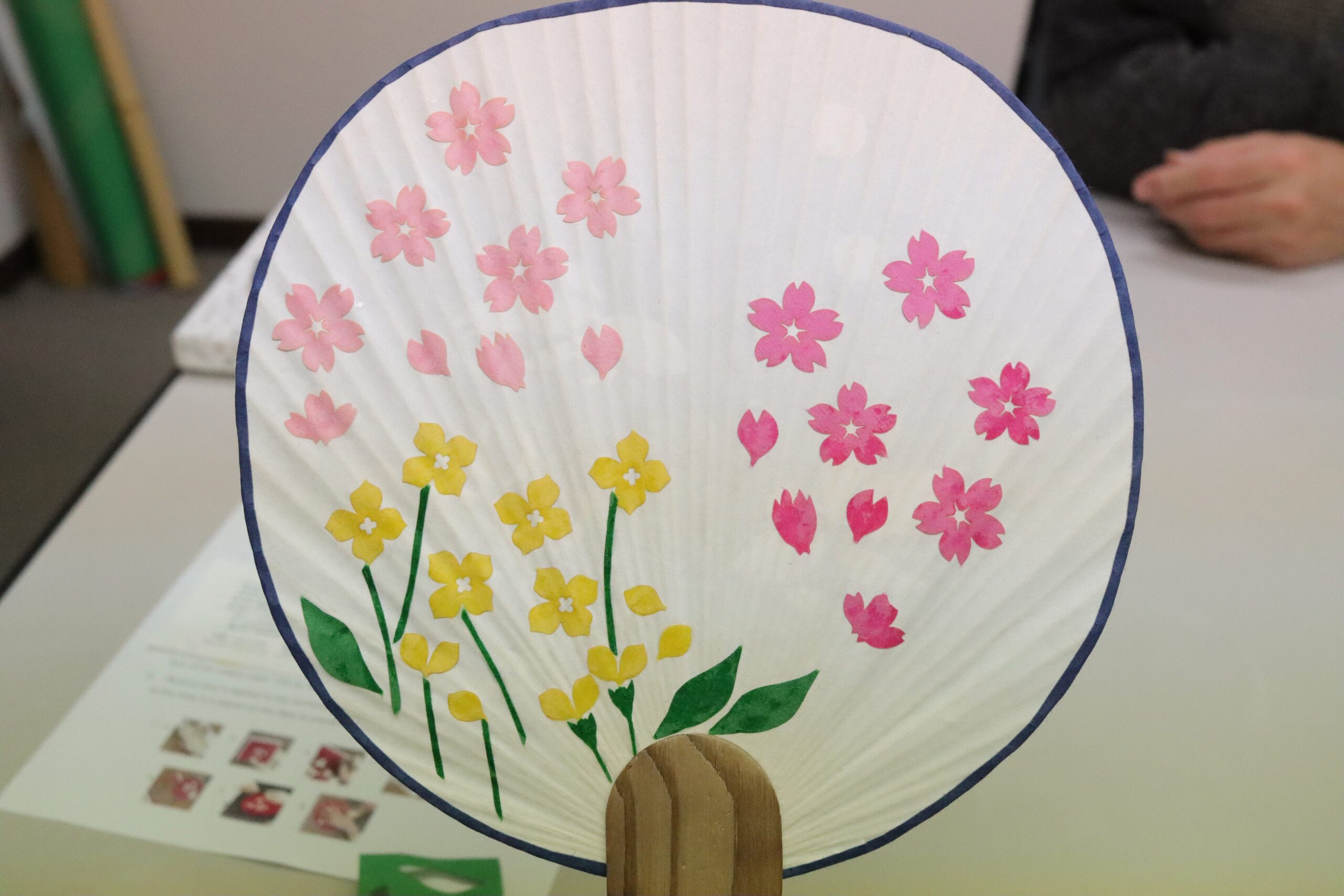
I created my own Kyoto-fan! The time I needed to create it was about an hour, but if you take the time to decide the layout of the other side of the fan, it could put you behind schedule.
Let’s take a close look at the process of making a Kyoto fan at a workshop!
If you’re interested in watching backstage artisans making paper fans, I do recommend you allocate about 15 minutes to your journey. The workshop is worth visiting because you can learn more about Kyoto fans.
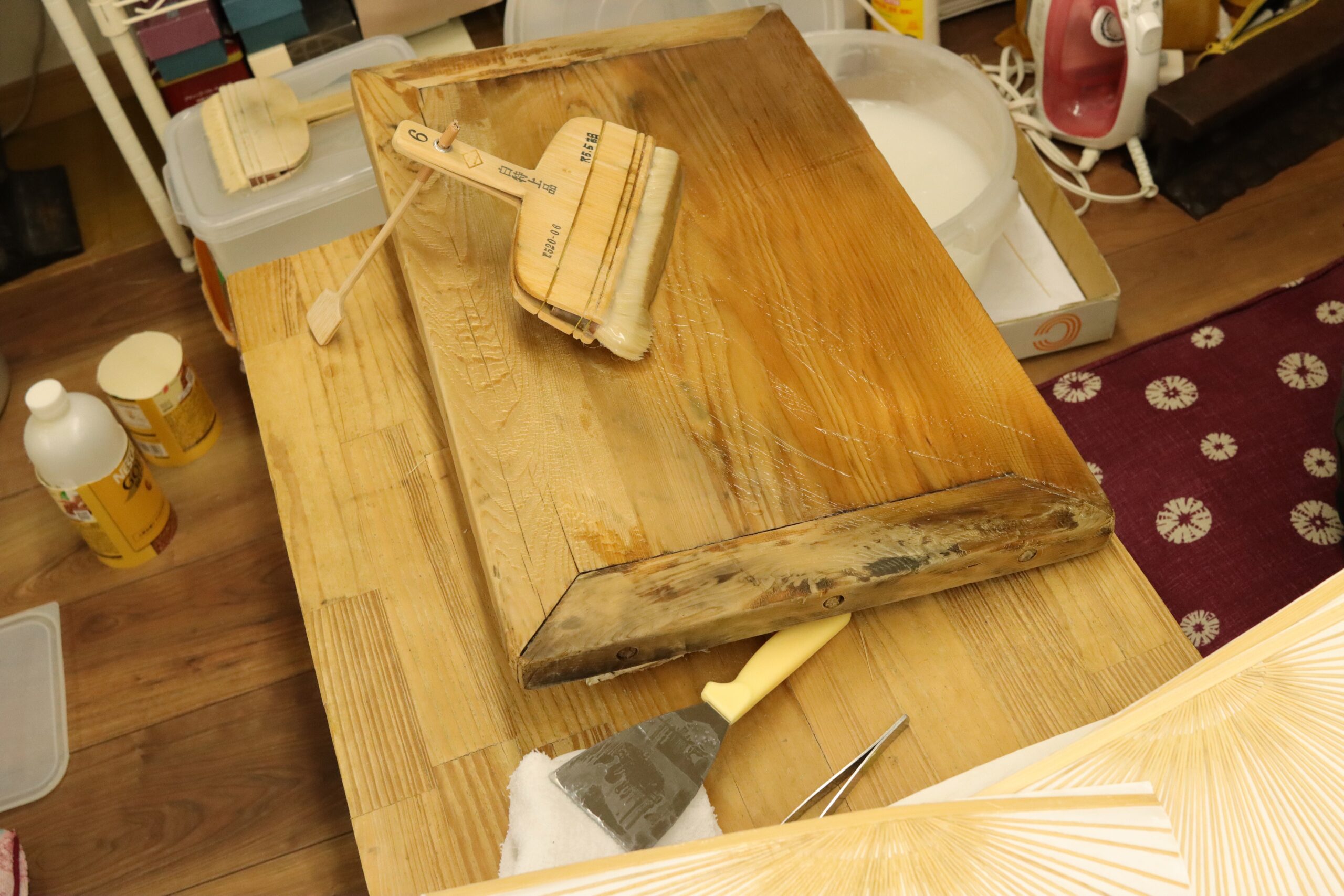
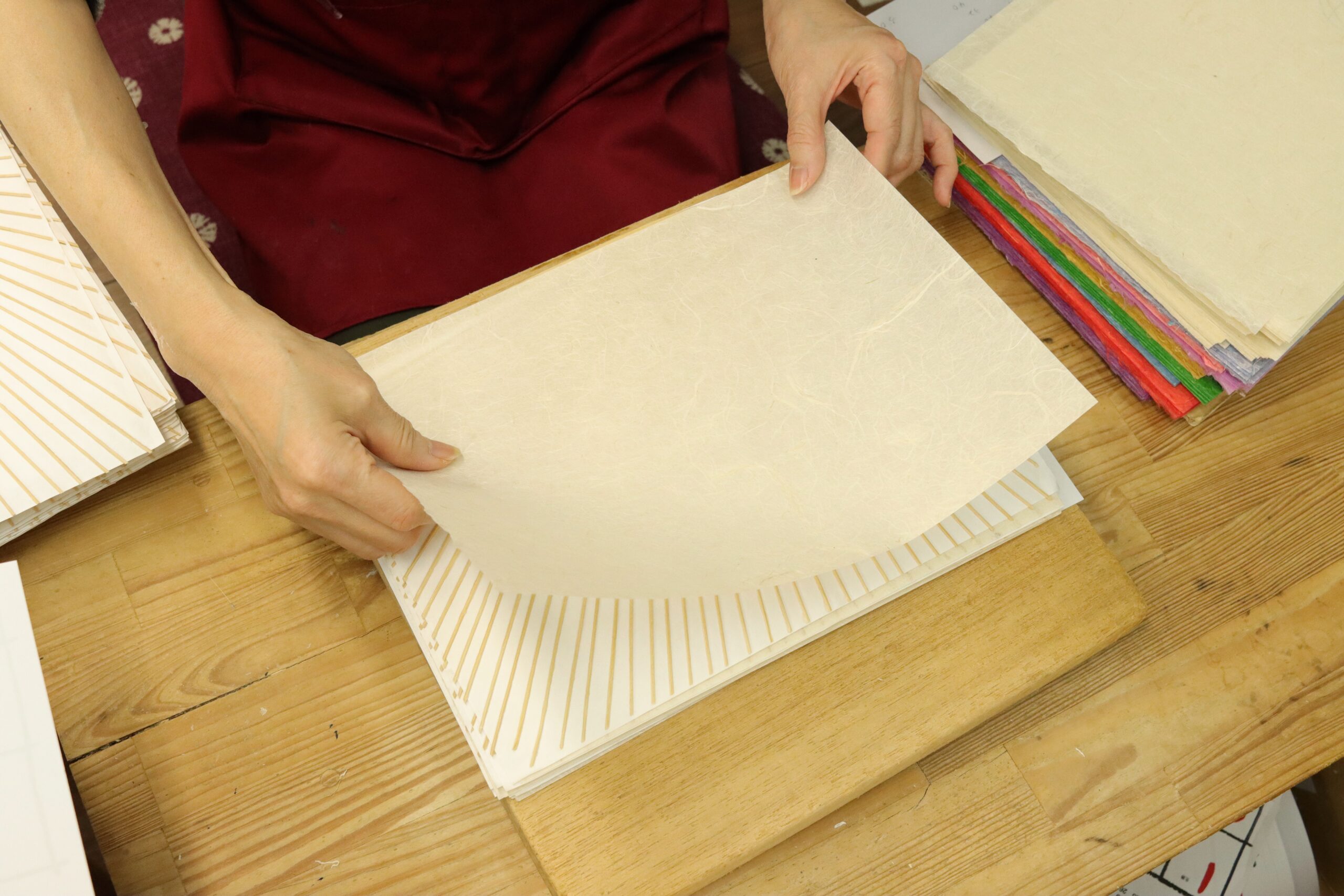
She is pasting paper on a bamboo frame. She has a mountain of work to do, so the task requires great hand dexterity and speed.
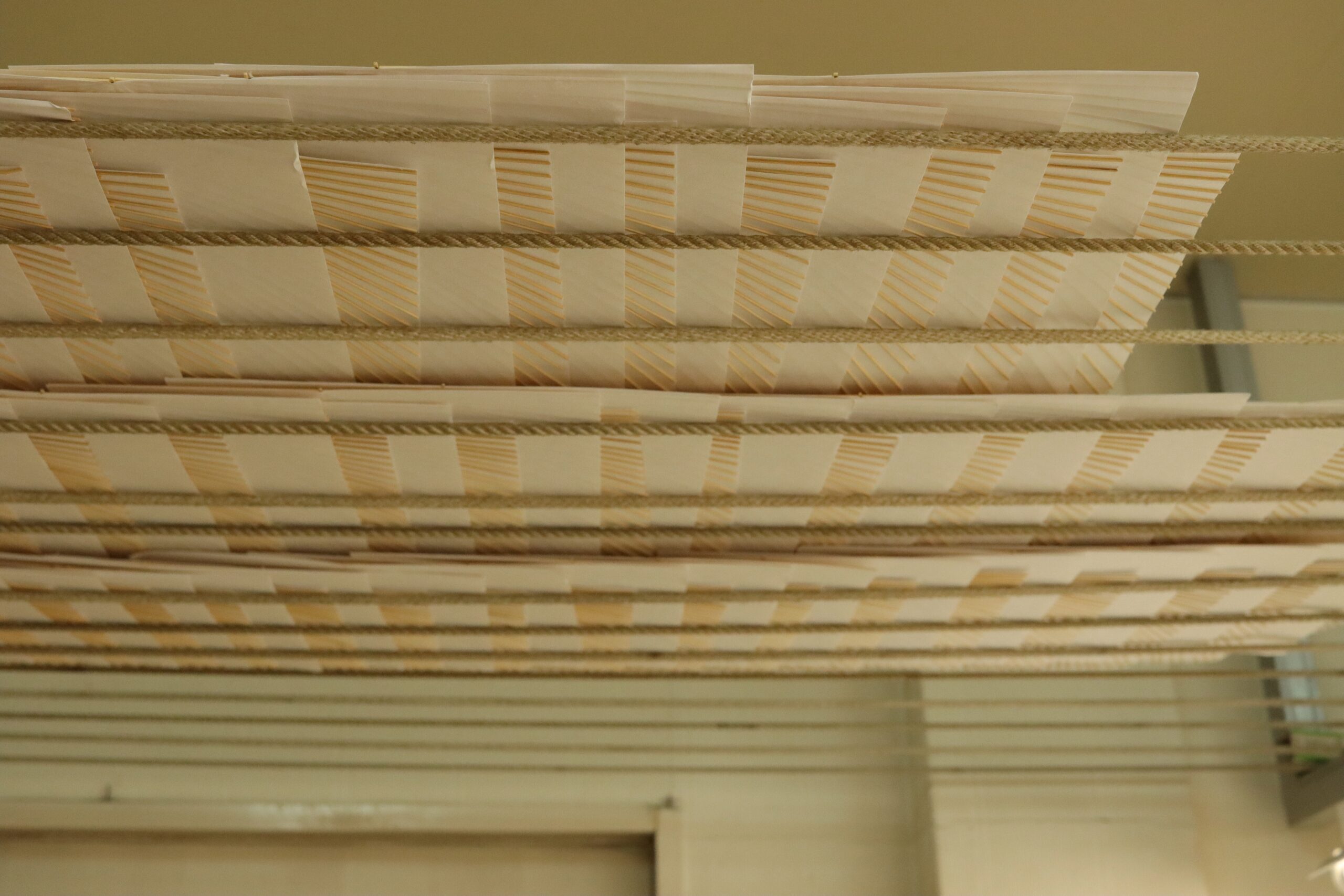
After pasting paper on the bamboo frames with glue, they need a time period of a couple of days to dry, so it takes a couple of weeks to finish making paper fans.
She is attaching a grip to paper fans. The entire process is done by hand, so the finished products have warmth.

Summary
I was into making my own Kyoto-fan, though it requires several steps. The experience is worth the price, and anyone who wants to know about it and create their own traditional paper fan should visit this workshop.
The shop clerk was so nice, and he told me the background of Kyoto fans and how to make them. You can learn about it in English, so you don’t need to worry about any language barriers that might hinder you from having a hands-on experience.
Kyoto fans are not only beautiful but also very traditional; having one may mean one is a cultured person. In addition, Kyoto fans are durable. The main purpose of a fan is to cool us off, but I learned that Kyoto fans are unique in that they can be a good interior decoration that could last for a century!
Why not have this experience to feel like a cultured Japanese? I strongly recommend this experience if you are interested in experiencing one of Kyoto’s traditional crafts—the Kyoto fan!
Shop information
Shop name: Rakufuan Shiomi
Location: 24-3 Ono Nishiura Yamashina-ku,Kyoto-shi, Kyoto, Japan
Business hours: Mon-Sat 10:00-18:00, closed every Sunday and national holiday