 Merry Japan Tours
BLOG
A Night Out in Kyoto
Kyoto surely abounds with lots of interesting bars and Izakayas, some of which are reasonably priced. If you’d like to efficiently explore night experiences in Kyoto, I’d strongly recommend you read this article so that you can get a bigger picture of a Kyoto night—a blessing that will be indelibly etched into your memory.
First, Kyoto is famous for its cultural importance, but nighttime activities are also fascinating. You will never be bored with its vibes generated through neon lights; the nightscape might be not only exciting but also relaxing—something you should experience while you are in Kyoto. I dare say cultural activities during the daytime and nighttime scenes are the two aspects of Kyoto that are quite different but inseparable.
In this article, I will introduce several restaurants and bars in Kyoto, which offer delicious food and alcoholic beverages, including sake unique to Japan or Kyoto. For those who want to have a night out on a trimmed budget, I do recommend you start your night from Hankyu Omiya Station, which is a bit far from the Gion district, but there are many good restaurants and bars that are reasonably priced, thanks to their locations being away from the heart of Kyoto.
After immersing yourself in the unique atmosphere of the Omiya shopping arcade and cutting down expenses by having delicious food at a restaurant near the arcade, you might want to get to the Gion district by cab, where you can either paint the town red or save on additional expenses by just spending time with your loved one on the deck of the Kamo river, which is one of the more famous activities among Japanese lovers who have low budgets. Once you get an idea of how to spend your nighttime in Kyoto by reading this article, you will truly be able to enjoy your night to the fullest! So, let’s go on.
Contents
Amitatsu
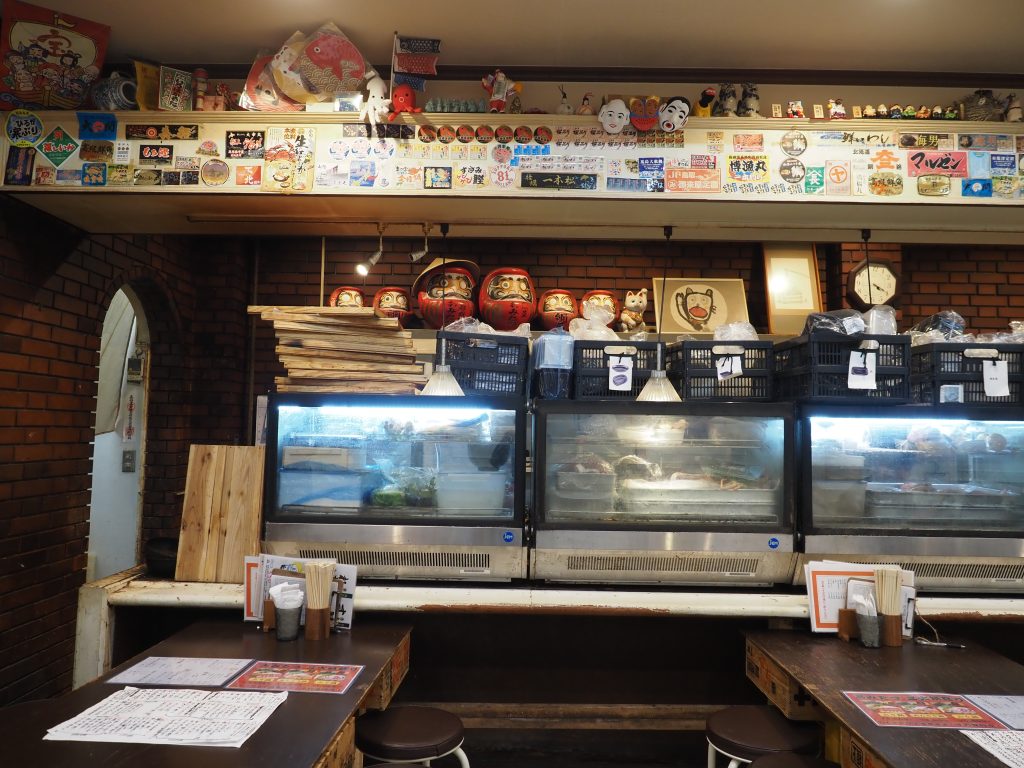
First off, after getting off at Hankyu Omiya Station, you walk towards “the Kyoto Sanjokai shopping arcade,” which is one of the representative arcades in Kyoto and bustles with shops and restaurants. This arcade, measuring 800 meters from east to west, has around 180 shops and restaurants. An 11-minute walk will lead you to a seafood restaurant named “Amitatsu” where you can enjoy not only raw seafood called “Sashimi” but also cooked seafood.
Once you enter the restaurant, you will be captivated by its atmosphere generated through objects unique to Japan, like daruma dolls or good luck charms.
Generally speaking, Kyoto is surrounded by mountains and is far from the ocean, so the prices of seafood could be a bit higher than they are in Osaka, so in the past, people in Kyoto felt that raw seafood in Kyoto was terrible—Over time, however, the condition surrounding seafood has improved a lot due to the advancement of freezing techniques and transportation, so these days, many restaurants in Kyoto offer raw seafood, which leaves nothing to be desired for the palates of Kyotoites.
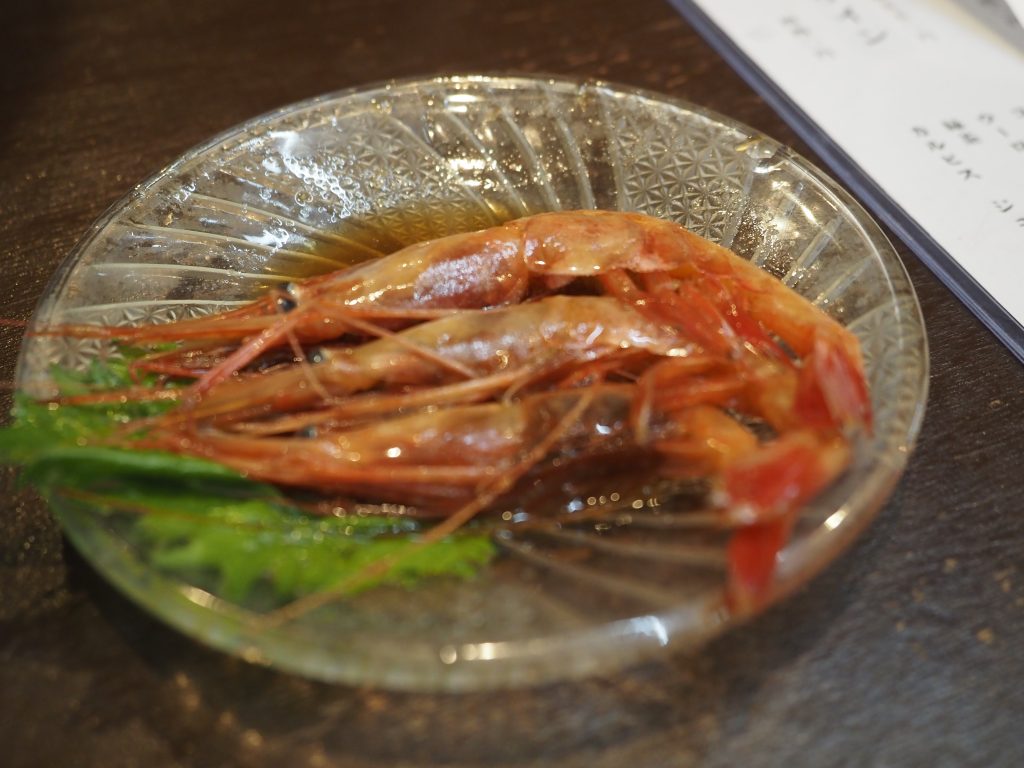
One of the dishes from the menu, which caught my fancy, was sweet shrimp seasoned with dashi-flavored soy sauce and sake and served raw. There’s no sugar added to it, but the natural sweetness that these shrimp have can be relished by your palate.
This dish has an interesting name: “Yopparai Amaebi,” meaning a sweet shrimp which got drunk. So, if you have a baby or kids with you, I recommend keeping it away from the children.
Mind you these drunk shrimp don’t have that much alcohol, so they won’t get you drunk. Instead, the reason alcohol is added is that it enhances the taste of these shrimp.
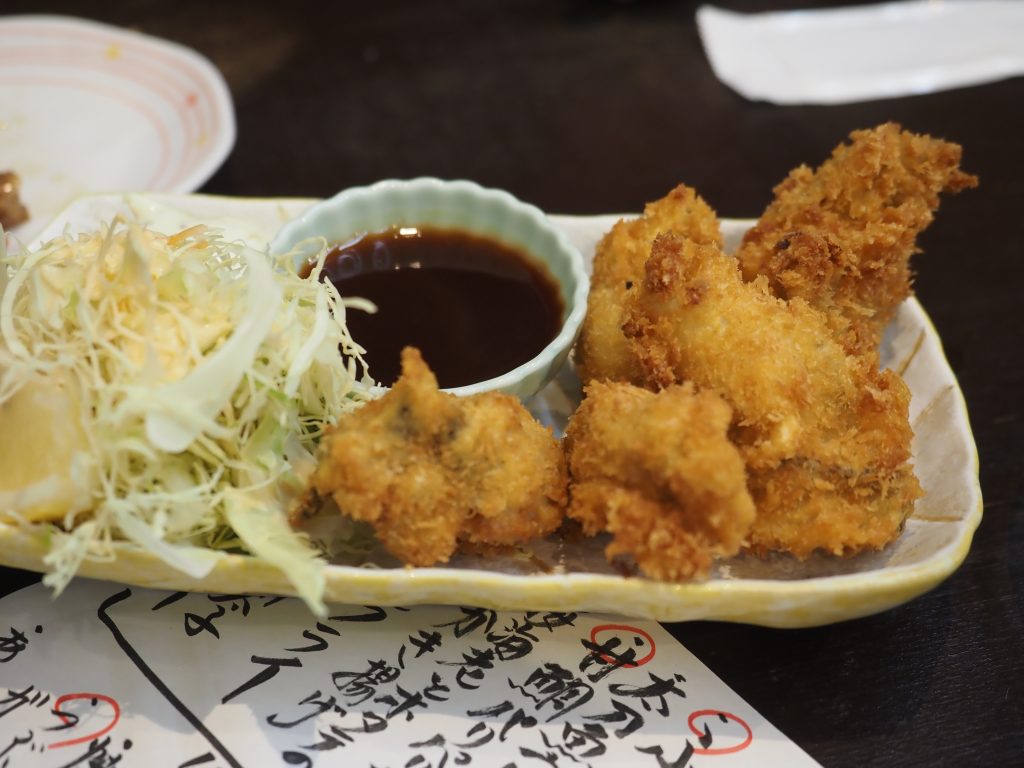
The next dish I ordered was deep-fried oysters, which I ate by dipping them into Worcestershire sauce. They were very crispy outside but very juicy and hot inside, so I recommend you have little bites. Oysters are rich in minerals, iron, and zinc, so they will give you the energy needed to make it through the night if you are tired from sightseeing.
The most preferable alcoholic beverage that goes well with deep-fried oysters, I believe, is “Highball,” or whisky with soda.
Japanese people like to drink whisky with soda at Izakayas, Japanese-style taverns because it is relatively cheap and goes well with all dishes, especially deep-fried food.
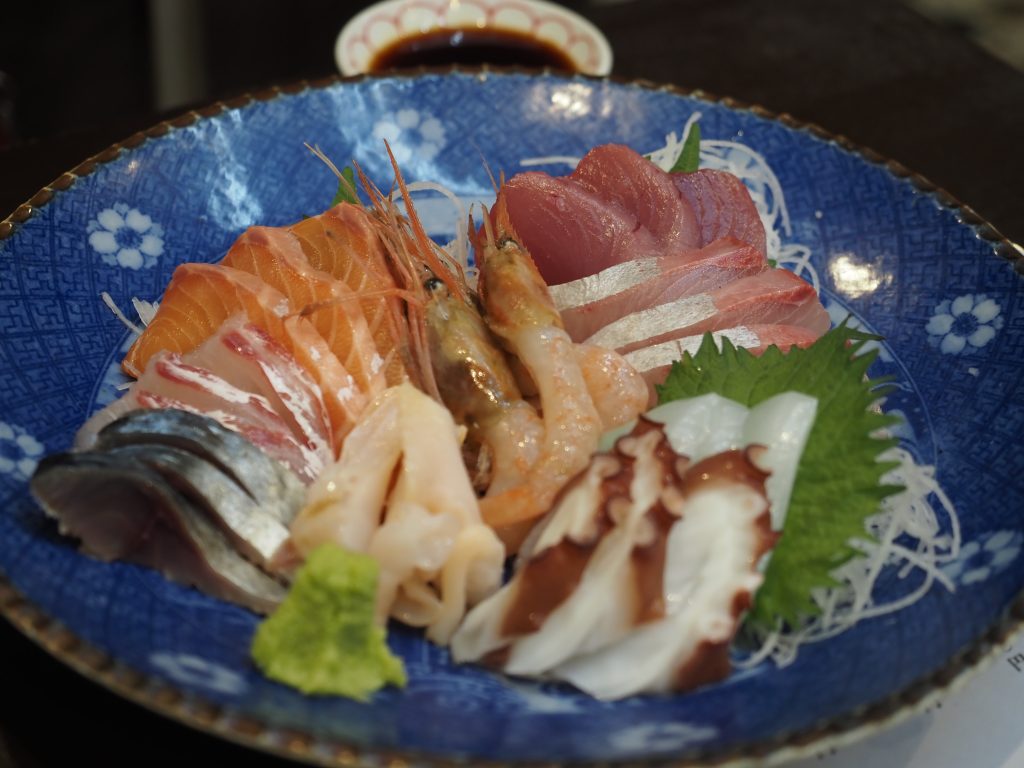
Here comes today’s main dish at this restaurant: assorted raw seafood. Once it’s served at the table, I’m sure you will be exhilarated. It’s not just for eating but for appreciating the beauty of the arrangement before eating.
I’d say this assorted raw seafood eaten with soy sauce would be the epitome of Japanese raw seafood culture.
The salmon melts in your mouth. The lean portion of tuna always tastes good because it’s rich in iron, making you taste fragrant acid. And, in spite of its appearance, the octopus gives you a chewy texture—the more you chew it, the tastier it will become.
Oops, you might forget to add “Wasabi” or Japanese grated horseradish, which holds the key to boosting the flavor. Though Wasabi has a kick to it, a small portion of Wasabi won’t make you cry.
- Address: 7-11 Ikenouchi-cho, Nishinokyo, Nakagyo-ku, Kyoto City
- Business hours: 11:30-22:30
- Closed: Wednesday
Ponshu KONAKARA
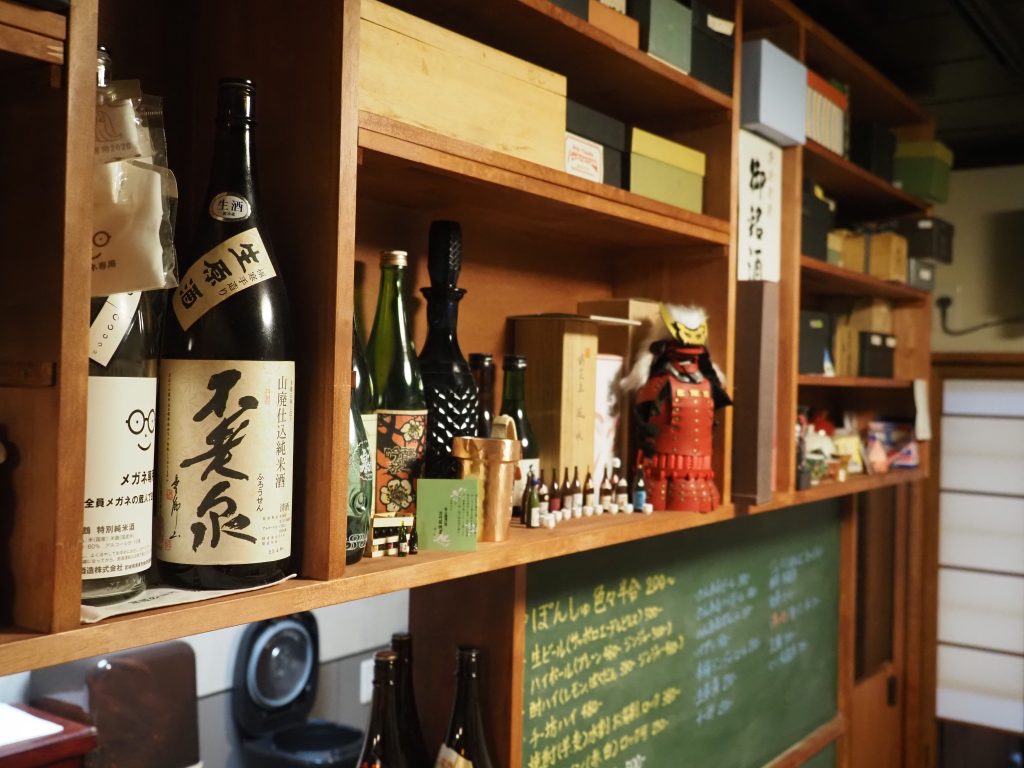
After relishing blessings bestowed by the ocean, drinking sake and having a Japanese snack in a cozy atmosphere would be the way to go. You might wonder which restaurant offering sake is the best since there are many sake bars in the Omiya district.
For those who would like to drink sake at a restaurant specializing in sake, I do recommend you visit “Ponshu KONAKARA” located in an alley. Since it’s located in an alley and keeps a low profile, many people pass it by.
This place, which not only serves sake but also offers snacks unique to Japan, is just like a restaurant hideaway that caters to your specific sake needs. Once you enter this restaurant, you will be healed by its relaxing vibes.
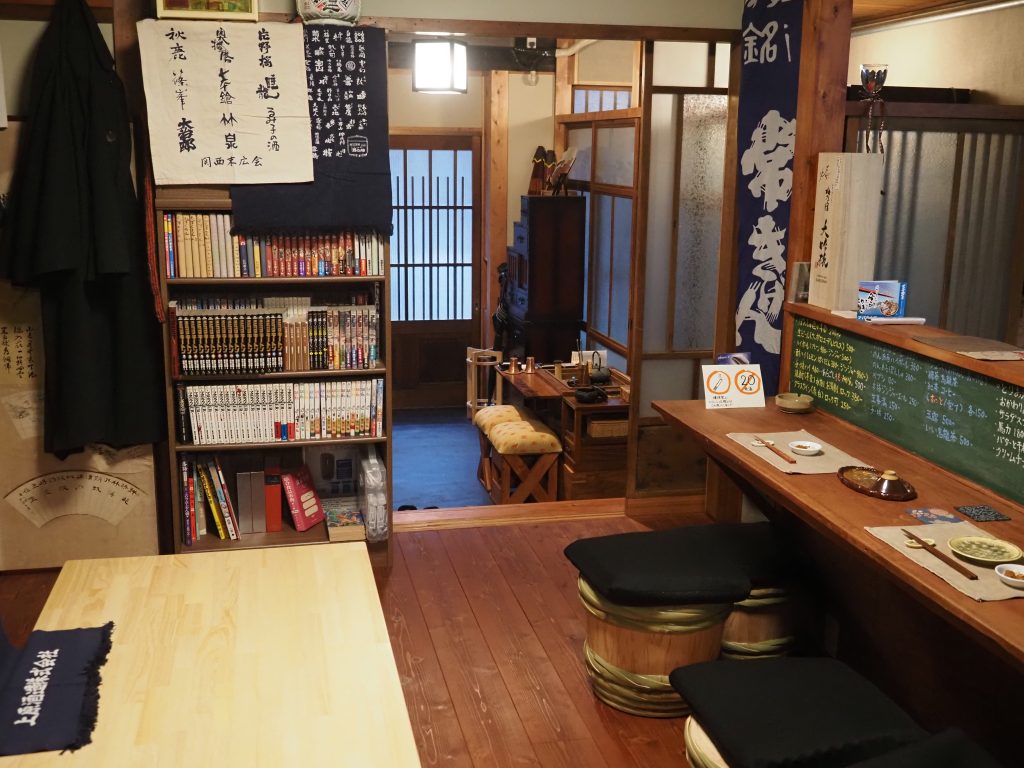
An old Japanese-style house called “Kyomachiya” was renovated into a restaurant, so you can experience the traditional Japanese architecture while you are drinking sake. There is space beneath the counter, so you don’t need to worry about your legs getting numb.
In addition, there are lots of Manga on a bookshelf. So, while you are waiting for your orders, why not glance through them?
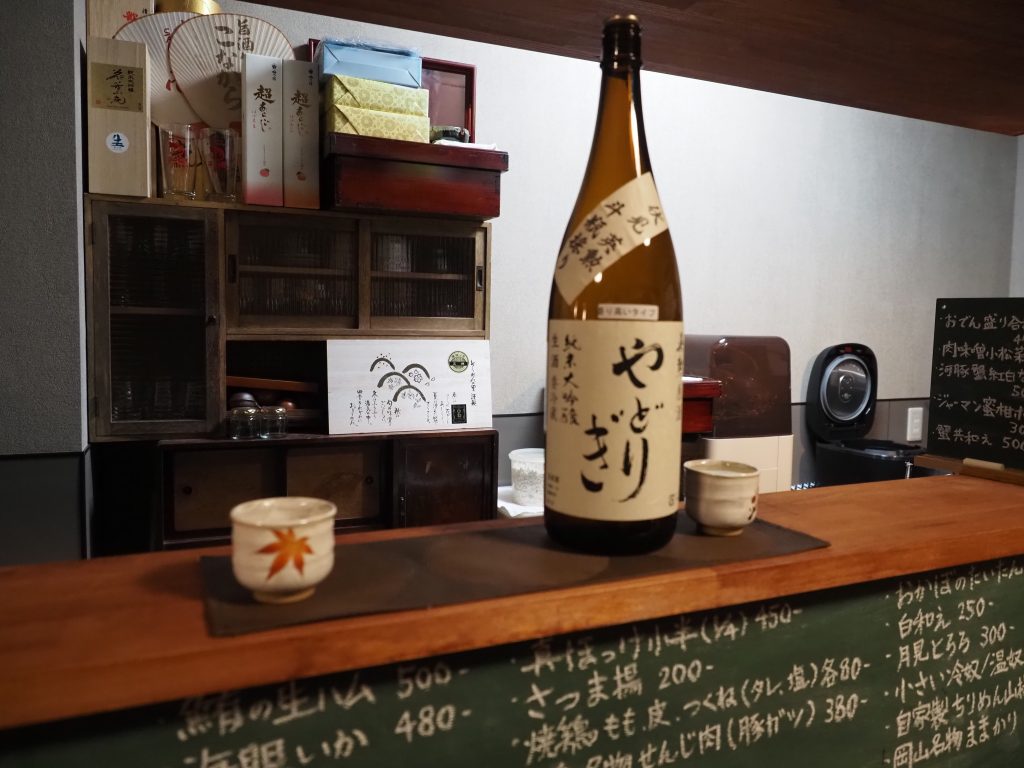
This time, I tried sake brewed in Kyoto; rice grown in Kyoto is used to make this sake. This sake is a non-diluted sake called “Genshu,” so the content of alcohol is relatively higher than normal sake.
Here are brief explanations of sake in general. Sake, also known as “Nihonshu,” is a fermented alcoholic beverage made from rice, yeast, and rice malt called “Kouji” in Japanese. Westerners dub rice wine as “Sake,” but this is confusing since we Japanese use the term, “Sake” to mean a general term signifying “alcoholic beverages.”
Anyway, in sake production, it is said that two things are crucial: the quality of the rice, and the quality of the water. Cultivating rice suitable for making sake is said to be extremely challenging due to its tall height, later harvesting period compared to regular rice, and frequent exposure to typhoons. Water accounts for 80% of sake, and plays an important role in the taste of sake.
And, most importantly, though, the grade of sake differs according to the degree of rice milling: the more we polish the rice grain, the higher the grade of sake becomes.
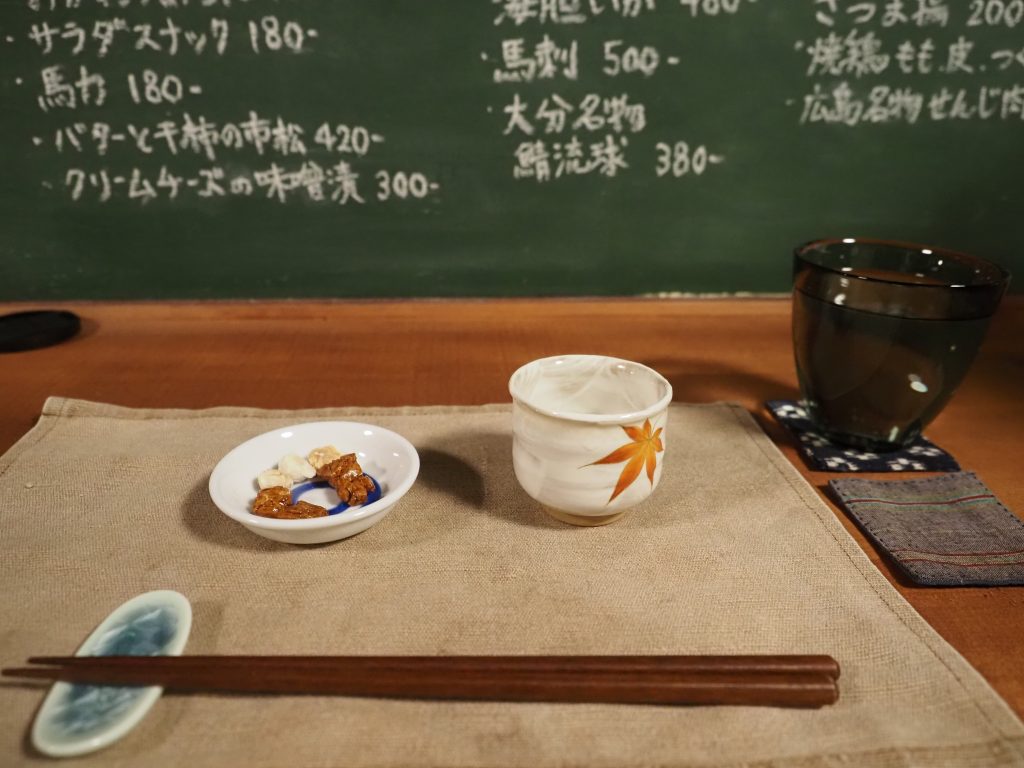
We Japanese take a sip with a small sake cup called “Ochoko” to relish the taste of sake. However, a cool Japanese guy tends to chug his sake. It’s more of a tradition rooted in Japanese society to chug the first cup of sake; it isn’t meant to demonstrate how strong one is.
In fact, the alcohol content of sake is less than 22 degrees, so it won’t break you down unless you are fragile with alcohol.
It may well sound cool to gulp down a cup of sake, but I recommend you take a sip and relish the flavor.
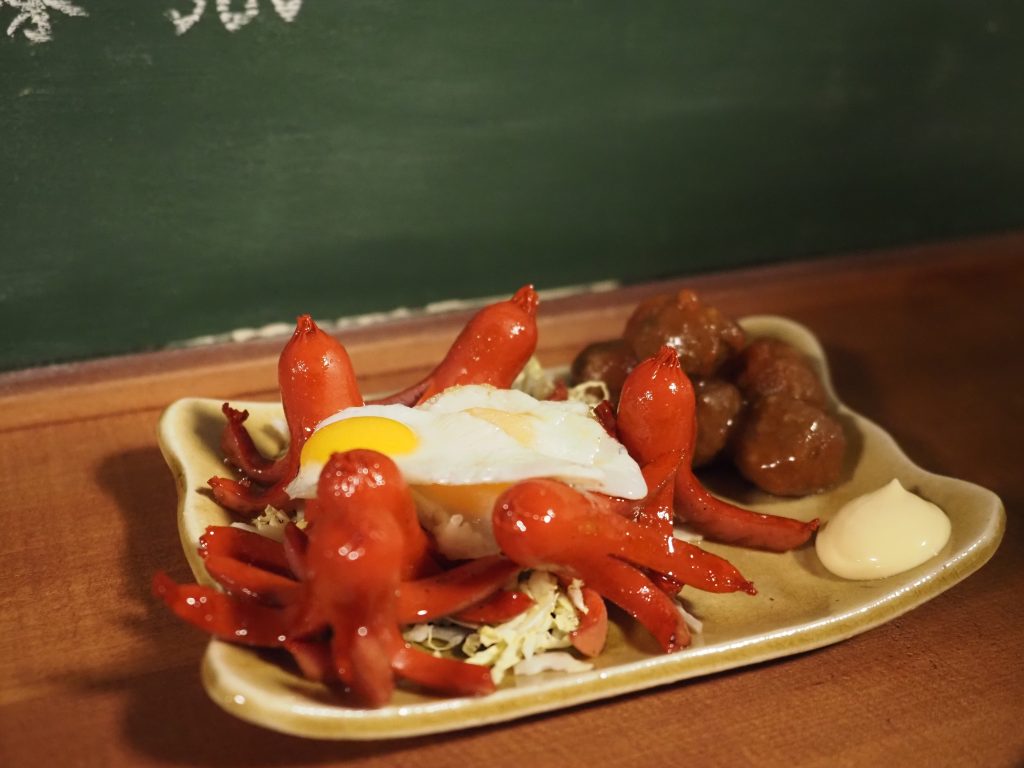
This time, I ordered a dish that is just like a home-cooked meal. Japanese children feel lucky if they have these octopus-shaped sausages inside their bento boxes.
Curious as it may seem, we like octopus. So, instead of adding a real octopus in a bento box, which is impossible due to its size which is way larger than the bento box, we enjoy having octopus-shaped sausages—something we came up with on the basis of the Japanese mentality of miniaturizing everything.
- Address: 29-28 Ikenouchi-cho, Nishinokyo, Nakagyo-ku, Kyoto City
- Business hours: 17:00-22:00
- Closed: Sundays and Tuesdays
Hard Rock Café Kyoto
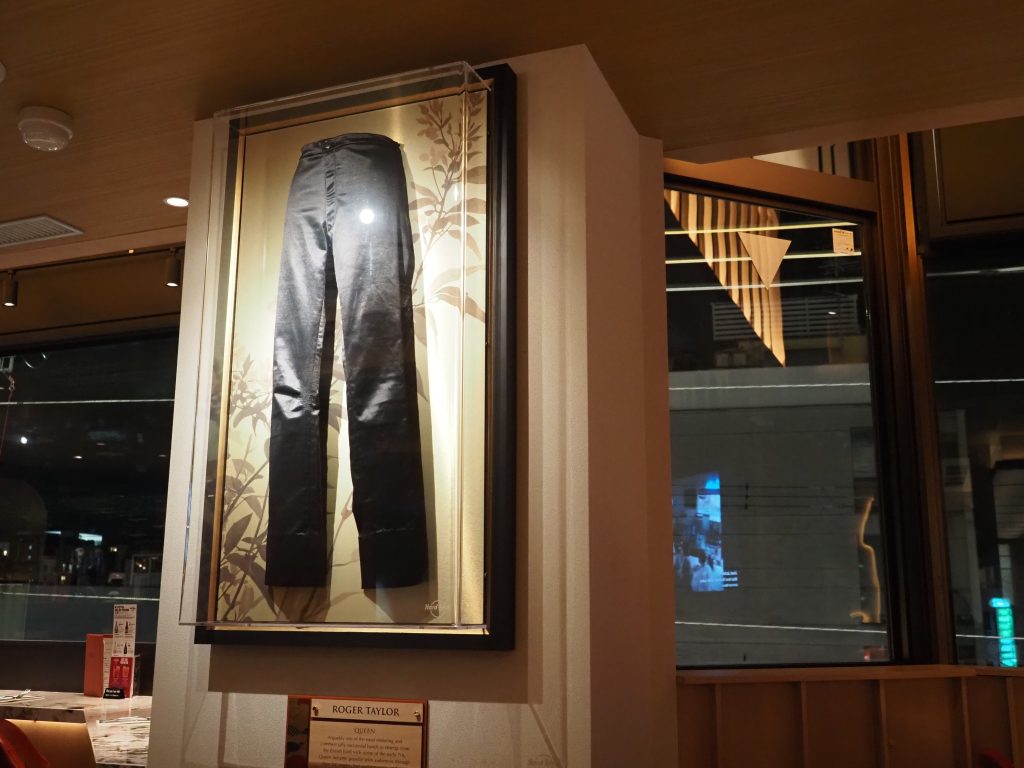
When it comes to having “cheers!” in the heart of the Gion district, no other place is as good as “Hard Rock Café Kyoto” for Westerners. In this place, you will not only enjoy drinking and eating but also be able to purchase rock items on the first floor unique to Kyoto. A bar is on the upper floors where it exhibits Jeans once worn by Roger Taylor, the drummer of the legendary rock band, “Queen.”
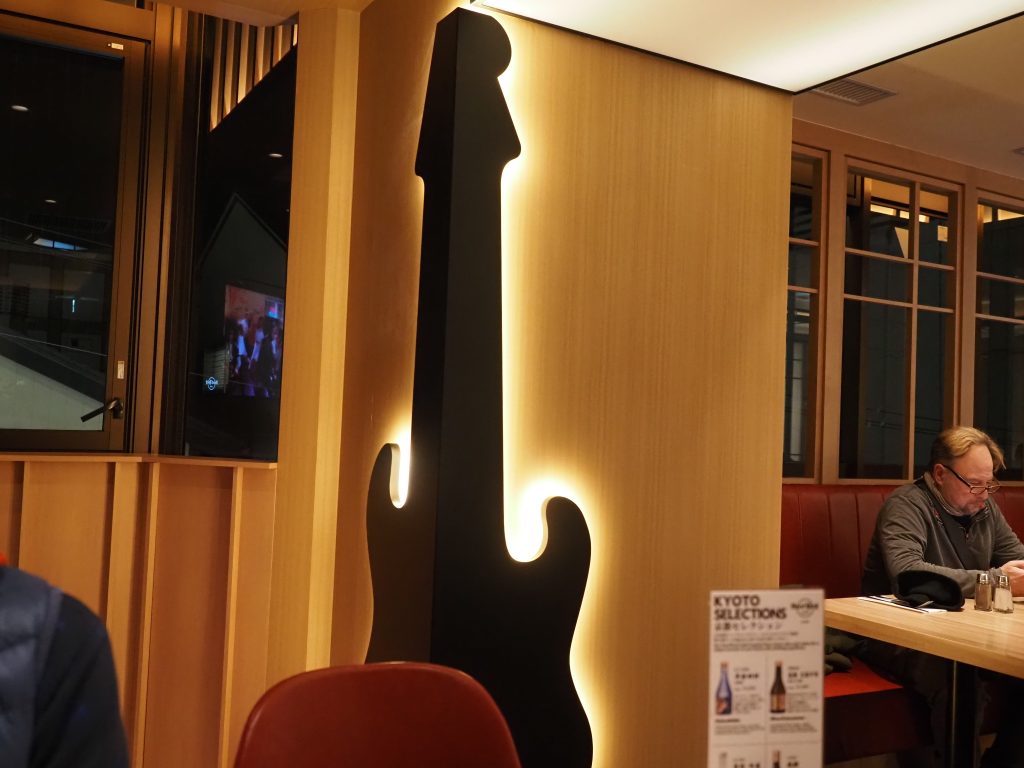
One corner of the restaurant is adorned with an electric guitar-like object; you will be able to appreciate its interior decorations everywhere in this restaurant, which will make you feel as if you are the protagonist of the world of rock music. Once you have a seat, a pretty girl who has a strong command of English will be in charge of your table, so you don’t need to worry about a language barrier, which would force you to turn to your smartphone for translations.

This time, I ordered a non-alcoholic cocktail with “a cherry on top” in which “Red Bull,” orange juice, and mango are mixed: It’s quite the non-alcoholic beverage that will give you energy to “fly” all night.
If you’d like to experience the taste of “victory,” you might want to try chicken burgers that feature the football legend, Messi. The burgers may be larger than you expect, so if you are not hungry, it’s a good idea to share the burgers with your friends.
- Address: 1st, 3rd, and 4th floors of Gion OKI Building, 216 Nishiri-Nakanocho, Shijo-dori Yamato-oji, Higashiyama-ku, Kyoto City
- Business hours: 11:30-22:00
Shirotokuro
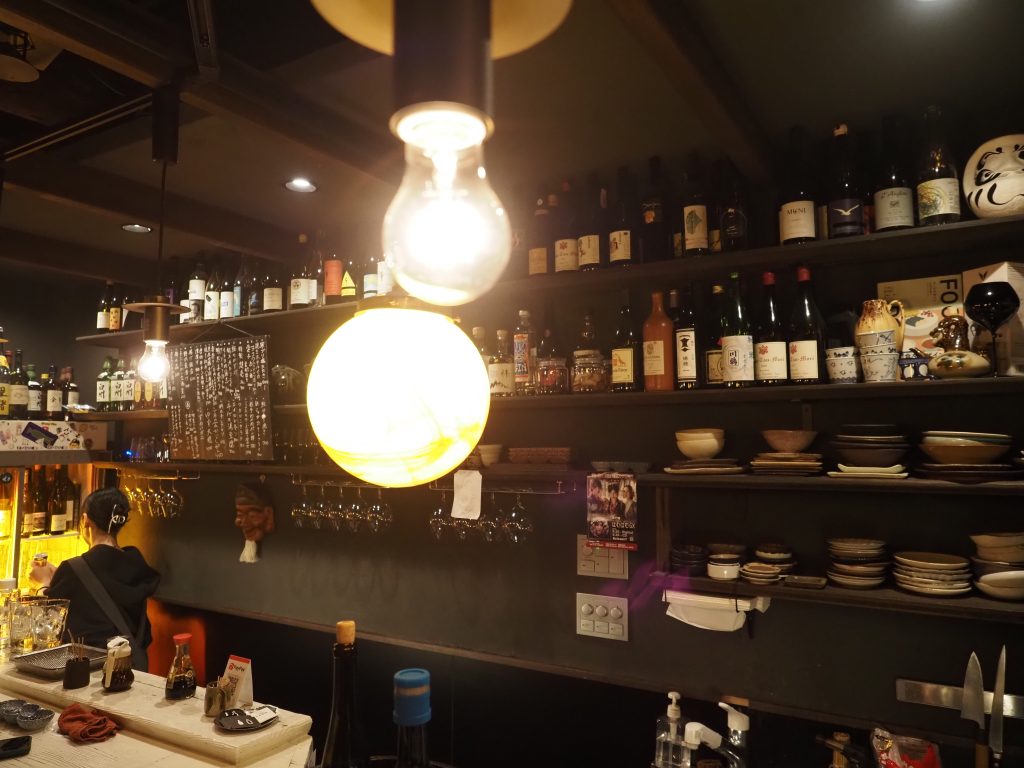
I was already drunk by the time I got to this standing-style restaurant, but I was trying hard and captured yummy dishes and great drinks with my camera. This restaurant, which is located within walking distance from Hard Rock Café Kyoto, offers a wide range of alcohol and a wide variety of food that would definitely pique your appetite even if you are full.
You may be relieved by the restaurant’s calm atmosphere where only a few light bulbs are giving us clues to order; it’s not dark, but I was fond of the restaurant’s arrangement for light bulbs giving off reddish-brown light.
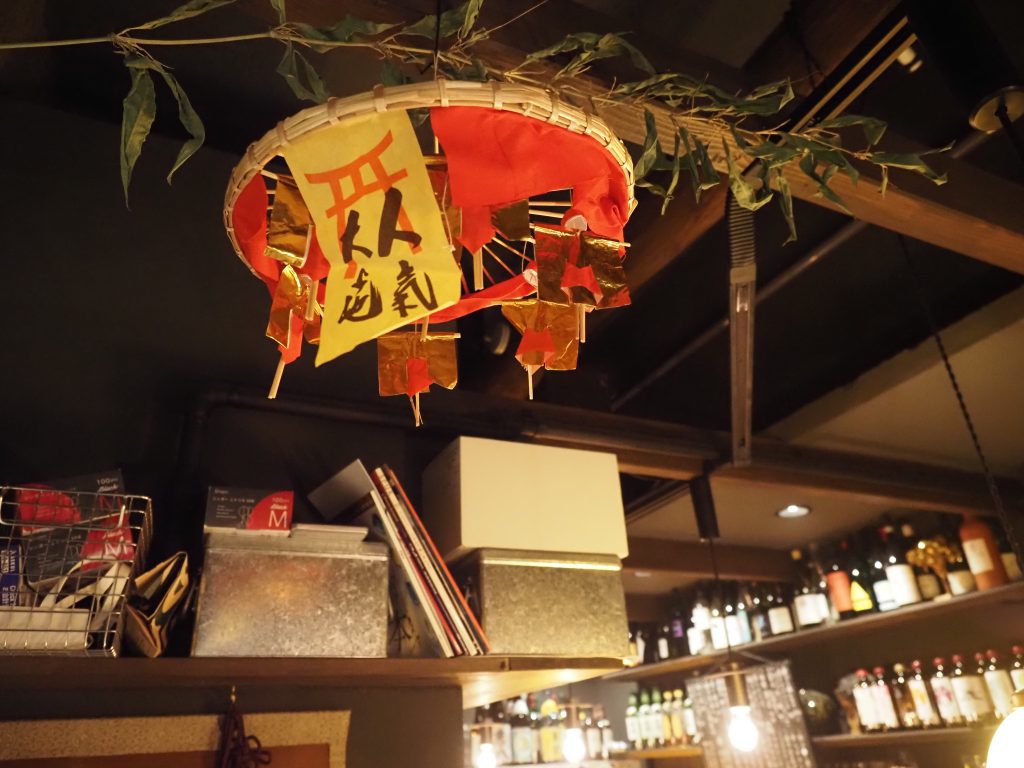
When looking around the restaurant, I found a special good luck charm that will bring popularity. This good luck charm can be bought at Kyoto Ebisu Shrine only once a year.
When you are in Kyoto, you will often encounter this type of good luck charm inside restaurants or bars. It not only brings popularity but also adds aesthetic value to them.
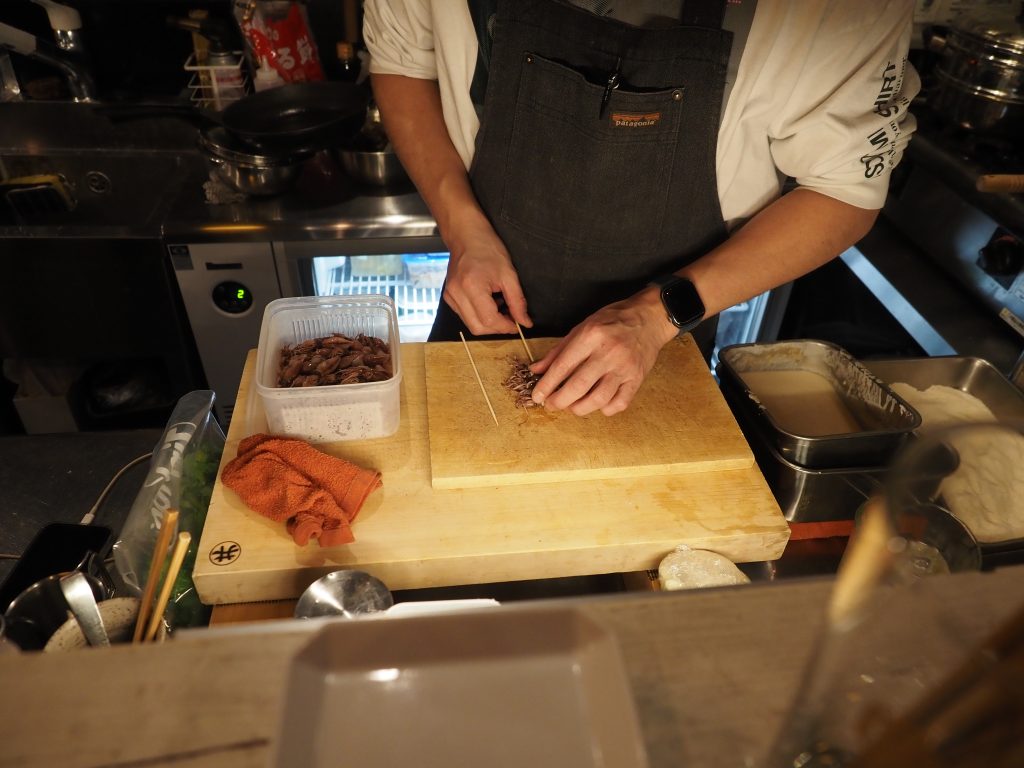
The chef is cooking food over the counter, so you can enjoy looking at the process of making delicious dishes. Though the chef seems not to be proficient in English, you can enjoy having a chat using your smartphone—one of the enjoyable moments that allows you to talk with a local person about things that can be enjoyed in the local area. You shouldn’t worry about speaking Japanese if you have already picked up a few Japanese phrases—that’s the name of the game!
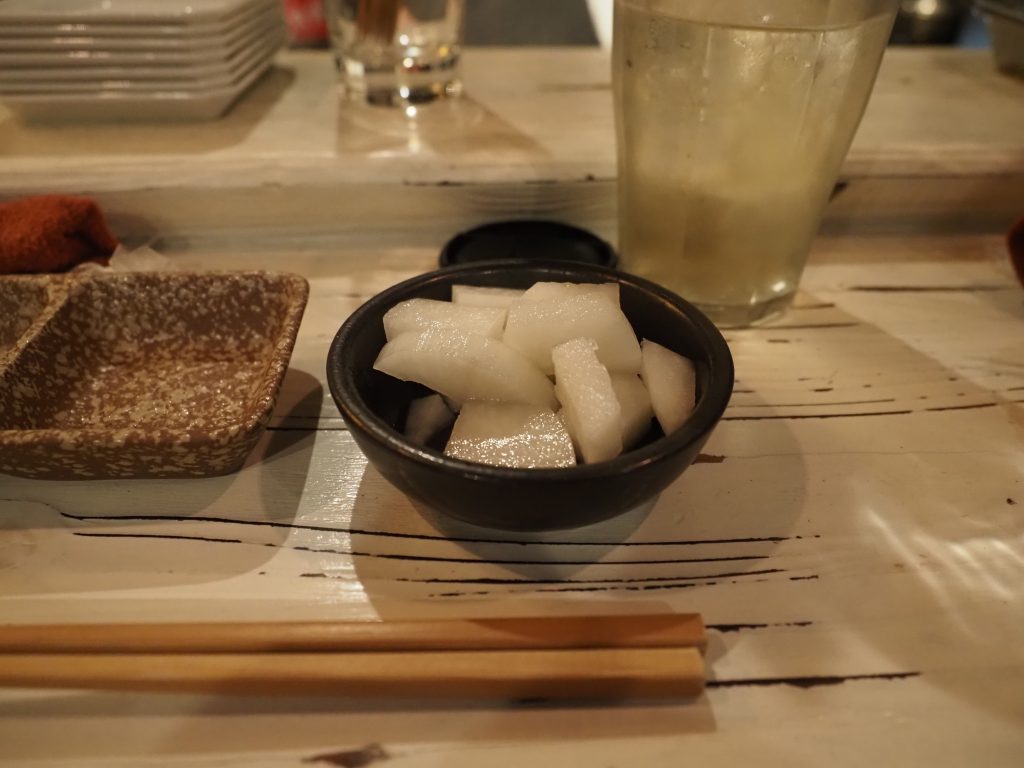
The first dish served was one that I didn’t order—this is something we take for granted: “Tsukidashi,” or a Japanese appetizer without which we feel we are left behind because drinks come first, and we like to enjoy having the appetizer while we are waiting for our orders.
Some Japanese-style taverns or restaurants break with this old custom, but a great majority of Japanese-style taverns still adopt this custom. Don’t worry. Any Tsukidashi is free of charge unless the menu says you need to pay for it.
This Tsukidashi is slightly pickled Japanese radish. It tastes so refreshing that it sounds like your palate makes a fresh start. It goes well with any alcoholic beverage you order.
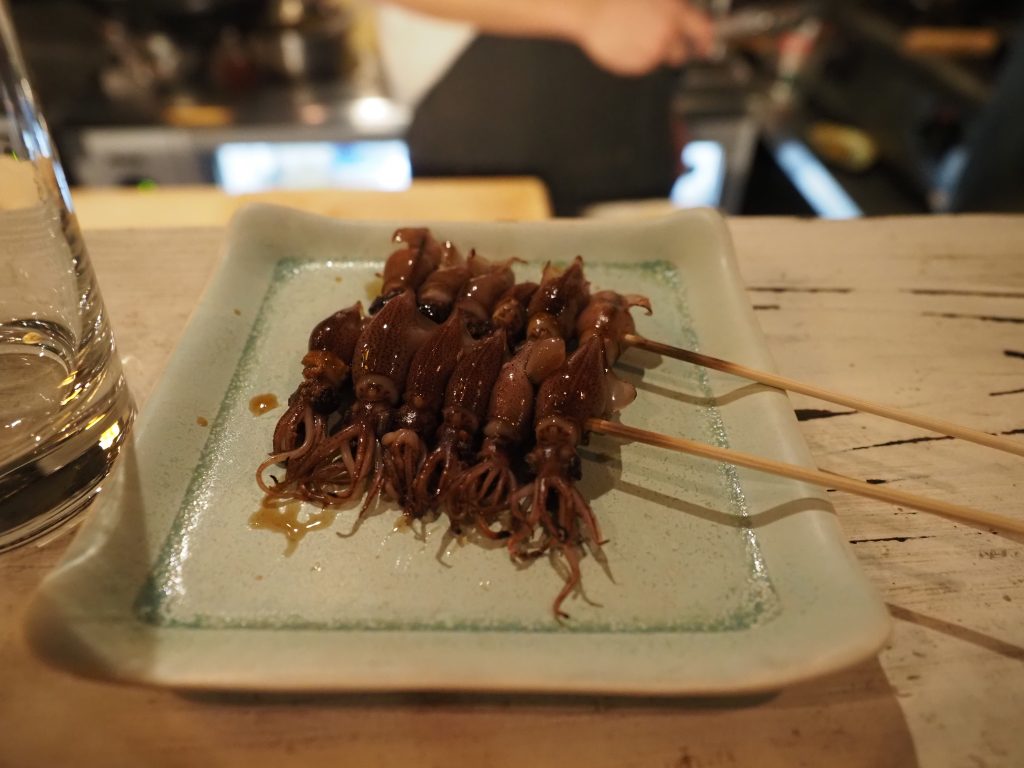
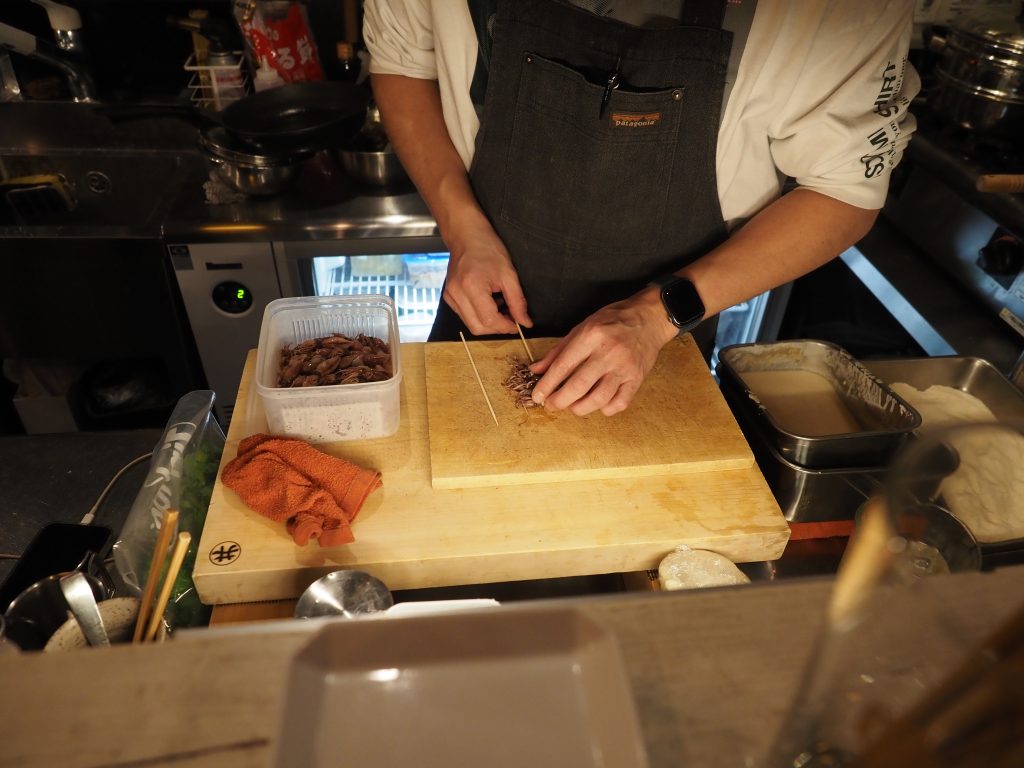
Here come small squids. They taste not as bad as they look. On the contrary, they are delicious. Believe me. Once you take a bite, the bittersweet taste expands beautifully in your mouth. Their beautifully rich flavor makes you drink more and more! Though they are served on a skewer, I recommend you take them apart to eat little by little.
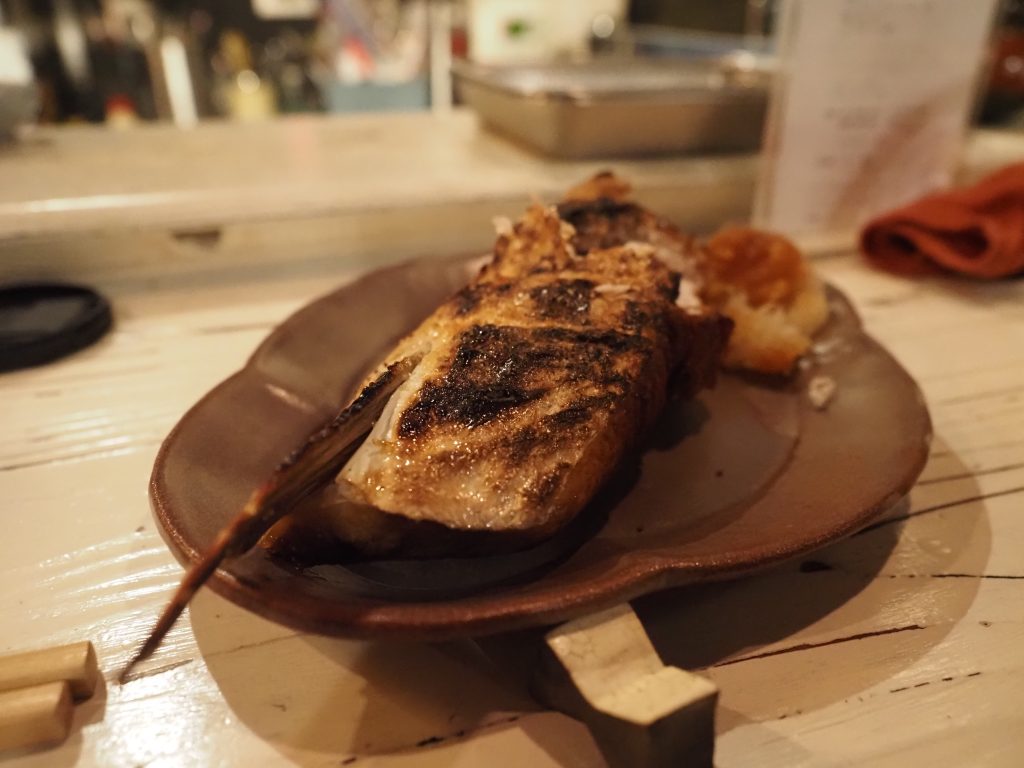
The next dish served was the main one in this restaurant: “Burinokamayaki,” or grilled yellowtail’s collar. This is the portion that used to be very active when it was alive, so this is supposed to be one of the yummier parts of the yellowtail—the rare parts for we can take just two collars from one yellowtail.
Japanese people from the young to the old like to eat this portion because it’s thick and more filling than it looks. We usually eat grilled yellowtail’s collar with grated radish and soy sauce. Though it’s a relatively lean portion, it still contains a little fat that melts in your mouth. So, eating it with grated radish and soy sauce will milden the fat taste.
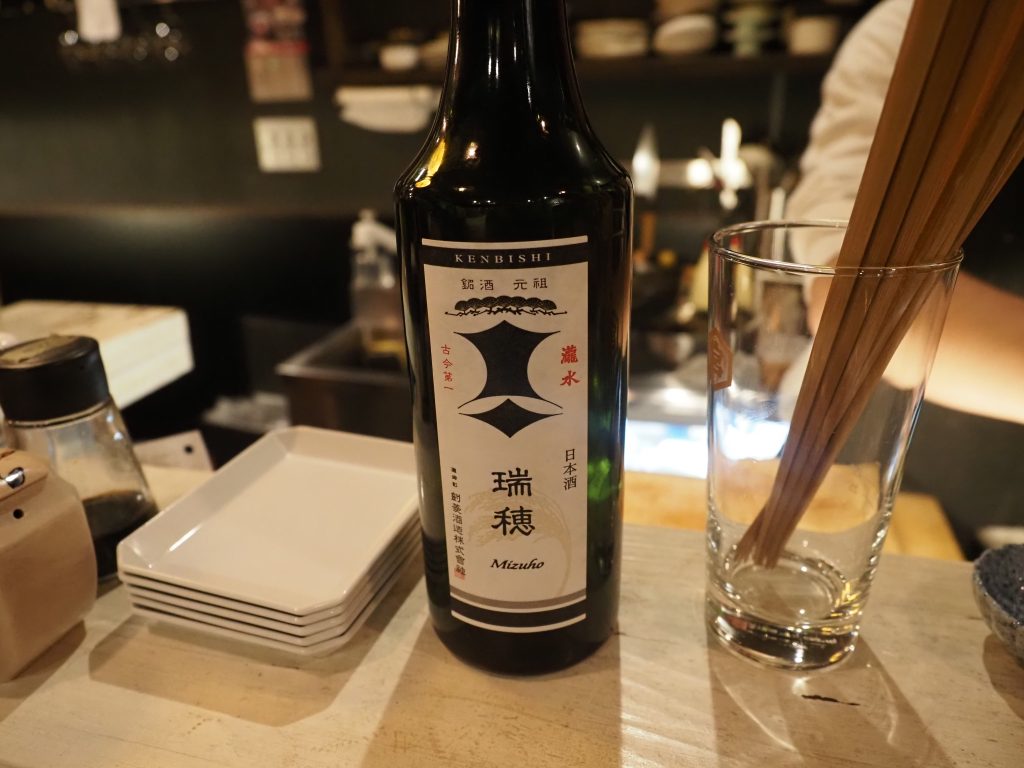
This time, I ordered one of the oldest Japanese sakes, “KENBISHI,” which traces its origin back to 1505 and originated in “Itami,” an inland area of Hyogo prefecture.
I like its unique flavor, which is attributed to its traditional way of production: “Kanzukuri,” or a traditional sake-making process, which requires a lot of hard preparation work during winter. Coupled with a rice steamer for sake that is made from “Yoshino Cedar,” one of the well-established brands of Japanese wood, KENBISHI’s sake gives us a rich as well as edgy flavor.
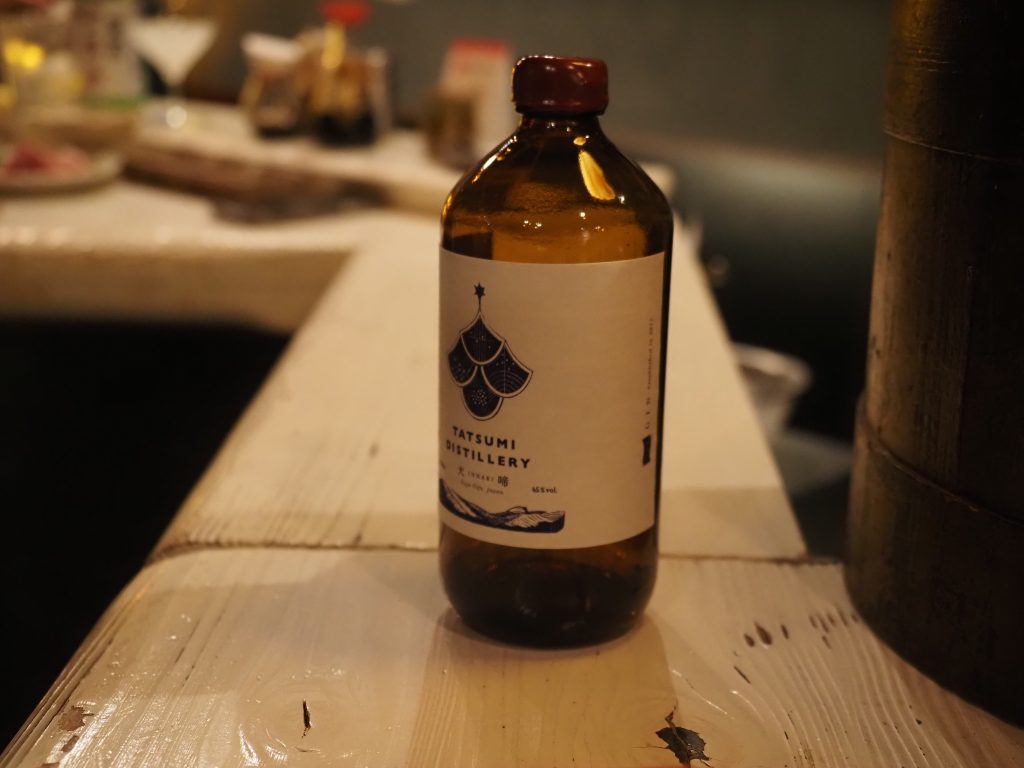
The next alcoholic beverage was a relatively new gin: “TATSUMI DISTILLERY,” founded in 2017. This gin is distilled in Gujohachiman, Gifu prefecture, which has been selected as one of the top 100 high-quality water areas in Japan.
Juniper berries are used to make this gin, so when you are asked, “How would you like it prepared?”, you should answer “Gintonikku de,” meaning “I’d like to drink it with tonic.” That way, you will be able to taste the flavor of Juniper berries.
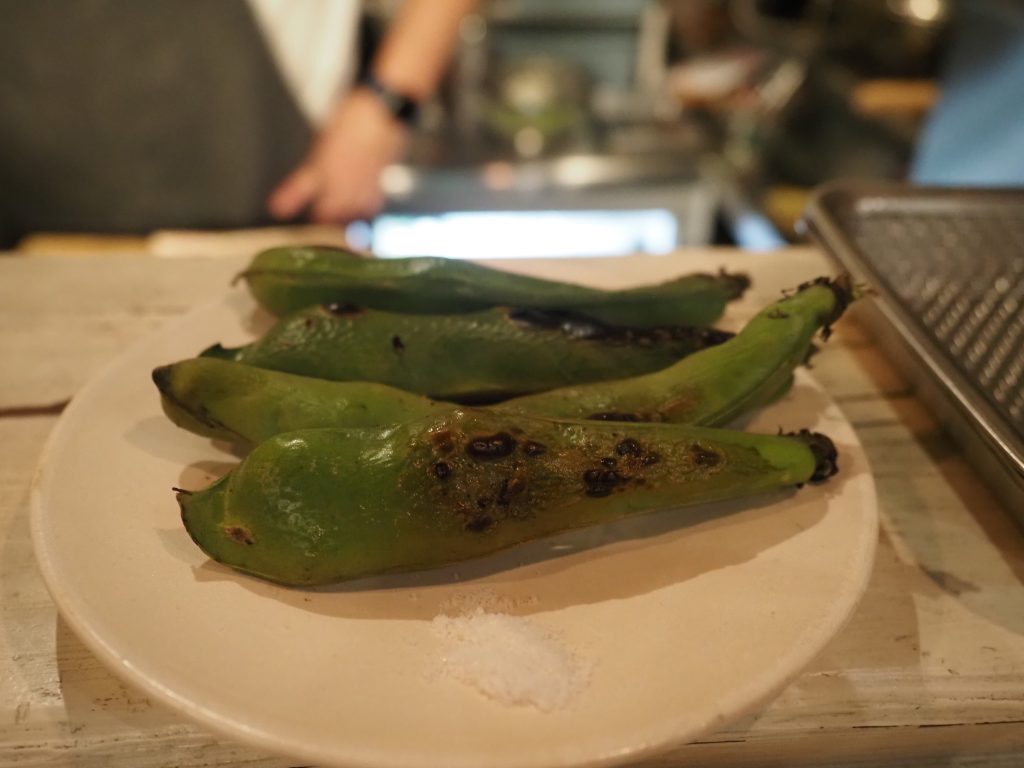
The last dish in this restaurant was roasted big fava beans. Fava beans are a type of bean that gives off a strong smell when boiled, so it’s better to roast them. Fava beans are rich in protein and vitamins and give you a natural flavor.
Also, they go extremely well with beer! This time, I was drunk enough, so I settled for a glass of gin and tonic with the fava beans as a finger food.
- Address: 206-1 Rokkencho, Higashiyama-ku, Kyoto City, Donguri Kaikan 2nd floor
- Business hours: 19:00-0:00
- Closed: Thursday
Ebisugawa Gyoza Nakajima, the Donguri branch

After I enjoyed having meals and drinking and parted from a handsome chef in Shirotokuro, I was attracted by the yummy smell from a Gyoza Chinese dumpling restaurant on the first floor of the same building.
The restaurant is “Ebisugawa Gyoza Nakajima” serving not only Gyoza Chinese dumplings but also roasted pork as well as steamed chicken.
Here’s a piece of advice for those who’d like to save on food expenses: Start your night adventure from here instead of the Omiya station if you happen to be in the Gion district. The food and drinks of this restaurant are relatively reasonably priced, so if you have little budget for food, I recommend you have a meal here, and after you are full, you might want to visit a standing-style restaurant like “Shirotokuro” to get drunk.
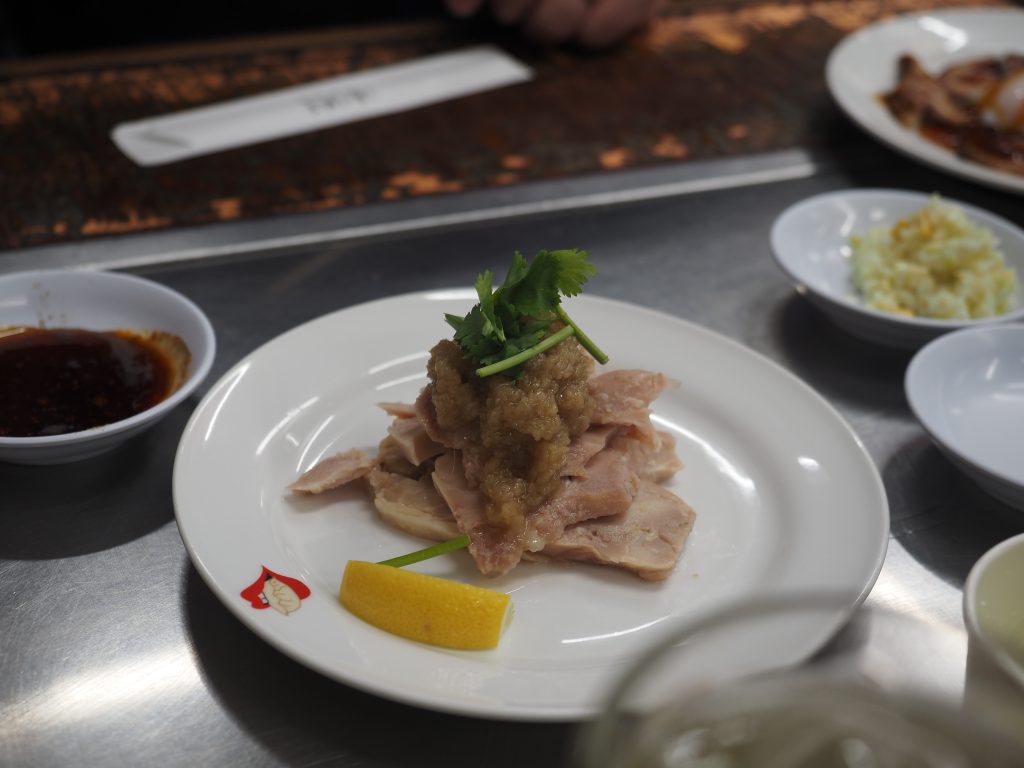
This is steamed chicken. If you’d like to add some citric flavor to it, just squeeze lemon over it. Unlike Gyoza Chinese dumplings, which take some time to be served, this dish is quick to be served, so while you are waiting for Gyoza, you might as well eat this dish. Needless to say, ordering a beer is a must if you’d like to fully enjoy tasting Gyoza. No other alcoholic beverages are right up there with a beer when you have Gyoza.
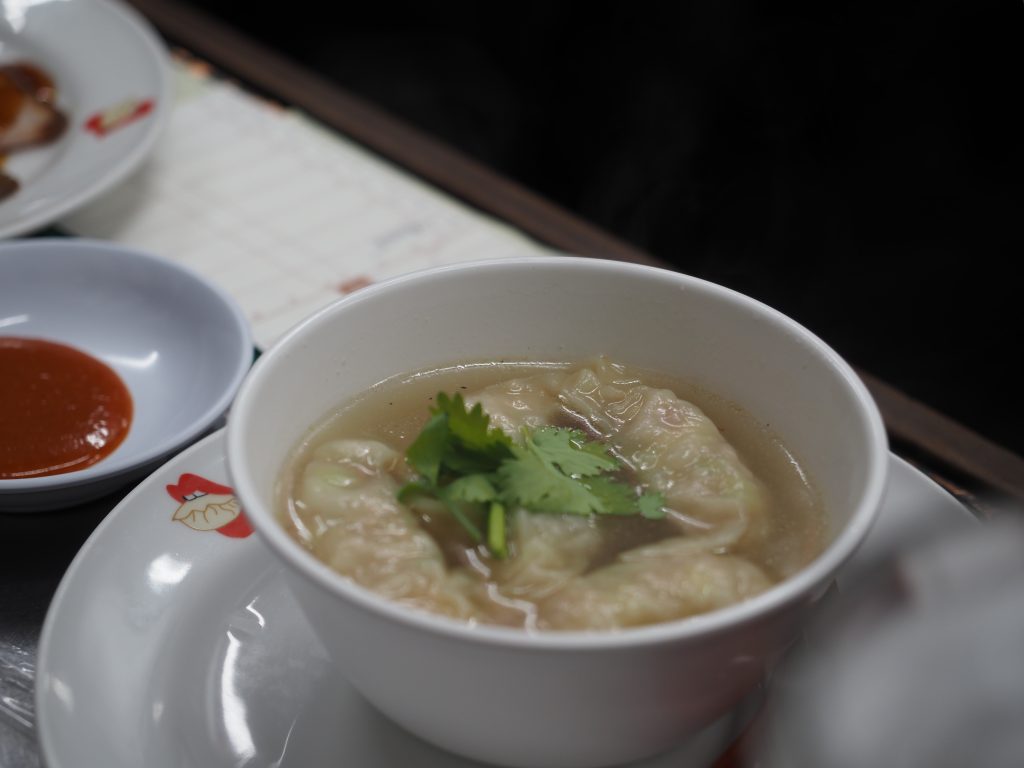
This time, I ordered boiled Gyoza, instead of pan-fried Gyoza because it tastes good all the more for its soup and coriander on top. We normally eat boiled Gyoza with soy sauce or Ponzu, or soy sauce mixed with citrus juices.
- Address: 1st floor, Acorn Kaikan, 206-1 Rokkencho, Higashiyama-ku, Kyoto City
- Business hours: 11:30-14:00, 17:00-23:00
Mixology Bar Smooth

The last place I visited that night was an experimental bar, “Mixology Bar Smooth,” located in the Keyamachi district near Ponto town. A 10-minute walk from the Gyoza restaurant will take you to this bar, but if you are already drunk, you might want to take a cab to get there.
If you feel inclined to drink experimental cocktails using lots of fruits, then this bar would be second to none in Kyoto.
It offers a wide range of cocktails—most of which will definitely agree with your taste. The experimental spirit this bar embraces is out of this world—lots of fruits exhibited in a small refrigerator are surely a feast for the eyes.
Disciplined bartenders are all out to make you great cocktails that are considered to be to your taste. Why not wind up your night adventure with a beautiful cocktail here?
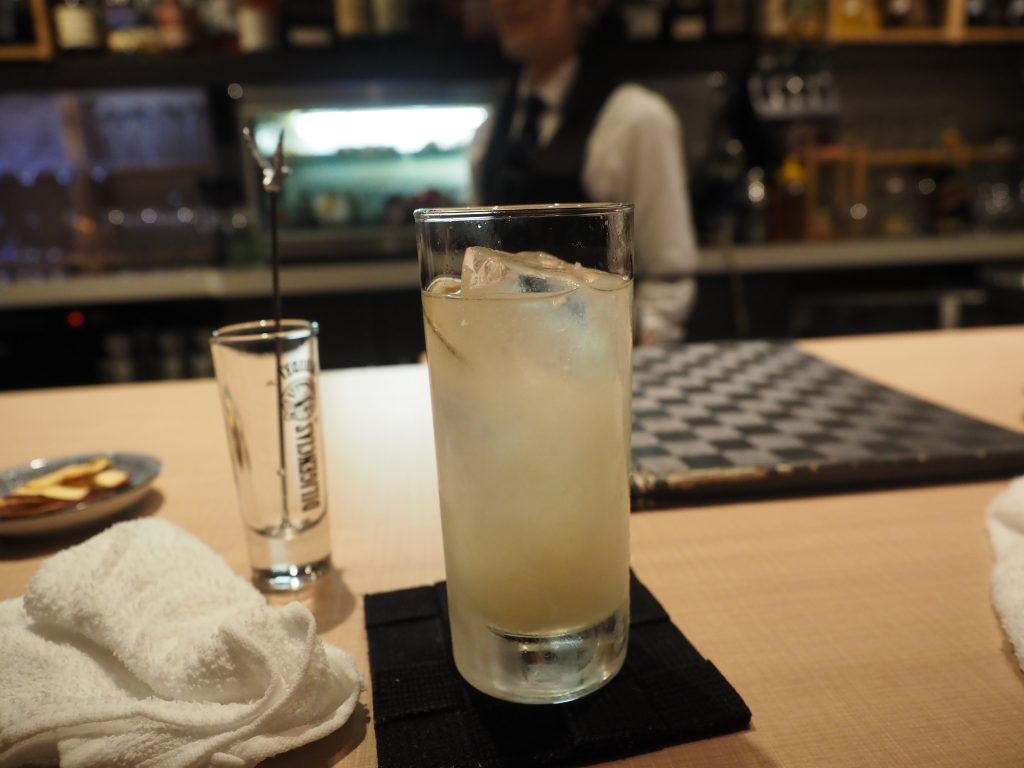
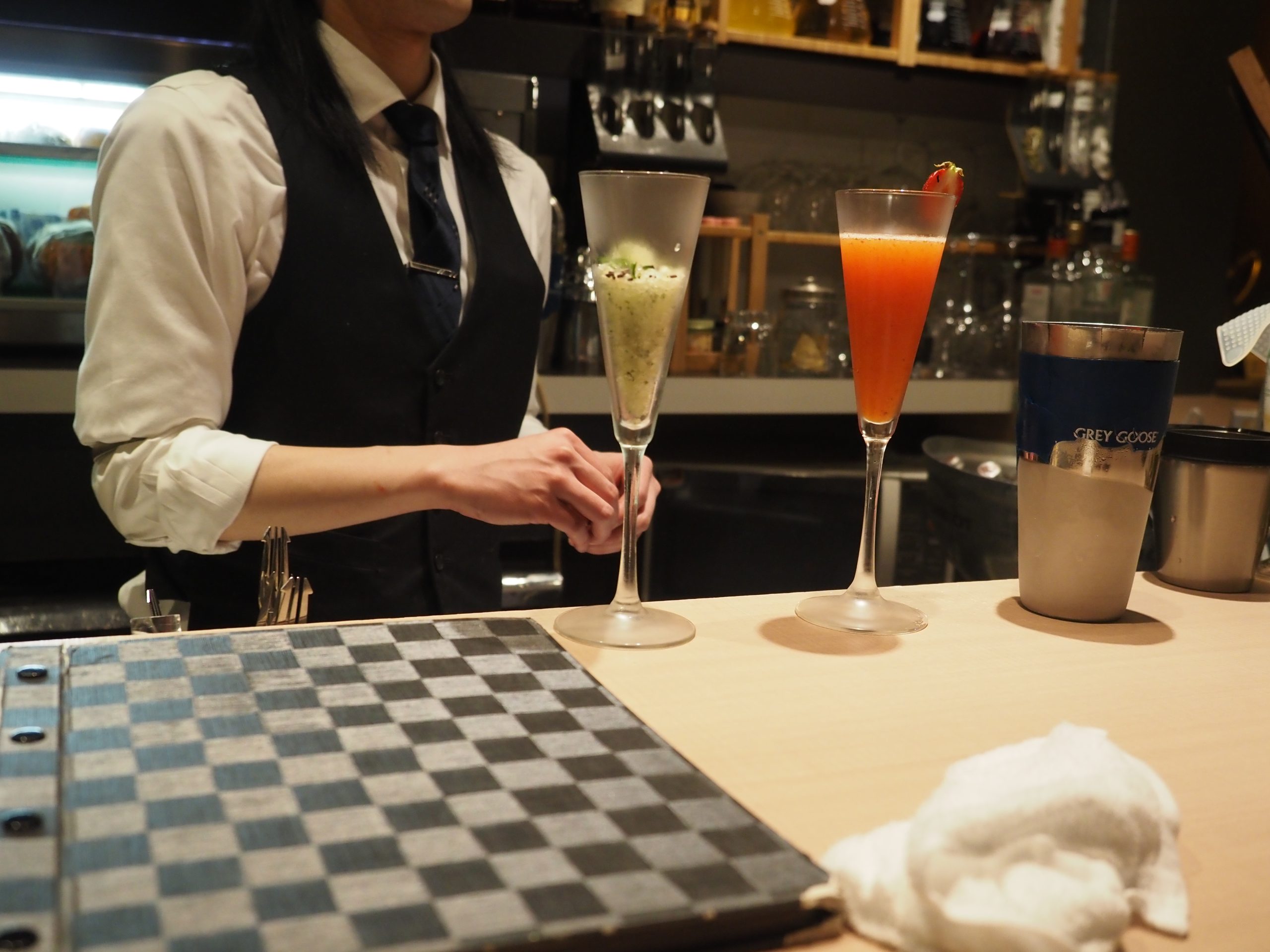
Here, I ordered a frozen gin and tonic. Gin is literally frozen at the bottom of the glass, so you need to stir it with a stirrer. The gin will gradually melt and be mixed with tonic water.
It’s quite a cocktail that no other bars would even think of—something you can enjoy and feel as if you were an apprentice bartender.
- Address: 1st floor, Yoshiki Building, 214 Nabeyacho, Nakagyo-ku, Kyoto City
- Business hours: 18:00-3:00
- Closed: Wednesday
Article in same category